Startup cost
$10k–$30k
TRUiC Business Ideas
Decision Snapshot
Idea Score
68
Startup cost
$10k–$30k
Profit margin
25%
Break-even
4 mo–12 mo
Time to launch
12 wk–36 wk
Demand trend
Stable
5-yr failure rate
—
Capital intensity
Medium
Time commitment
Full time
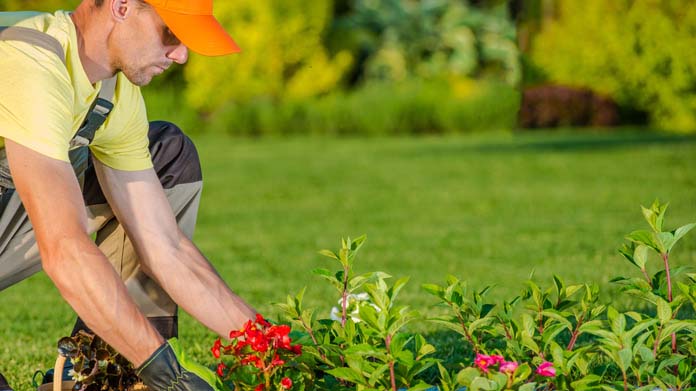
Responsible landscaping businesses are looking to integrate green solutions into the traditional business model of the landscaping industry. In addition to supplying management and beautification to trees, shrubs, flowers, turf, and mulch, green wise businesses look for ecologically sensitive options for plants, pesticides, fertilizers, and other landscaping supplies.
Our guide is in 3 parts:
Although you may be able to purchase an independent landscaping business turnkey from a retiring owner, you’ll more than likely be starting your own business or buying into a franchised landscaping operation. Franchising can be a great way to start if you don’t have a lot of expertise or investment capital. You will also be representing a known name in the industry, which helps with customer retention and acquisition.
You’ll also have a proven business model to adhere to, which can give you some great insight into the steps you’d need to take if you decided to branch out on your own. You will be paying a franchise fee to the parent company, but most franchise opportunities make it very reasonable, as it’s in their best interest to have successful franchise owners.
In contrast, starting your own business will ensure you see 100% of profits, but you’ll also incur 100% of the costs for the start-up. If you are experienced in small business finances and have a natural green thumb, you may be more successful going it alone, as you can build your business from the ground up. There will be competition to contend with, but by positioning yourself in a niche market of ecologically mindful lawn care, you have a good chance of standing out in the crowd. You may also find that you can set your prices a bit higher to match your specialties, as the economically stable customers are more likely to be attracted to a green business solution for their landscaping needs.
In both cases, your start-up costs will range, depending on how big or small, independent, or franchised. Average costs can start around a few thousand to buy equipment and a trailer or upwards of six figures for a fully-functioning franchise. Some essentials will include:
Lawn equipment, including mower(s), weed eaters with various edging and trimming attachments, leaf blower(s), gas tanks, hand tools, and a trailer to haul the equipment
Eco-friendly fertilizers and pesticides
Possibly a vehicle upgrade or a dedicated work truck or van
T-shirts, with business logos and other work apparel
Magnetized company advertising, business cards, or even a company vehicle advertising wrap
Website
Marketing and other standard business expenses
Accounting and CRM software applications for proper management of accounts
Business insurance for your company and employees
Landscaping contractor licensing and associated fees
Equipment maintenance, fertilizer and pesticides, gas, and consumables, such as yard waste bags will constitute a majority of your costs. Additionally, wages for employees will also factor in, as your business grows. You will also need to factor in advertising costs, website maintenance, and any company clothing or accessories, such as gloves, hats, dust masks, and goggles.
Clients may range from residential customers to medium to large businesses with multiple properties and outdoor spaces. The type of customers will most likely determine the size and scope of your business and crew. The added element of providing an ecologically sensitive approach to landscaping will also attract more eco-conscious consumers, as well.
Successful landscaping companies make their money from contracted customers. Most landscaping businesses offer annual and semi-annual, or possibly seasonal service terms, which outline the basic services agreed upon and the frequency of the visits.
Pricing varies depending upon the location and demographics as well as the services offered. Price other lawn and landscaping services in your area and determine a reasonable yet competitive price. Build pricing guides for customers, as well, which explain basic services and the sliding scale for specific services and products.
A successful landscaping and lawn maintenance small business can expect to make anywhere between $40,000 and 80,000 annually. Your profit margins will fluctuate by the size and scope of your business. Offering green options may cost a bit more if they are hard to find in your region, but you should be able to price accordingly for this type of service. When determining your profit and sales goals, be sure to consider that this industry is seasonal and plan accordingly.
As has been our focus, your business should promote the eco-friendly methods your business offers. Make this a focal point without making it the only substantial difference you have from your competition.
Consider teaming up with local and regional groups who also focus on cleaning up and protecting our natural spaces. You may even want to have your company participate in neighborhood clean-ups and national celebrations, such as Arbor Day or Earth Day. Positive exposure and connectivity can influence many customers to seek you out.
You can also consider offering weekend classes to help customers and consumers enact eco-friendly practices in their homes and gardens, regardless of if they use your service or not.
For most landscapers, day to day activities include servicing the outdoor spaces of customers, managing inventory and supply levels, and canvassing for new customers. Most landscaping businesses begin their days pretty early to make the most of more reasonable temperatures and outdoor conditions. In addition to the landscaping itself, maintenance on lawn machines, edgers, and trimmers, as well as service vehicles is also a critical part of the routine.
A new focus on greener solutions for products and techniques will additionally require some research and inquiry to determine where you can find more ecological options for fertilizers, pesticides, use of native and drought-tolerant plant species, and more efficient options for managing clippings and yard take away. Fortunately, this is a growing area of interest, which offers numerous angles of input from landscapers, scientists, and other related professionals.
Make no mistake, starting a landscaping business is hard work, both in the field and in the books. You build sweat equity from the daily work you perform, but your name and reputation must be curated properly. The work is there, but you need to be prepared to hit the ground running and plan on dedicating at least two years to building and developing the business through customer acquisitions, proper advertising and marketing, and equipping you and your crew with reliable tools, supplies, and vendors. Developing a realistic business model first will allow you to consider the numerous scenarios and associated costs.
A friendly and engaging personality is somewhat necessary for garnering customers. You’ll have to be able to sell your business and articulate how you’ll perform a superior service over your competition. You must also be able to engage in physical labor, especially if you start as a small outfit. The work may be harder than relying on a crew, but your overhead will be significantly lower.
Your knowledge of plants and horticulture/agriculture will also be on display, so make sure you’re regularly studying up and adding to your palette of services. And finally, a sound business mind is needed. You, or a partner, will have an initial uphill challenge to raise capital unless you can secure outside investors from the start. Either way, your business acumen will also greatly contribute to the success of your business.
Landscaping businesses tend to be fairly lucrative, whether small or large. Your success will be determined by your work ethic and the attention to detail you show your customers and their green spaces. And again, the added element of Earth-conscious products and techniques will bode well with many new and future customers, as consideration for our world is garnering more positive and vested attention.
Seasoned eco-friendly landscape business owners offer the following advice:
Due to a saturated market, advertising will be key when starting as a business. You’ll have to make yourself known, so an advertising blitz may be necessary to gain a foothold.
Invest in items on an as-needed basis.
Your success is defined by how consistently you meet and exceed customer expectations. As you build with customers, your reputation will precede you.
Proper pricing is important. Find the right balance – you don’t want to undercut everyone else in the community, but you also need to avoid inflated prices.
Look for vendors who share your outlook on going green. You’ll need a partner for your supplies.
Look for customers in a certain region and canvas small to medium areas heavily. Ideally, you’ll want to be able to work in certain related customer zones, so you aren’t driving too far from day-to-day. For instance, you may work only on the West side of town one day, and in the downtown area another day.
Always put your best foot forward and look to main good relations with clients and vendors, alike.
Landscaping and lawn maintenance is hard work, so choose wisely when picking your crew. You need dedicated, hard workers on your team, but you may be able to build slowly, one person at a time. Developing regular customers may take time, so you could operate successfully for some time with yourself and only a few other employees.
If you are franchising, or you can start with a substantial business budget, you’ll need to vet your potential hires carefully. Consider a month trial basis to see if they’re capable of keeping up with demands and work conditions, especially in the summer months. Once you have a strong team, treat them as you do your loyal customers with bonuses and incentives to keep working hard for your combined business.
Business Evaluation & Strategy Tool
We'll walk you through the four pillars every business needs: Points of Leverage, Marketing Strategy, Financial Model, and Personal Compatibility. At the end you'll see a personalized report and your action plan below will be tailored to your answers.
Every viable business has natural advantages. Below are common leverage points across four categories. Pick the ones that apply to your Responsible Landscaping business. We've pre-suggested a few based on your idea — review and adjust.
Without a way to connect with customers, even great businesses fail. Pick the channels you plan to use to reach your customers.
Enter your monthly baseline costs — the minimum overhead to keep the business running. Then we'll calculate how many sales per month you need to break even.
A business that doesn't fit your life will fail no matter how good the numbers look. Tell us how this business fits you.
Complete the four pillars and your personalized summary will appear here.
Nine concrete steps to take you from idea to open business, grouped into 30-day phases. Complete the planner above and we'll highlight what's most important for your situation.
An LLC keeps your personal assets separate from business debts and lawsuits — the most common reason small business owners choose this structure. Sole proprietorships and partnerships do not provide this protection.
Apply for your free Employer Identification Number through the IRS, then register for any state or local taxes that apply to your business (sales tax, franchise tax).
A dedicated business account is required to maintain personal asset protection. Mixing personal and business finances ('piercing the corporate veil') can void your LLC's liability shield.
Recording expenses and income from day one makes tax filing easier and lets you see when the business is actually profitable. Use software (QuickBooks, Wave) or a part-time bookkeeper.
State and local requirements vary widely. Brick-and-mortar businesses typically need a Certificate of Occupancy; service businesses may need specific professional licensing; food businesses need health permits.
General Liability Insurance is the most common starting point. If you'll have employees, most states require Workers' Compensation. Specific industries need additional coverage (product liability, professional liability, etc.).
Your brand is how customers perceive and remember you. A clear name, logo, and visual identity make every later marketing decision easier and protect you legally as you grow.
Every legitimate business needs a website. Social media pages are not a substitute — you don't own the platform. Modern website builders mean you can launch a clean site in a weekend without a developer.
A dedicated business number keeps your personal life private, makes the business look legitimate, and lets you route calls professionally. Cloud phone services start under $20/month.
Starting a Responsible Landscaping business typically costs $10,000 to $30,000. It is considered a medium capital-intensity business.
A Responsible Landscaping business runs roughly a 25% net profit margin, and most owners reach break-even in about 4 to 12 months.
You can usually launch a Responsible Landscaping business in about 12 to 36 weeks, and it is commonly run full time.
A Responsible Landscaping business is generally an intermediate-skill business to start, with stable demand. TRUiC rates it 68 out of 100 on our Idea Score.
Most Responsible Landscaping businesses register as an LLC or other legal entity and obtain a general business license. Depending on your state and city you may also need industry-specific permits, sales tax registration, and zoning or health approvals, so check your local requirements before you launch.