Startup cost
$150k–$300k
TRUiC Business Ideas
Decision Snapshot
Idea Score
57
Startup cost
$150k–$300k
Profit margin
25%
Break-even
4 mo–12 mo
Time to launch
12 wk–36 wk
Demand trend
Stable
5-yr failure rate
—
Capital intensity
Very high
Time commitment
Full time
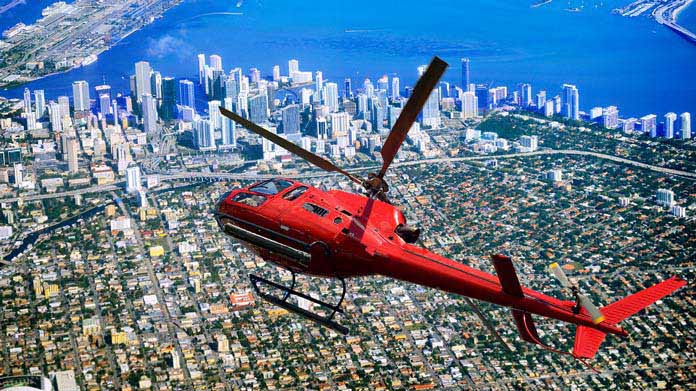
A helicopter tour business takes customers on short flights so they can view their city from a bird’s-eye view. This is typically marketed as a more expensive service for a more adventurous clientele, and it adds a touch of excitement into any community.
Our guide is in 3 parts:
Unlike some small businesses, the costs of opening a helicopter tour business are significant. Depending on the size, make, and model, the helicopter alone will cost between $150,000 and $300,000. If you need a private pilot’s license, it will cost between $10,000 and $15,000, and if you need to obtain your commercial pilot’s license, this will take between $18,000 and $20,000. You must also lease a hangar for your helicopter, and the monthly cost of this will vary, though it is typically between $1,500 and $3,000 a month. You must also advertise your business, which is worth spending $3,000 on to start out. In addition, you’ll need enough helicopter fuel to get started, which is about $1,000. Finally, you’ll require insurance, and while the costs may vary, it is typically between $11,000 and $15,000 a year.
Your primary ongoing expenses will be the hangar for your helicopter (leases are typically between $1,500 to $3,000 a month), gasoline (typically less than $1,000 a month), and advertising (your exact balance of cheap social media advertising and more expensive traditional advertising is up to you, but this is typically less than $500 a month).
While many people enjoy a good helicopter ride, your target demographic is men between the ages of 35 and 45. They are likely to have enough disposable income for a relatively extravagant experience while still being young enough to seek out thrilling experiences.
A helicopter tour business typically charges a fixed price for short helicopter flights around a city.
How much you charge is up to you, though the amount is typically determined by the distance you transport customers. Typical flights cost between $20 to $355 and range from a simple eight-mile tour to a thirty-mile tour that features special city landmarks and other unique attractions.
The amount of profit you can make is determined by how many customers you serve per year and which tour packages they buy from you. If you provide tours to eight people a day for five days a week at an average cost of $40 per person, you will make over $83,000 per year before expenses. It is possible to make more by serving more customers, selling pricier packages, or both.
Consider charging more for extra features. For instance, people may pay more to be flown over a scenic waterfall or an iconic amusement park. And you should offer seasonal specials for everything from Valentine’s Day to Halloween. Finally, don’t be afraid to raise your rates after you’ve established your business, especially if you have little to no competition in your area.
For a helicopter tour business, your days are straightforward. Most of them will ideally be spent flying customers around predetermined routes within your city. Otherwise, your time is chiefly taken up with helicopter maintenance, advertising, accounting, and general customer service.
As mentioned before, being licensed to fly a helicopter is a must for this business. Therefore, it’s best to obtain this license before seeking to open the business. Any prior experience professionally flying helicopters is a great way to get your business started. Additionally, previous experience in the tourism and hospitality industry can help you market yourself to key demographics.
The growth potential of this business is modest, as the Technavio forecast of the global helicopter tourism market predicts the industry to grow by 3.45% between 2017 and 2021.
One tip is to fly as much and as often as you can on your own before doing it commercially. Carefully consult aerial maps of your city and determine the best paths to take customers on. Depending on your city, you should try to advertise via local hotels to gather the interest of tourists who may be visiting.
While it’s not impossible to start this business completely on your own, you will likely want a small team to help serve customers and contribute to the maintenance of your helicopter.
Business Evaluation & Strategy Tool
We'll walk you through the four pillars every business needs: Points of Leverage, Marketing Strategy, Financial Model, and Personal Compatibility. At the end you'll see a personalized report and your action plan below will be tailored to your answers.
Every viable business has natural advantages. Below are common leverage points across four categories. Pick the ones that apply to your Helicopter Tour business. We've pre-suggested a few based on your idea — review and adjust.
Without a way to connect with customers, even great businesses fail. Pick the channels you plan to use to reach your customers.
Enter your monthly baseline costs — the minimum overhead to keep the business running. Then we'll calculate how many sales per month you need to break even.
A business that doesn't fit your life will fail no matter how good the numbers look. Tell us how this business fits you.
Complete the four pillars and your personalized summary will appear here.
Nine concrete steps to take you from idea to open business, grouped into 30-day phases. Complete the planner above and we'll highlight what's most important for your situation.
An LLC keeps your personal assets separate from business debts and lawsuits — the most common reason small business owners choose this structure. Sole proprietorships and partnerships do not provide this protection.
Apply for your free Employer Identification Number through the IRS, then register for any state or local taxes that apply to your business (sales tax, franchise tax).
A dedicated business account is required to maintain personal asset protection. Mixing personal and business finances ('piercing the corporate veil') can void your LLC's liability shield.
Recording expenses and income from day one makes tax filing easier and lets you see when the business is actually profitable. Use software (QuickBooks, Wave) or a part-time bookkeeper.
State and local requirements vary widely. Brick-and-mortar businesses typically need a Certificate of Occupancy; service businesses may need specific professional licensing; food businesses need health permits.
General Liability Insurance is the most common starting point. If you'll have employees, most states require Workers' Compensation. Specific industries need additional coverage (product liability, professional liability, etc.).
Your brand is how customers perceive and remember you. A clear name, logo, and visual identity make every later marketing decision easier and protect you legally as you grow.
Every legitimate business needs a website. Social media pages are not a substitute — you don't own the platform. Modern website builders mean you can launch a clean site in a weekend without a developer.
A dedicated business number keeps your personal life private, makes the business look legitimate, and lets you route calls professionally. Cloud phone services start under $20/month.
Starting a Helicopter Tour business typically costs $150,000 to $300,000. It is considered a very high capital-intensity business.
A Helicopter Tour business runs roughly a 25% net profit margin, and most owners reach break-even in about 4 to 12 months.
You can usually launch a Helicopter Tour business in about 12 to 36 weeks, and it is commonly run full time.
A Helicopter Tour business is generally an expert-skill business to start, with stable demand. TRUiC rates it 57 out of 100 on our Idea Score.
Most Helicopter Tour businesses register as an LLC or other legal entity and obtain a general business license. Depending on your state and city you may also need industry-specific permits, sales tax registration, and zoning or health approvals, so check your local requirements before you launch.