Startup cost
$25k–$250k
TRUiC Business Ideas
Decision Snapshot
Idea Score
66
Startup cost
$25k–$250k
Profit margin
25%
Break-even
4 mo–12 mo
Time to launch
12 wk–36 wk
Demand trend
Rising
5-yr failure rate
—
Capital intensity
Very high
Time commitment
Full time
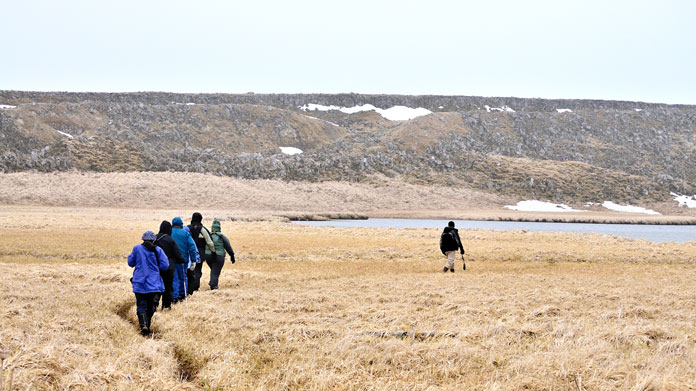
Ecotourism is small scale, low impact tourism that offers travelers an opportunity to learn about the local flora, fauna, and culture. Unlike your standard tour guide service, the focus of ecotourism is to educate guests on how they can positively impact the environment and community they’re visiting. Tourists are able to immerse themselves in the culture and habitat, gaining an understanding of the positive impact each can have on the other. Ecological sustainability and responsibility is the heart of this educating and rewarding experience.
Our guide is in 3 parts:
Operating this type of business requires dedication to the cause and a great deal of flexibility. While not a requirement, a background in tourism, hospitality, and/or environmentalism is preferred. In preparation for each tour you plan, a considerable amount of research is required, as you must possess a deep understanding of local natural resources, facilities, rules and regulations, and safety issues. The International Ecotourism Society (TIES) and Sustainable Travel International both offer consumers and business owners ideas, advice, and solutions regarding how to get involved. TIES’ annual https://ecotourism.org/ecotourism-and-sustainable-tourism-conference-2021/ is a great way to network and come together with like-minded individuals.
This is as much about your mission as it is your business. To gain the knowledge necessary to succeed, you must be able to deeply connect with people from all different cultures. To truly inspire and educate your guests, you must first be willing to listen.
When passion and business collide, it’s easy to sacrifice one for the other. Those inexperienced in running an enterprise should consider partnering with a financial adviser or taking some basic business courses at their local college before mapping out their business plan.
Your ongoing expenses will be defined by the types of tours you offer your guests. Traveling expenses for you and your team, and payroll expenses will take up the largest portion of your budget. Standard operational costs such as rent, fuel costs, etc are minimized, as much of your work is done on the road, eliminating the need for a storefront. When traveling overseas, be sure to keep all immunizations up to date and keep up with all insurance and licenses that your work requires.
Your work in ecotourism has the potential to enhance lives around the world. No matter where you go, you’ll run into skeptics who believe the only positive impact is a financial onel. While these are the people you hope to reach through your work, they are not your preferred customer type. Focus on the individuals who believe in what you’re doing and who are eager to be a part of the process. Hopefully, this will create a trickle down effect, eventually reaching the skeptics.
An ecotour business generates revenue from each hosted tour, focusing on funneling money back into the local economy in the process.
Your fees will depend largely upon how extensive your ecotour is. One company offers expeditions to places like Uganda, Peru, and Brazil. Prices for a trip of this magnitude include: a donation to the community, local lodging, guided tours hosted by members of the community, and locally sourced food (guests are responsible for airfare). Fee per guest ranges from $5,600 to over $10,000. For many ecotourism businesses just starting out, this type of expedition is something to reach for. Smaller scale trips could include half or full-day tours that include hiking, bird watching, or water activities. Fees for this type of adventure average $139 to $300, depending upon a number of factors.
Unless you start your business with a great deal of experience, you’ll likely want to start small-scale. If a full-day tour yields you $300 per customer, and each tour hosts 10 guests, you’ve brought in $3,000. For this example, let’s assume fuel and amenity costs and park entry fees come out to $60 per person, equalling $600. If you personally host 5 of these a week, you’ve earned a profit of $12,000 in one week. While this stands to be a very profitable business, true ecotourism hosts caution new business owners against getting caught up in the profits. Doing so causes many to lose sight of the original mission, which is to support sustainable living and make a positive impact on the environment and communities.
One strategy to keep your expenses at a minimum is to support the businesses and individuals from the area where you are hosting your tour. This will have the greatest impact on the local community, with the lowest impact on your budget. This can take even the form of hiring employees from the region of the world where you frequently host tours.
Offering discounts for travel packages that include multiple tours will help ensure that your customers are satisfied with their experience, and it will make them more likely to want to travel with your company in the future.
Those who have found their calling in ecotourism typically immerse themselves in the cause. They personally host ecotours, spending the rest of their time researching new ways to give back to Mother Nature and the communities they visit. Some find their true passion in Uganda or other places abroad, while others dedicate their time and resources on a local level. Regardless of which path you choose, your days will be active and rewarding.
With Mother Nature playing a major role in your day-to-day activities, no two days will ever be alike. Your duties will include:
Taking reservations from customers and answering questions.
Setting up the itinerary and ensuring everything is scheduled properly. Finding solutions when something comes up that could push back the schedule.
Educating yourself regarding the local culture and environment and how each positively and negatively impacts the other. You will be building relationships with those in the community to gain an understanding of what their needs are and how your business can help fulfill those needs.
Spending time immersed in the natural habitat, gaining a clearer understanding of what changes are occurring, the impact this will have on its future, as well as that of the community.
Routine maintenance of all vehicles used to transport guests.
Interacting with your staff and local accommodations to ensure everything is on schedule.
Hosting tours, interacting with guests, and answering questions.
Brainstorming and planning new ecotour ideas.
Putting your marketing strategy into action, making adjustments when necessary.
Experienced ecotourism hosts caution new entrepreneurs against trying to do too much too fast. Your responsibility is to make a positive impact on the environment and local communities. Since they’re both in a constant state of evolution, your business will need to be as well. Before adding new tours to your itinerary, make sure you’re fully educated on what impact you’re currently making and how you plan to pass this on to the next destination.
You’ll incur a great deal of your start-up costs before the business has become a reality. Research will require hours of time away from your current obligations. It will require networking and, if your mission is outside of your local community, a great deal of traveling.
Once the legwork is done, there are just a few things you’ll need:
Computer and telephone – $1,000 to $2,500
Website – a cheap, basic design could work when starting out, but professional web design runs anywhere from $2,500 to $11,000
Marketing materials – $1,000
Insurance – Speak with a trusted insurance professional regarding the type of insurance this would require. If your ecotours require a great deal of travel, inquire about how to provide travel insurance for your guests.
If you plan to offer local tours, transporting guests should be considered. Some business owners choose to utilize services by local businesses, while others provide their own transportation.
Generating revenue of over $77 billion, ecotourism is poised to be the fastest growing sector of tourism in the U.S.. With more and more Americans striving to learn about the environment, their impact on it, and how they can make positive changes, entrepreneurs seeking to enter this field have a unique opportunity to earn a healthy income while making positive changes in the world. What better legacy could you leave behind?
Successful ecotour hosts offer the following advice:
The relationships you build will be critical to your business’ success. Get to know a travel agent that can assist you and your guests in finding the most affordable travel options. Collaborate with NGOs and public/private enterprises for renting equipment, environmental conservation, training and education programs, and natural resources management.
Consider selling/marketing your ecotours to associations and other well-known agencies that have similar values.
While your guests are there to learn and give back, they’re also there to unwind on vacation. Incorporate outdoor activities that appeal to your target audience.
While this is a rapidly growing business, there are a number of companies who mislead consumers into believing they support sustainability while having little to no positive impact on the environment. Hold yourself to the highest standards and ethics and work to support other businesses who share your same dreams.
Many ecotourists start their business small, hosting each ecotour themselves. As the organization begins to make a name for itself, it will also attract aspiring ecotourists who share your passion and drive to make a difference. They may come to you with their own ideas, or simply be there to learn. Those are the individuals who should comprise your team. You each stand to grow from one another, extending your reach to whatever parts of the earth stand to benefit from your services.
Business Evaluation & Strategy Tool
We'll walk you through the four pillars every business needs: Points of Leverage, Marketing Strategy, Financial Model, and Personal Compatibility. At the end you'll see a personalized report and your action plan below will be tailored to your answers.
Every viable business has natural advantages. Below are common leverage points across four categories. Pick the ones that apply to your Ecotour business. We've pre-suggested a few based on your idea — review and adjust.
Without a way to connect with customers, even great businesses fail. Pick the channels you plan to use to reach your customers.
Enter your monthly baseline costs — the minimum overhead to keep the business running. Then we'll calculate how many sales per month you need to break even.
A business that doesn't fit your life will fail no matter how good the numbers look. Tell us how this business fits you.
Complete the four pillars and your personalized summary will appear here.
Nine concrete steps to take you from idea to open business, grouped into 30-day phases. Complete the planner above and we'll highlight what's most important for your situation.
An LLC keeps your personal assets separate from business debts and lawsuits — the most common reason small business owners choose this structure. Sole proprietorships and partnerships do not provide this protection.
Apply for your free Employer Identification Number through the IRS, then register for any state or local taxes that apply to your business (sales tax, franchise tax).
A dedicated business account is required to maintain personal asset protection. Mixing personal and business finances ('piercing the corporate veil') can void your LLC's liability shield.
Recording expenses and income from day one makes tax filing easier and lets you see when the business is actually profitable. Use software (QuickBooks, Wave) or a part-time bookkeeper.
State and local requirements vary widely. Brick-and-mortar businesses typically need a Certificate of Occupancy; service businesses may need specific professional licensing; food businesses need health permits.
General Liability Insurance is the most common starting point. If you'll have employees, most states require Workers' Compensation. Specific industries need additional coverage (product liability, professional liability, etc.).
Your brand is how customers perceive and remember you. A clear name, logo, and visual identity make every later marketing decision easier and protect you legally as you grow.
Every legitimate business needs a website. Social media pages are not a substitute — you don't own the platform. Modern website builders mean you can launch a clean site in a weekend without a developer.
A dedicated business number keeps your personal life private, makes the business look legitimate, and lets you route calls professionally. Cloud phone services start under $20/month.
Starting an Ecotour business typically costs $25,000 to $250,000. It is considered a very high capital-intensity business.
An Ecotour business runs roughly a 25% net profit margin, and most owners reach break-even in about 4 to 12 months.
You can usually launch an Ecotour business in about 12 to 36 weeks, and it is commonly run full time.
An Ecotour business is generally an intermediate-skill business to start, with rising demand. TRUiC rates it 66 out of 100 on our Idea Score.
Most Ecotour businesses register as an LLC or other legal entity and obtain a general business license. Depending on your state and city you may also need industry-specific permits, sales tax registration, and zoning or health approvals, so check your local requirements before you launch.