Startup cost
$10k–$100k
TRUiC Business Ideas
Decision Snapshot
Idea Score
44
Startup cost
$10k–$100k
Profit margin
4%
Break-even
4 mo–12 mo
Time to launch
12 wk–36 wk
Demand trend
Stable
5-yr failure rate
—
Capital intensity
High
Time commitment
Full time
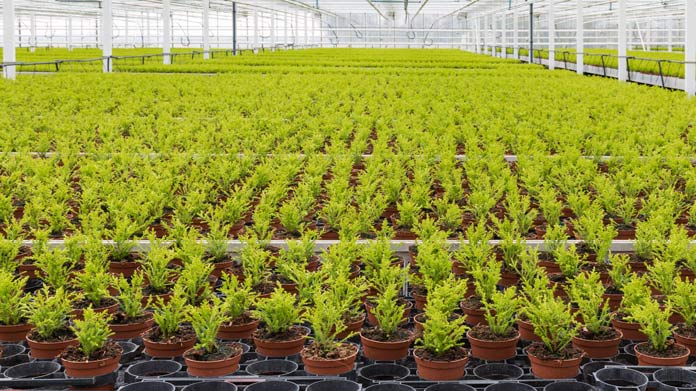
A hydroponic farm business grows and sells plants, vegetables, grass, and other forms of greenery to businesses and individuals. Examples of such businesses include grocery stores and restaurants. The twist to this style of business is water solvent is used to grow the plants rather than soil. Hydroponic farm businesses are usually located indoors. In many instances, these indoor environments are greenhouses. This business is an excellent way to give back to the community. Hydroponic farm business owners provide people with high-quality, nutritious, and tasty produce. These businesses also grow lovely flowers and other forms of greenery that beautify the local community. Furthermore, hydroponic farm businesses benefit the local environment as they are environmentally-friendly compared to conventional methods of farming.
Our guide is in 3 parts:
You need a space to grow your produce and other items. Most hydroponic farms require a greenhouse. Greenhouses can be built, rented, or purchased in all different sizes. Plan on spending anywhere between $10,000 and a couple hundred thousand dollars to build such a space. Greenhouses can be as small as a couple hundred square feet or as large as several thousand square feet. The exact cost hinges on the size of the facility you have in mind. Your hydroponic farm will require seeds, water solvent, lighting, grow tunnels, climate control systems, UV filtration, racks, towers, and nutrient reservoirs. Plan on spending at least several thousands of dollars for these supplies. Furthermore, your business will require office supplies, a computer for research, a high-speed internet connection, a desk, chairs, and possibly a cash register. You will also need a vehicle to transport your plants and produce to customers. Budget at least a thousand dollars for the office sundries. You can use your own vehicle if it has ample cargo space.
The hydroponic farm requires labor, insurance, seeds, equipment, utilities, delivery vehicle upkeep, and a facility such as a greenhouse to permit growth without outside interference. Hydroponic farm employees typically make between $8 and $12 per hour. It will cost at least a couple hundred dollars per month to maintain and fuel your delivery vehicle. Budget several hundred dollars for utilities as your hydroponic farm will require a significant amount of water and light to spur plant growth. Equipment won’t last forever. Plan on spending at least $200 per month for equipment upkeep and equipment replacement.
The target market is local restaurants and supermarkets. However, some hydroponic farms sell directly to the public.
This business makes money by selling produce, flowers, plants, grass, and other green items to customers. Customers include everyday people, restaurants, supermarket stores, schools and universities, and other facilities that serve food or buy plants.
You can charge a wide variety of prices. The exact prices you charge hinges on the items you grow and sell. The prices also hinge on your local market’s supply and demand. Specialize in a certain type of produce, grass, flower or other item and customers will be more than willing to pay a significant amount of money for your unique offering.
It is possible to make several hundred thousands of dollars per year. However, if you start out with a fairly small greenhouse or face a competitive market, your profits might not be that lofty. If you find enough customers, grow delicious produce, and have little competition, it is possible to grow your hydroponic farm business into an entity that generates millions of dollars per year.
Consider selling directly to customers. Subscription farming will also create an additional revenue source. If you sell items beyond produce, you will expand your customer base. Consider growing and selling herbs, general plants, flowers, grass, and even turf.
The typical workday at a hydroponic farm involves planting seeds, ensuring the watering system is functioning as designed, providing sufficient light, and preparing grown plants for sale. The grown plants must be plucked and transported to customers. Additional workday activities involve researching new hydroponic farming methods, ordering supplies, cleaning the facility, and performing market research regarding customers and prices.
Obtain a thorough understanding of horticulture. Study the nuances of other successful hydroponic farms. Make sure you are in this business for the right reasons. If you are insistent on providing people with delicious and healthy food that doesn’t harm the environment, you will eventually succeed. When in doubt, perform additional research on the best hydroponic farming methods. If possible, visit other hydroponic farmers and pick their brains. It will also help to start out by working at a hydroponic farm to gain a comprehensive understanding of the basics involved in this unique business.
This business is quite popular at the moment. The produce and plants grown at hydroponic farms are in heavy demand. There is an emerging trend toward purchasing produce from hydroponic farms as they are quite environmentally-friendly. Establish enough relationships with local buyers, grow high-quality produce and other forms of greenery, meet or beat competitors’ prices and this business will prove to be a raging success. If you make enough money, you can add additional greenhouses or other indoor growing environments in your town or adjacent towns to gradually grow the business.
Perform extensive research before committing to a specific hydroponic farm. There are numerous types of systems ranging from top drip to ebb and flow, wick, deep water culture, and beyond. You will also have to settle on a medium, lighting, and specific plants to grow. These are not decisions to take lightly. Conduct market research to find out what types of produce local restaurants and supermarkets are looking for. Be sure to cover all your bases in terms of the legal aspect of food sales. Any business that sells food requires licensing from the local health department. If you serve food on-site, your facility must pass a health inspection.
You need to build a team right away unless you plan on growing produce out of a small greenhouse. Add employees to monitor and facilitate plant growth, deliver produce to customers, collect the proceeds of sales, order supplies and equipment, and maintain the facility.
Read our hydroponic farm business hiring guide to learn about the different roles a hydroponic farm business typically fills, how much to budget for employee salaries, and how to build your team exactly how you want it.
Business Evaluation & Strategy Tool
We'll walk you through the four pillars every business needs: Points of Leverage, Marketing Strategy, Financial Model, and Personal Compatibility. At the end you'll see a personalized report and your action plan below will be tailored to your answers.
Every viable business has natural advantages. Below are common leverage points across four categories. Pick the ones that apply to your Hydroponic Farm business. We've pre-suggested a few based on your idea — review and adjust.
Without a way to connect with customers, even great businesses fail. Pick the channels you plan to use to reach your customers.
Enter your monthly baseline costs — the minimum overhead to keep the business running. Then we'll calculate how many sales per month you need to break even.
A business that doesn't fit your life will fail no matter how good the numbers look. Tell us how this business fits you.
Complete the four pillars and your personalized summary will appear here.
Nine concrete steps to take you from idea to open business, grouped into 30-day phases. Complete the planner above and we'll highlight what's most important for your situation.
An LLC keeps your personal assets separate from business debts and lawsuits — the most common reason small business owners choose this structure. Sole proprietorships and partnerships do not provide this protection.
Apply for your free Employer Identification Number through the IRS, then register for any state or local taxes that apply to your business (sales tax, franchise tax).
A dedicated business account is required to maintain personal asset protection. Mixing personal and business finances ('piercing the corporate veil') can void your LLC's liability shield.
Recording expenses and income from day one makes tax filing easier and lets you see when the business is actually profitable. Use software (QuickBooks, Wave) or a part-time bookkeeper.
State and local requirements vary widely. Brick-and-mortar businesses typically need a Certificate of Occupancy; service businesses may need specific professional licensing; food businesses need health permits.
General Liability Insurance is the most common starting point. If you'll have employees, most states require Workers' Compensation. Specific industries need additional coverage (product liability, professional liability, etc.).
Your brand is how customers perceive and remember you. A clear name, logo, and visual identity make every later marketing decision easier and protect you legally as you grow.
Every legitimate business needs a website. Social media pages are not a substitute — you don't own the platform. Modern website builders mean you can launch a clean site in a weekend without a developer.
A dedicated business number keeps your personal life private, makes the business look legitimate, and lets you route calls professionally. Cloud phone services start under $20/month.
Starting a Hydroponic Farm business typically costs $10,000 to $100,000. It is considered a high capital-intensity business.
A Hydroponic Farm business runs roughly a 4% net profit margin, and most owners reach break-even in about 4 to 12 months.
You can usually launch a Hydroponic Farm business in about 12 to 36 weeks, and it is commonly run full time.
A Hydroponic Farm business is generally an intermediate-skill business to start, with stable demand. TRUiC rates it 44 out of 100 on our Idea Score.
Most Hydroponic Farm businesses register as an LLC or other legal entity and obtain a general business license. Depending on your state and city you may also need industry-specific permits, sales tax registration, and zoning or health approvals, so check your local requirements before you launch.