Startup cost
$600–$1.0k
TRUiC Business Ideas
Decision Snapshot
Idea Score
53
Startup cost
$600–$1.0k
Profit margin
8%
Break-even
4 mo–12 mo
Time to launch
12 wk–36 wk
Demand trend
Stable
5-yr failure rate
—
Capital intensity
Low
Time commitment
Part time
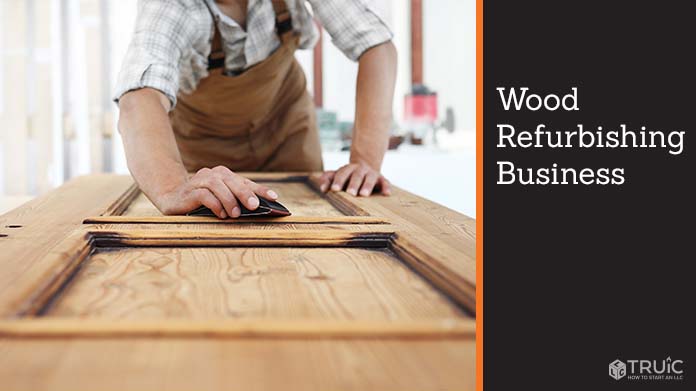
While many furniture pieces are now mass-produced and made of lesser materials, solid wood furniture is still sought after by many. A wood furniture refurbishing business finds old wood furniture pieces that have been thrown out or neglected and breathes new life into the piece.
From a simple refinishing to a complete custom makeover, wood refurbishing allows an individual to connect with customers who have the same appreciation for furniture that was built to last. A wood refurbisher will wear many hats while working from their home garage until they find the groove in their business that allows them to expand their team. However, the joy of working with a new piece of wooden furniture every day makes every bit of effort worth it.
Our guide is in 3 parts:
The costs involved in opening this type of business will largely depend on what tools you have available in your garage. If you already have many of the needed tools handy, this will significantly decrease the costs to get started. Some basic items needed to get started include a sander, sandpaper (180 grit and 220 grit minimum), scarper, screwdrivers (various sizes, both Phillips and flat head), paint buckets, painters tape, brushes (large, medium, small, and detail size), rollers, wood stain, polyurethane, wood paint, work table, gloves, respirator, and furniture.
If you did not have any of the tools to get started, the total costs involved would range from $600 to $1,000. Additionally, you would need to find furniture to practice on in order to hone your skills. This could be furniture you already have in the house, something you find on the side of the road, or something purchased from a thrift store. Starting prices can range anywhere from $0 to $100 per piece.
Ongoing expenses will often be your supplies and materials. You will quickly build a nice selection to use on your wood furniture. However, you will also go through some materials more quickly than others. Some of these recurring expenses include, but are not limited to, purchasing more wood stain, paint, painter’s tape, and sandpaper.
The target market for a wood furniture refurbishing business are individuals who are filling out their home with sturdy furniture pieces. These individuals crave original furniture that is not mass marketed and built to withstand the test of time. Since real wood furniture that has been refurbished is often more costly than other furniture options, these individuals tend to be well-off in their professional career or retired. The demographics of this market include those who are 35 to 60 years old with an income of $60,000+. A particular interest does not typically define this group, but they do all have a love for real wooden furniture.
This type of business makes money by finding real wood furniture for as cheap as possible. Once the furniture is found, you will restore the piece and make it look incredible using common woodworking products. Once the piece has been restored to its former glory, you will flip it for a nice profit. This can be anywhere from $50 to $200 or more, depending on the piece.
You need to charge what your time is worthwhile also covering your costs for supplies and the furniture. For the time and tools required, it is fair to start at $50 per hour. If you purchase a piece from a thrift store for $25, put $15 worth of products into it, and spend three hours on the piece, you are at a total material cost of $40 and labor cost of $150. You can easily charge $250 for this piece and gain $60 in profit.
The earning potential with this type of business is unlimited. Since some pieces may come to you free, and you can make hundreds in profits on just one piece. Other furniture pieces may come to you at a small cost, so they may only provide a small profit. If you can refurbish, list, and sell even just 10 pieces of furniture in your first month at a $50 or more profit, you can earn $500 in profit. This can make a significant dent in your initial startup costs. If you keep on this trend of 10 pieces at $50 profit per month, you can earn $6,000 in profit in your first year. The more you sell and the higher your profit margin, the more profit you will make every year.
The best way to make your business more profitable is to use as much free furniture as possible, shop for supply discounts, and hone your skills. The less money you have to put into each piece, the more you are going to make. If you get a free piece of furniture, use it! There is nothing wrong with asking your family or friends if they have any furniture they no longer want in their home.
In addition to using free furniture, purchase your stains, paints, brushes, and other supplies when there are sales. You can check big box stores and compare prices with local businesses. Find where your most commonly used supplies are cheapest and inquire when they do sales on these items. Once the sale begins, stock up!
Finally, by honing your skills, you will significantly decrease the amount of time you need to invest to complete a project. As you refurbish more wooden furniture, you will identify how to complete the task at hand more efficiently. This means you can finish more projects in less time. However, remember to keep charging appropriately. Just because something takes you 30 minutes now doesn’t mean you shouldn’t charge for the three hours of work it took you when you were learning these skills. You deserve to be paid fairly for the skills you have mastered.
You will get up somewhat early in the morning and go find your next piece of furniture. This will either be on the side of the road or at a thrift store. Once you find the piece, you will bring it home, clean it up, and get pictures and videos to show the piece’s initial state. Then, you get to work sanding and taking progress pictures.
Once the piece is sanded, you will decide if it needs an oil, stain, or paint. As you are waiting for the first coat of product to dry, you will tease your followers on social media with some progress pictures and videos to peak interest. If you have any inquiries, you will answer those. Additionally, you will check in on any other furniture pieces you may have been working on previously. Do those other pieces need another coat, or are they finally ready to be listed?
Once you have finished tending to other tasks, it’s time to get back to the piece at hand and add that second coat. From there, it is a waiting game. Once the piece is dry, it is time to get the best product pictures possible and write an attractive description. Now, you put the piece online and try to get others to share your latest creation.
Once the piece is up, you need to interact with other furniture refurbishers online. You will learn about the latest techniques and see some other great pieces. By now, the sun is setting and you will check in on your analytics to understand how profitable your business has been compared to other days.
The best thing about this business is you really do not need any specific skill set or past experiences to get started. Being comfortable with tools and knowing the difference between a Phillips head and a flat head will certainly help. However, all you really need is a passion for restoring wood to its former glory.
The growth potential for a wood furniture refurbishing business is dependent on how much time you invest and who you are targeting. This has the potential to grow into a six-figure business if you hone your skills and target the right people in your local area and online. Fortunately, you are not limited to the area where you live. You do, however, need to learn how to ship out these pieces if you sell them online. Your first year may only land you a couple of thousand dollars in profit, but it will allow you to gain the testimonials you need and build client relationships that produce return customers.
One of the best ways to grow your inventory without spending a penny on furniture is to monitor any bulk pick up days your local garbage company schedules. Once your neighbors put their furniture on the side of the road for pick up, it is fair game. You will be amazed at some of the high-quality furniture others are willing to throw away. Aside from paying for gas, this will allow you to grow your inventory for next to nothing.
If your area does not have a bulk pick up day, consider visiting local thrift stores and second-hand shops. You will find a wide array of low and high-quality pieces. While you will need to search through the store to find these treasures, you often will find pieces for less than $30 that are perfect to add to your inventory.
Finally, make sure you learn how to identify real wood from veneer or laminate. A few telltale signs that the furniture you are looking at is not real wood is the weight, joints, and grain. Real wood is incredibly heavy. Lightweight pieces are not made of real wood. Joints on real wood are often complicated in order to securely build the piece. Simple joints are often made of corkboard. Furthermore, you can feel the grain pattern on wood and see its depth. Veneer and laminate have a grain pattern painted on the surface.
The best time to assemble a team for this business is as soon as possible. A single piece of furniture can take one person several weeks to complete whereas just one other person can help cut that time in half. Due to the nature of the business, your team will need to be local. The closer they are to you, the better. You can employ anyone in your social circle who is interested, dependable, and reliable. If you don’t know anyone who fits the description, network online and in person until you find someone who does.
Your team can do more than just assist with refurbishing furniture. You can find someone who manages your online profiles and stores for you which allows you to focus solely on finding the best furniture deals that will turn the highest profit.
Business Evaluation & Strategy Tool
We'll walk you through the four pillars every business needs: Points of Leverage, Marketing Strategy, Financial Model, and Personal Compatibility. At the end you'll see a personalized report and your action plan below will be tailored to your answers.
Every viable business has natural advantages. Below are common leverage points across four categories. Pick the ones that apply to your Wood Refurbishing business. We've pre-suggested a few based on your idea — review and adjust.
Without a way to connect with customers, even great businesses fail. Pick the channels you plan to use to reach your customers.
Enter your monthly baseline costs — the minimum overhead to keep the business running. Then we'll calculate how many sales per month you need to break even.
A business that doesn't fit your life will fail no matter how good the numbers look. Tell us how this business fits you.
Complete the four pillars and your personalized summary will appear here.
Nine concrete steps to take you from idea to open business, grouped into 30-day phases. Complete the planner above and we'll highlight what's most important for your situation.
An LLC keeps your personal assets separate from business debts and lawsuits — the most common reason small business owners choose this structure. Sole proprietorships and partnerships do not provide this protection.
Apply for your free Employer Identification Number through the IRS, then register for any state or local taxes that apply to your business (sales tax, franchise tax).
A dedicated business account is required to maintain personal asset protection. Mixing personal and business finances ('piercing the corporate veil') can void your LLC's liability shield.
Recording expenses and income from day one makes tax filing easier and lets you see when the business is actually profitable. Use software (QuickBooks, Wave) or a part-time bookkeeper.
State and local requirements vary widely. Brick-and-mortar businesses typically need a Certificate of Occupancy; service businesses may need specific professional licensing; food businesses need health permits.
General Liability Insurance is the most common starting point. If you'll have employees, most states require Workers' Compensation. Specific industries need additional coverage (product liability, professional liability, etc.).
Your brand is how customers perceive and remember you. A clear name, logo, and visual identity make every later marketing decision easier and protect you legally as you grow.
Every legitimate business needs a website. Social media pages are not a substitute — you don't own the platform. Modern website builders mean you can launch a clean site in a weekend without a developer.
A dedicated business number keeps your personal life private, makes the business look legitimate, and lets you route calls professionally. Cloud phone services start under $20/month.
Starting a Wood Refurbishing business typically costs $600 to $1,000. It is considered a low capital-intensity business.
A Wood Refurbishing business runs roughly a 8% net profit margin, and most owners reach break-even in about 4 to 12 months.
You can usually launch a Wood Refurbishing business in about 12 to 36 weeks, and it is commonly run part time.
A Wood Refurbishing business is generally an intermediate-skill business to start, with stable demand. TRUiC rates it 53 out of 100 on our Idea Score.
Most Wood Refurbishing businesses register as an LLC or other legal entity and obtain a general business license. Depending on your state and city you may also need industry-specific permits, sales tax registration, and zoning or health approvals, so check your local requirements before you launch.