Startup cost
$1.5k–$10k
TRUiC Business Ideas
Decision Snapshot
Idea Score
62
Startup cost
$1.5k–$10k
Profit margin
8%
Break-even
4 mo–12 mo
Time to launch
2 wk–12 wk
Demand trend
Rising
5-yr failure rate
—
Capital intensity
Medium
Time commitment
Flexible
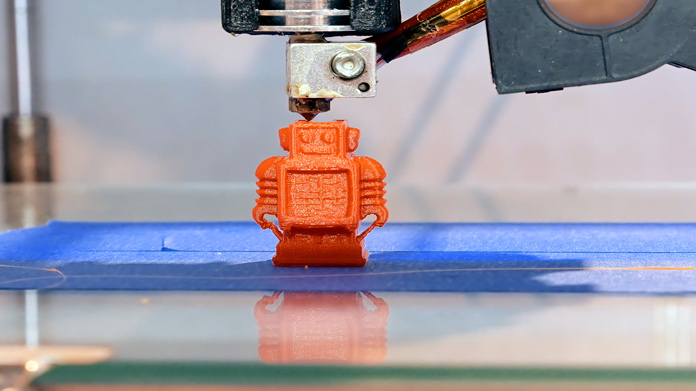
Starting a 3D printing design business can be an exciting and rewarding business venture for entrepreneurs who are passionate about creativity, innovation, and using cutting-edge technology to bring their unique designs to life.
Having said that, you should keep in mind that launching a successful 3D printing design business requires careful planning, a wide range of skills, and can sometimes involve significant investment.
In this comprehensive guide, we’ll walk you through all the essential steps you’ll need to take to start your own 3D printing design business, from budgeting your startup costs and developing a business plan to investing in the right equipment and obtaining the necessary licenses and permits.
Our guide is in 3 parts:
In 2023, the 3D printing industry in the US was valued at $20.37 billion, and is expected to further grow at a compound annual growth rate (CAGR) of 23.5% until 2030. This expansion is fueled by advances in 3D printing technologies and an increasing demand in industries like healthcare, automotive, and aerospace.
In addition to its clear commercial appeal, these technological innovations have made 3D printing particularly attractive for small-batch production and custom designs as they lower the barrier of entry to the necessary manufacturing processes and allow small businesses to reduce costs.
However, there are still a number of challenges that these smaller manufacturers face, the most prevalent being the wealth of technical knowledge needed to be able to effectively adopt 3D printing technologies.
Despite this, we believe that the 3D printing industry represents a significant opportunity for small business owners.
If you’re considering whether a 3D printing design business is right for you, the first thing you’ll need to know is whether it’s a) affordable, and b) worth the investment. I mean, how much can you actually make running your own 3D printing design business?
Well, it depends. The initial investment for a 3D printing design business varies widely based on factors such as the equipment and software you choose and the scale at which you plan to produce designs:
3D Printer and Equipment Choice: When starting out your business, the cost of purchasing your own 3D printer is one of the largest expenses you’ll likely face. There’s a wide range of options, with entry-level printers starting from as low as $500 and high-end commercial models reaching up to $6,000 or more. On top of the printer, a number of other pieces of equipment will also add to this cost, such as the filament you choose, post-processing tools, storage for materials, and quality control devices.
Software and Design Tools: If you decide to do the product design for your business as well, you’ll need to invest in a professional design software to be able to create models. Some of the most popular software options (e.g., AutoCAD or SolidWorks) can be very costly, with licensing fees that range from several hundred to several thousand dollars annually. However, there are also a number of reliable free alternatives available to you (e.g., Blender), which are more than capable for more basic work or that grant you temporary access to their premium tools.
Shipping Costs: In order to be able to send products to customers, you’ll need to invest in some basic shipping supplies when starting out — though this likely won’t represent as big of a portion of your startup costs as the two mentioned above. Overall, you’ll typically only need to spend around $100 to $200 dollars on essential shipping supplies such as boxes, filler material (e.g., bubble wrap or packing peanuts), and tape. However, this can increase if you decide to add more specialist equipment like a thermal label printer for more efficient label printing.
In terms of ongoing costs, one of the best aspects about operating a 3D printing business is that it’s relatively low-maintenance once you get it up and running, especially if you do so from home.
The primary recurring expenses include hosting your website (if you decide to create one), which generally costs less than $100 per year as well as the cost of re-stocking materials when you receive orders if you operate your own 3D printer.
The earning potential of your 3D printing design business will vary greatly based on the type of products and services you offer, the materials used in your products, and how effectively you can market your designs.
For example, while you may be able to charge between $15 and $75 for home decor items, larger, more intricate figurines and pieces of terrain for tabletop war games could sell for $200 or more.
While estimating exact profit figures can be challenging, 3D artists working for corporations typically earn around $53,000 per year on average. However, as an independent business owner, your actual profits could far exceed this depending on your ability to offer the right designs, appeal to niche markets, and execute effective marketing strategies.
Ultimately, maximizing your potential profits will often come down to how much you can increase your business’s visibility. To do this, consider writing guest blogs on websites that cater to your target audience, or offer to print items that fulfill a need in your community (e.g., prosthetics), to gain publicity and build relationships.
One of the major advantages of running a 3D printing business is how easily it can be scaled as your sales grow. Unlike many other businesses that require large initial investments, a 3D printing business allows you to start small and expand as your revenue increases, giving you the flexibility to grow at your own pace.
For example, if you start receiving more orders than one printer can handle, you can simply reinvest your profits in another one. Alternatively, if you find yourself shipping too many orders a day, spending an extra $200 to $300 on a thermal label printer can greatly streamline this process.
This is one business where your preferred clients may vary greatly depending on your area and if you choose to specialize in printing certain things.
One group that may become your favorite is hobbyists — from collectors wanting to replace parts for their model trains to gamers wanting you to print objects for their roleplaying campaign, hobbyists are that rare group that has very niche interests and the disposable income to accommodate those interests.
The price for your items will vary greatly according to their size, complexity, and the materials used. For instance, in the tabletop gaming niche, you might charge four dollars for a small item like a miniature shopping cart.
Conversely, you might charge upwards of two hundred dollars for large, complex terrain to be used in a tabletop war game. If you are printing through Shapeways, then they will help determine the price of the item using those same factors. The more niche your item, the more you can effectively charge, as customers have nowhere else to obtain that item.
The exact amount of profit you can make is difficult to determine. While one research company estimates that 3D artists make an average of $53,000 a year, this only describes those who do such work for corporations rather than themselves.
Regardless, your actual profit is like that of any other specialty shop: if you find the right combination of diverse products, niche markets, and relevant advertising, the sky’s the limit on your profit.
All of the ways to make your business more profitable will ultimately come down to making it more visible. Try to write guest blogs for websites that your audience reads in order to get noticed, or offer to print things your community may need (such as prosthetics) in order to build good relationships and gain publicity.
Business Evaluation & Strategy Tool
We'll walk you through the four pillars every business needs: Points of Leverage, Marketing Strategy, Financial Model, and Personal Compatibility. At the end you'll see a personalized report and your action plan below will be tailored to your answers.
Every viable business has natural advantages. Below are common leverage points across four categories. Pick the ones that apply to your 3d Printing business. We've pre-suggested a few based on your idea — review and adjust.
Without a way to connect with customers, even great businesses fail. Pick the channels you plan to use to reach your customers.
Enter your monthly baseline costs — the minimum overhead to keep the business running. Then we'll calculate how many sales per month you need to break even.
A business that doesn't fit your life will fail no matter how good the numbers look. Tell us how this business fits you.
Complete the four pillars and your personalized summary will appear here.
Nine concrete steps to take you from idea to open business, grouped into 30-day phases. Complete the planner above and we'll highlight what's most important for your situation.
An LLC keeps your personal assets separate from business debts and lawsuits — the most common reason small business owners choose this structure. Sole proprietorships and partnerships do not provide this protection.
Apply for your free Employer Identification Number through the IRS, then register for any state or local taxes that apply to your business (sales tax, franchise tax).
A dedicated business account is required to maintain personal asset protection. Mixing personal and business finances ('piercing the corporate veil') can void your LLC's liability shield.
Recording expenses and income from day one makes tax filing easier and lets you see when the business is actually profitable. Use software (QuickBooks, Wave) or a part-time bookkeeper.
State and local requirements vary widely. Brick-and-mortar businesses typically need a Certificate of Occupancy; service businesses may need specific professional licensing; food businesses need health permits.
General Liability Insurance is the most common starting point. If you'll have employees, most states require Workers' Compensation. Specific industries need additional coverage (product liability, professional liability, etc.).
Your brand is how customers perceive and remember you. A clear name, logo, and visual identity make every later marketing decision easier and protect you legally as you grow.
Every legitimate business needs a website. Social media pages are not a substitute — you don't own the platform. Modern website builders mean you can launch a clean site in a weekend without a developer.
A dedicated business number keeps your personal life private, makes the business look legitimate, and lets you route calls professionally. Cloud phone services start under $20/month.
Starting a 3d Printing business typically costs $1,500 to $10,000. It is considered a medium capital-intensity business.
A 3d Printing business runs roughly a 8% net profit margin, and most owners reach break-even in about 4 to 12 months.
You can usually launch a 3d Printing business in about 2 to 12 weeks, and it is commonly run flexible.
A 3d Printing business is generally an intermediate-skill business to start, with rising demand. TRUiC rates it 62 out of 100 on our Idea Score.
Most 3d Printing businesses register as an LLC or other legal entity and obtain a general business license. Depending on your state and city you may also need industry-specific permits, sales tax registration, and zoning or health approvals, so check your local requirements before you launch.