Startup cost
$15k
TRUiC Business Ideas
Decision Snapshot
Idea Score
73
Startup cost
$15k
Profit margin
80%
Break-even
4 mo–12 mo
Time to launch
2 wk–8 wk
Demand trend
Stable
5-yr failure rate
—
Capital intensity
Medium
Time commitment
Full time
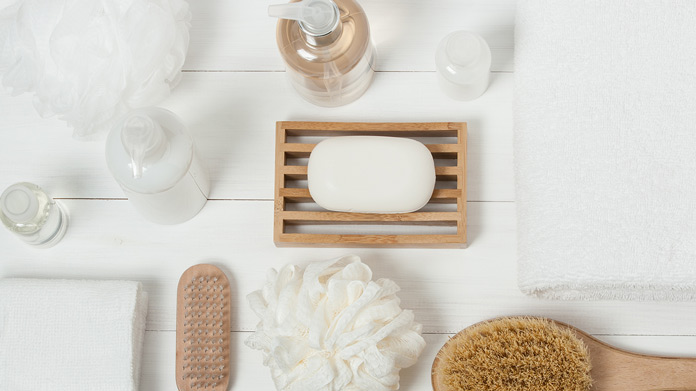
These days people are living healthier lives. Most of us are trying to eat better, reduce waste, recycle more and use natural products. An organic hygiene products business is perfectly positioned to provide people with all-natural soaps, shampoos, cosmetics, and feminine hygiene products.
Our guide is in 3 parts:
A lot of the cost of starting this type of business is for product formulation, manufacturing, and testing. Owners who do not have a background in formulating cosmetics can purchase existing formulations or pay someone to develop a unique formulation for them. Costs can range from hundreds to tens of thousands of dollars depending on the formula’s complexity and its ingredients. After formulation, products need testing which cost hundreds more. Finally, they need to be manufactured, bottled, and shipped. The average costs per unit is between two and three dollars.
Another expense will be getting your products organic certified. Certifying a product as organic is a long and expensive process which can cost thousands of dollars each year to renew per product.
The typical startup cost for an organic hygiene product business is around $15,000 per product. This is in addition to all the other normal start up any other business requires.
Potential organic hygiene products business owners who want to start a company more inexpensively, should look into working with private label hygiene companies.
The ongoing expenses include manufacturing, shipping, rent, labor, insurance, and yearly recertification.
The target market for organic hygiene products is middle and upper class women who care deeply about their health and the environment and are willing to pay a premium for an organic alternative to national brands.
These businesses make money by selling products straight to the consumer or distributing through a wholesale process to stores.
When it comes to how much consumers are willing to spend on organic hygiene products, the sky is the limit. Essential Wholesale & Labs, a private label company, suggests companies charge retail customers 5 to 6 times of the cost of the finished product and wholesale customer half of that price.
Retail profits margins are around 80% and wholesale profit margins are half that. Of course, not all of that is profit, but it is possible to make millions of dollars selling organic hygiene products.
Owners of organic hygiene products can expand their product line to include a wide range of products including hair care, skin care, and feminine hygiene products.
It can be very complicated to run an organic hygiene products business. There are a lot of moving parts. The largest of these parts is the manufacturing phase. The size and scope of manufacturing depends on the type and the amount of products a company requires. Since businesses usually outsource manufacturing duties, many owners spend a good portion of their days talking to manufacturers about their orders. The rest of the time, owners split between marketing to businesses and customers. Smaller companies tend to sell directly to customers either online and through retail stores. Larger companies have the brand recognition and inventory to sell wholesale.
Marketing is critical in this industry. It is important to understand the marketplace and know how to market to this unique niche of customers. The more experience owners have in marketing, the better they will be able to position their brand. It is very helpful to have a background in formulating and manufacturing organic hygiene products, but it is not essential. Many owners decide to outsource development and production or to purchase and relabel third-party products.
The overall growth of the industry is huge. Experts predict the industry will be worth close to 16 billion dollars by 2020. New brands entering this saturated market will need unique products and effective marketing to claim their share of sales.
Business owners should start small and grow slowly. Owners need to speak with their customers to ask for their opinions on which new products are worth developing. There is a lot of competition in this market and expanding too quickly can use up the capital necessary for marketing. Offer an unique selling proposition for the brand to make it stand out.
A team is essential from the start of this kind of business. Try to hire employees who are socially active and environmentally aware, since these kinds of people can be excellent brand ambassadors for the company.
Business Evaluation & Strategy Tool
We'll walk you through the four pillars every business needs: Points of Leverage, Marketing Strategy, Financial Model, and Personal Compatibility. At the end you'll see a personalized report and your action plan below will be tailored to your answers.
Every viable business has natural advantages. Below are common leverage points across four categories. Pick the ones that apply to your Organic Hygiene business. We've pre-suggested a few based on your idea — review and adjust.
Without a way to connect with customers, even great businesses fail. Pick the channels you plan to use to reach your customers.
Enter your monthly baseline costs — the minimum overhead to keep the business running. Then we'll calculate how many sales per month you need to break even.
A business that doesn't fit your life will fail no matter how good the numbers look. Tell us how this business fits you.
Complete the four pillars and your personalized summary will appear here.
Nine concrete steps to take you from idea to open business, grouped into 30-day phases. Complete the planner above and we'll highlight what's most important for your situation.
An LLC keeps your personal assets separate from business debts and lawsuits — the most common reason small business owners choose this structure. Sole proprietorships and partnerships do not provide this protection.
Apply for your free Employer Identification Number through the IRS, then register for any state or local taxes that apply to your business (sales tax, franchise tax).
A dedicated business account is required to maintain personal asset protection. Mixing personal and business finances ('piercing the corporate veil') can void your LLC's liability shield.
Recording expenses and income from day one makes tax filing easier and lets you see when the business is actually profitable. Use software (QuickBooks, Wave) or a part-time bookkeeper.
State and local requirements vary widely. Brick-and-mortar businesses typically need a Certificate of Occupancy; service businesses may need specific professional licensing; food businesses need health permits.
General Liability Insurance is the most common starting point. If you'll have employees, most states require Workers' Compensation. Specific industries need additional coverage (product liability, professional liability, etc.).
Your brand is how customers perceive and remember you. A clear name, logo, and visual identity make every later marketing decision easier and protect you legally as you grow.
Every legitimate business needs a website. Social media pages are not a substitute — you don't own the platform. Modern website builders mean you can launch a clean site in a weekend without a developer.
A dedicated business number keeps your personal life private, makes the business look legitimate, and lets you route calls professionally. Cloud phone services start under $20/month.
Starting an Organic Hygiene business typically costs $15,000. It is considered a medium capital-intensity business.
An Organic Hygiene business runs roughly a 80% net profit margin, and most owners reach break-even in about 4 to 12 months.
You can usually launch an Organic Hygiene business in about 2 to 8 weeks, and it is commonly run full time.
An Organic Hygiene business is generally an intermediate-skill business to start, with stable demand. TRUiC rates it 73 out of 100 on our Idea Score.
Most Organic Hygiene businesses register as an LLC or other legal entity and obtain a general business license. Depending on your state and city you may also need industry-specific permits, sales tax registration, and zoning or health approvals, so check your local requirements before you launch.