Startup cost
$700–$1.0k
TRUiC Business Ideas
Decision Snapshot
Idea Score
55
Startup cost
$700–$1.0k
Profit margin
6%
Break-even
4 mo–12 mo
Time to launch
2 wk–8 wk
Demand trend
Stable
5-yr failure rate
—
Capital intensity
Low
Time commitment
Full time
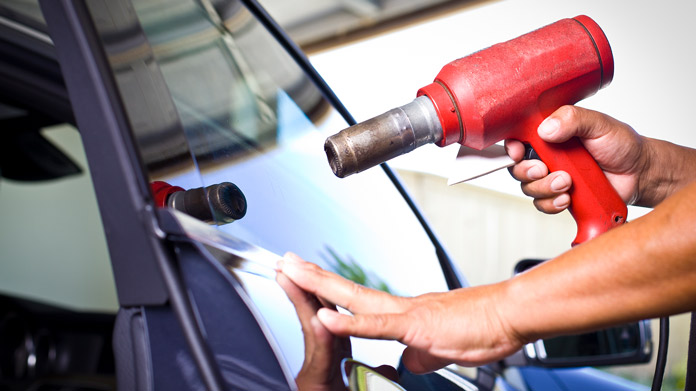
Window tinting is one of the most popular ways to customize vehicles. Window tinting businesses specialize in this form of aftermarket customization. Some businesses offer tinting services at an on-site location, while others provide mobile window tinting that can be at customers’ locations.
Our guide is in 3 parts:
The costs associated with opening a window tinting business vary dramatically. On the low end, Advanced Window Tinting requires an investment of $2,995 and recommends that business owners have an additional $700 to $1,000 in available capital. On the high end, Tint World offers a turn-key franchise for $108,000.
Window tinting courses frequently start at $1,700, with some offering premium packages at higher prices. This is an additional expense that business owners should be prepared for.
Business owners who want to keep their startup costs as low as possible can work in the industry and then open a mobile window tinting business. Spending six months to a year working in the industry will give business owners the skills and knowledge needed to tint windows — and save them $1,700 on a training course. Opening a mobile business keeps upfront costs low, because business owners don’t have to lease a commercial space.
Streidel began his first mobile window tinting business with just his cell phone, personal vehicle and a box of tint. This reduced his startup expenses to just a box of window tint, which can be purchased for under $100.
The ongoing expenses for a window tinting business are manageable. They generally include:
fuel and maintenance costs for a vehicle (for mobile businesses)
lease payments and utilities (for businesses with a fixed location)
tinting supplies
any employees’ salaries
A window tinting business’ ideal customers are car dealerships. As Laurence Streidel explains, dealerships can take a long time — 30 days on average — to pay; however, they provide a regular source of work. During slow periods, the regular work that dealers provide more than makes up for their long payment cycles.
As an added bonus, dealerships frequently serve as a source of referrals. Car buyers will sometimes ask dealerships where they can get the windows of their new vehicle tinted.
A window tinting business makes money by charging customers to tint their vehicle’s windows. Businesses frequently offer several different levels of tinting that customers can choose from. For example, Notorious Tintz offers 3M-Crystalline, 3M-FX-Premium and 3M-Color Stable tinting options. Pricing depends on the type of tinting that customers opt to go for.
How much window tinting businesses charge depends on their location and the tinting services they offer. Yelp reports that the nationwide average cost for standard window tinting services is $195, with an average of $50 per window. Depending on the type of tint, the size of the car, the difficulty of the job, and the location, pricing can get up to as much as $800.
A successful window tint business can service four to ten cars per day. If the average cost of a job is $225, a business may bring in between $900 and $2,250 per day.
Window tinting businesses can increase their revenue by also offering window tinting services for buildings, but the demand for tinting the windows of homes and commercial buildings isn’t as great as the demand for automotive tinting. Businesses already have the supplies and equipment required, though, so this is a natural market to branch into.
Window tinting business owners spend most of their time cutting and applying tint to windows. When not actually tinting windows, business owners:
drive to and from customers’ locations (if offering mobile services)
market their business
invoice corporate customers (e.g. car dealerships)
order more tinting supplies
Window tinting business owners must know how to properly tint windows.
Business owners can learn how to apply window tint by taking an in-person course, which several schools offer for a fee. Tint College, Rightoutlook.com and AutoWindowTinting.com are a few companies that offer courses. (Because applying tint is a manual process, most courses are in-person and not online.)
Additionally, many companies that offer window tinting systems provide training on how to use their system. This training is usually included in the cost of a system. For example, Advanced Window Tinting offers free support to business owners who buy the company’s Film Star Machine. Such support is not always in-person, so it is still wise to invest in a hands-on course first.
Window tinting businesses are highly scaleable. A business can start out as a small mobile operation, and then invest in an upgraded vehicle or permanent location once the business is more established. Successful businesses can grow to have multiple locations.
One of the first decisions that business owners must make is whether they want to invest in a computerized tint cutting system or manually cut tint themselves. Cutting tint takes between 10 and 30 minutes per job, which greatly reduces efficiency. Computerized cutting, however, requires a sizeable upfront investment in software and machinery.
While the efficiency that a computerized system offers is appealing, it’s not necessary to have until a business is established and doing lots of work. Therefore, business owners can start out manually cutting tint. Once their customer base is built up, they can transition to a computerized program. At this point, their revenue should support such an investment.
A window tinting business can be run as a one-person operation, or it can grow to have several employees. Most business owners hire employees as their business grows and supports employees’ salaries. The average window tinter’s salary is $13 per hour.
Business Evaluation & Strategy Tool
We'll walk you through the four pillars every business needs: Points of Leverage, Marketing Strategy, Financial Model, and Personal Compatibility. At the end you'll see a personalized report and your action plan below will be tailored to your answers.
Every viable business has natural advantages. Below are common leverage points across four categories. Pick the ones that apply to your Window Tinting business. We've pre-suggested a few based on your idea — review and adjust.
Without a way to connect with customers, even great businesses fail. Pick the channels you plan to use to reach your customers.
Enter your monthly baseline costs — the minimum overhead to keep the business running. Then we'll calculate how many sales per month you need to break even.
A business that doesn't fit your life will fail no matter how good the numbers look. Tell us how this business fits you.
Complete the four pillars and your personalized summary will appear here.
Nine concrete steps to take you from idea to open business, grouped into 30-day phases. Complete the planner above and we'll highlight what's most important for your situation.
An LLC keeps your personal assets separate from business debts and lawsuits — the most common reason small business owners choose this structure. Sole proprietorships and partnerships do not provide this protection.
Apply for your free Employer Identification Number through the IRS, then register for any state or local taxes that apply to your business (sales tax, franchise tax).
A dedicated business account is required to maintain personal asset protection. Mixing personal and business finances ('piercing the corporate veil') can void your LLC's liability shield.
Recording expenses and income from day one makes tax filing easier and lets you see when the business is actually profitable. Use software (QuickBooks, Wave) or a part-time bookkeeper.
State and local requirements vary widely. Brick-and-mortar businesses typically need a Certificate of Occupancy; service businesses may need specific professional licensing; food businesses need health permits.
General Liability Insurance is the most common starting point. If you'll have employees, most states require Workers' Compensation. Specific industries need additional coverage (product liability, professional liability, etc.).
Your brand is how customers perceive and remember you. A clear name, logo, and visual identity make every later marketing decision easier and protect you legally as you grow.
Every legitimate business needs a website. Social media pages are not a substitute — you don't own the platform. Modern website builders mean you can launch a clean site in a weekend without a developer.
A dedicated business number keeps your personal life private, makes the business look legitimate, and lets you route calls professionally. Cloud phone services start under $20/month.
Starting a Window Tinting business typically costs $700 to $1,000. It is considered a low capital-intensity business.
A Window Tinting business runs roughly a 6% net profit margin, and most owners reach break-even in about 4 to 12 months.
You can usually launch a Window Tinting business in about 2 to 8 weeks, and it is commonly run full time.
A Window Tinting business is generally an intermediate-skill business to start, with stable demand. TRUiC rates it 55 out of 100 on our Idea Score.
Most Window Tinting businesses register as an LLC or other legal entity and obtain a general business license. Depending on your state and city you may also need industry-specific permits, sales tax registration, and zoning or health approvals, so check your local requirements before you launch.