Startup cost
$120k–$300k
TRUiC Business Ideas
Decision Snapshot
Idea Score
49
Startup cost
$120k–$300k
Profit margin
6%
Break-even
4 mo–12 mo
Time to launch
2 wk–8 wk
Demand trend
Rising
5-yr failure rate
—
Capital intensity
Very high
Time commitment
Full time
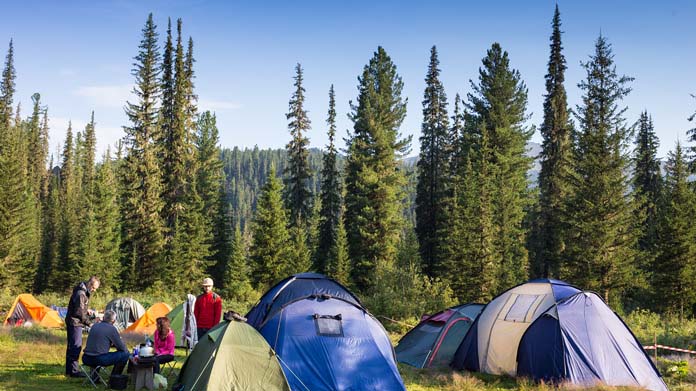
Americans across the country are realizing the benefits of spending time outdoors. It’s a time to escape from everyday life, clear the mind, and get a little exercise in the process. Like many hobbies, most outdoor activities require special clothing and/or gear. As part of a new consciousness, many consumers are choosing to spend their money at small, locally owned businesses, as opposed to the larger retail chains.
Our guide is in 3 parts:
Your first task is to decide on a location. Try to pick an affordable space with ample foot traffic and parking. The business’ short and long-term goals should play a factor, as should the condition and setup of the space. Balance is key – you want something you can grow into, but your space should not feel empty while you’re building your inventory. While rent and deposit costs vary by region, plan on budgeting for $4,000 – $5,000 to secure a location.
Once you’ve found a place to call “home,” you can start designing and filling the space. Include these items in your budget:
Construction costs for customizing the store – $3,000 to $8,000
Fixtures – purchase racks, shelves, mannequins, counter/checkout area, and lighting. This will account for approximately $3,500. Many of these items can be purchased used, reducing your overall budget.
Clothing hangers – up to $1,000
Inventory – this number varies depending upon the specifics of your store and the retailers you choose to work with.
Computer, accessories, internet, and phone system – $1,000
POS software, customized to fit the needs of your retail business – $1,000 – $3,500
Website – $1,500 – $3,500, depending upon your specific needs
Marketing materials – exterior and interior signs, logo design, business cards, coupon design/printing – store owners have reported spending close to $9,000 on these materials.
Grand opening event – this is a great way to introduce the business to your community. $1,500
Insurance – cost will vary depending upon the specifics of your business
The Outdoor Industry Association and American Outdoors Association both offer industry insight and advice to help start your business and market for long-term growth.
There are a number of factors that will influence your ongoing expenses. The size of the space you occupy, how much inventory you order each month, and the number of employees will all factor into your monthly budget. Retail shop owners advise budgeting for between $6,000 and $21,000 per month.
Your customer base will individuals ranging from the novice outdoorsmen, eager to learn everything about their new hobby, to experienced individuals. You have a unique opportunity to build a relationship with each of these classes of people. It is also important to converse with and listen to your customers, as you will be able to gain a better understand of activities that you are not as knowledgeable about, and you will also be able to survey the needs and wants of your customers.
A retail business generates money from the sale of each item. Many outdoor stores offer additional services, such as equipment rentals, which serve as an additional source of revenue and an effective marketing tool.
Pricing varies from product to product. Items are purchased at cost and marked up to ensure a reasonable return on your investment. If you’re inexperienced in pricing merchandise, ask your manufacturer for assistance.
Owners typically report earning little to no profit the first one to three years (standard for most startup businesses). With the right business plan in place, however, several have reported a profit of up to $64,000 going into their third year. To ensure profitability, keep up with the latest outdoor trends and invest in inventory with a higher profit margin whenever possible.
To increase your shop’s annual profit, consider implementing some of these strategies:
Research any special events that are held in your area targeting specific activities/hobbies.
Approach event coordinators and offer to volunteer, sponsor, or vend at the events.
Host classes geared towards various activities such as how to tie fishing flies or how to properly use cutting edge hunting calls. Make sure you make yourself available to every skill level.
Host “field trips.” Such trips can include hiking, fishing, or hunting trips. These can be educational and social events, offering customers a chance to bond with people of similar interest. Approach your retailers to see if they’d be willing to send a representative to the event.
In the retail business, there are a number of tasks that will keep you busy from one day to the next. Some of your duties include:
Keeping up with inventory and place orders for items you’re running low on
Rotating/rearranging in-store and window displays
Interacting with customers and assist them in identifying which items best suit their needs
Spending time with customers, offering advice and allowing them to share what they’ve learned and experienced thus far
Researching the latest trends, try out new products, and share your knowledge with customers
Attending local outdoor activities
Marketing
As with every business, there are a number of administrative duties you’ll be tasked with. As the store grows and you’re able to build a trusted team, many of these responsibilities can shift to the store manager.
Leaders in the retail industry agree that there are three critical skills you must possess to run a successful outdoor store. First, you must have strong interpersonal skills. Your days will be spent interacting with people, offering advice and, more often than not, learning from their experiences. This leads us to the next skill, which is that you must be modest enough to realize that there’s always more to learn. Lastly, it’s critical, particularly in this industry, that you be astute enough to surround yourself with people whose strengths are different from yours. This allows for an educational, give-and-take environment.
A recent study revealed that over 140 million U.S. citizens incorporate outdoor activities into their daily schedule, spending almost $646 billion annually. As consumers recognize the health and social benefits to outdoor recreation, it’s shifted from being a luxury to a “must have.” This offers entrepreneurs significant growth opportunity, particularly in regions with an abundance of outdoor activities to choose from.
Entrepreneurs who’ve found success in this industry offer the following advice:
Consider your demographic when setting store hours. If part of your client base goes hunting at 4am during turkey season, make sure you’re open. You never know what last minute supplies they might need.
Make sure your staff is knowledgeable and friendly. If they don’t know the answer, they shouldn’t be afraid to say, “I’m not sure, but let me find out.”
Stock your inventory with a mixture of items that can be purchased at the larger retail chains and gear that can’t be purchased within a certain radius.
Your logo can make or break you in this industry. Hire a professional.
Unless you have a significant amount of experience, take a basic business course at your local college or utilize your county’s small business resources.
Carefully select your team members. Delivering stellar customer service and educating each individual that enters your store should be of the highest priority to your employees. Your dream team should be diverse in their knowledge of various outdoor activities and willing to go above and beyond to find the answers they don’t already have.
Business Evaluation & Strategy Tool
We'll walk you through the four pillars every business needs: Points of Leverage, Marketing Strategy, Financial Model, and Personal Compatibility. At the end you'll see a personalized report and your action plan below will be tailored to your answers.
Every viable business has natural advantages. Below are common leverage points across four categories. Pick the ones that apply to your Outdoor Store business. We've pre-suggested a few based on your idea — review and adjust.
Without a way to connect with customers, even great businesses fail. Pick the channels you plan to use to reach your customers.
Enter your monthly baseline costs — the minimum overhead to keep the business running. Then we'll calculate how many sales per month you need to break even.
A business that doesn't fit your life will fail no matter how good the numbers look. Tell us how this business fits you.
Complete the four pillars and your personalized summary will appear here.
Nine concrete steps to take you from idea to open business, grouped into 30-day phases. Complete the planner above and we'll highlight what's most important for your situation.
An LLC keeps your personal assets separate from business debts and lawsuits — the most common reason small business owners choose this structure. Sole proprietorships and partnerships do not provide this protection.
Apply for your free Employer Identification Number through the IRS, then register for any state or local taxes that apply to your business (sales tax, franchise tax).
A dedicated business account is required to maintain personal asset protection. Mixing personal and business finances ('piercing the corporate veil') can void your LLC's liability shield.
Recording expenses and income from day one makes tax filing easier and lets you see when the business is actually profitable. Use software (QuickBooks, Wave) or a part-time bookkeeper.
State and local requirements vary widely. Brick-and-mortar businesses typically need a Certificate of Occupancy; service businesses may need specific professional licensing; food businesses need health permits.
General Liability Insurance is the most common starting point. If you'll have employees, most states require Workers' Compensation. Specific industries need additional coverage (product liability, professional liability, etc.).
Your brand is how customers perceive and remember you. A clear name, logo, and visual identity make every later marketing decision easier and protect you legally as you grow.
Every legitimate business needs a website. Social media pages are not a substitute — you don't own the platform. Modern website builders mean you can launch a clean site in a weekend without a developer.
A dedicated business number keeps your personal life private, makes the business look legitimate, and lets you route calls professionally. Cloud phone services start under $20/month.
Starting an Outdoor Store business typically costs $120,000 to $300,000. It is considered a very high capital-intensity business.
An Outdoor Store business runs roughly a 6% net profit margin, and most owners reach break-even in about 4 to 12 months.
You can usually launch an Outdoor Store business in about 2 to 8 weeks, and it is commonly run full time.
An Outdoor Store business is generally an intermediate-skill business to start, with rising demand. TRUiC rates it 49 out of 100 on our Idea Score.
Most Outdoor Store businesses register as an LLC or other legal entity and obtain a general business license. Depending on your state and city you may also need industry-specific permits, sales tax registration, and zoning or health approvals, so check your local requirements before you launch.