Startup cost
$10k–$100k
TRUiC Business Ideas
Decision Snapshot
Idea Score
57
Startup cost
$10k–$100k
Profit margin
6%
Break-even
4 mo–12 mo
Time to launch
2 wk–8 wk
Demand trend
Rising
5-yr failure rate
—
Capital intensity
High
Time commitment
Seasonal
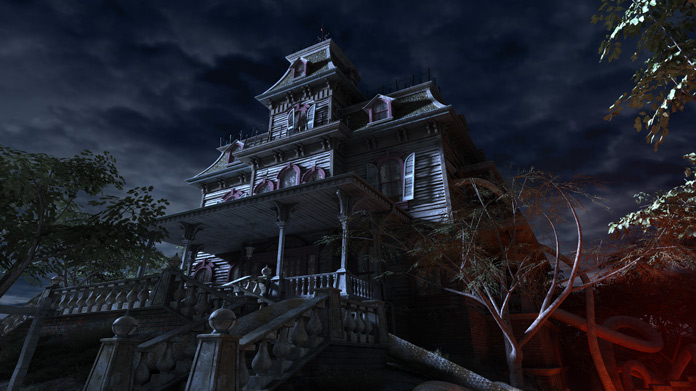
A haunted thrill park is any space designed to entice customers by offering a scary or thrilling experience. Americans spend about $7 billion on Halloween, and $300 million on haunted houses. Haunted thrill parks may be located in makeshift, temporary houses, corn mazes, or even old prisons or asylums. Typically, workers will dress up in costumes and pop out at customers to give them a fright. Props such as fake chainsaws or straight jackets are often used alongside fog machines and soundtracks of creepy noises.
Our guide is in 3 parts:
This is heavily dependent on the type of experience you offer. Costs may vary depending on the state or neighborhood. To rent out an old jail or asylum, you may end up spending hundreds of thousands of dollars to secure the space. Huge attractions in major cities can total $100,000 just for lighting and sound alone. However, if you have portable attractions that can be set up at carnivals around the nation, you can likely get away with as little as $10,000 for everything. If you own your own farm, you can do haunted hayrides to cover the cost of the costumes and the actors.
Because this business is somewhat seasonal, ongoing expenses are low.
Rent/property costs
Employee wages
Prop replacement
Advertising costs
Commercial insurance
Sound/lighting equipment maintenance
Your best clients are normally young people (teenagers) with a taste for adrenaline. Older people may have conditions where they can’t engage in heart-racing activities. Those who visit you should be people who understand that no matter how scary things may seem, they are never in any real danger.
Haunted houses generally charge a flat fee to participate in one or more houses. These costs need to cover and exceed the cost of the space, employee salaries, and props.
Haunted house tickets are typically anywhere from $15 to $40, but they can go even higher than that. People may spend as much as $100 or more on a custom experience.
The large attractions can make up to $3 million a year, while even the small businesses may make around $50,000. Your profits will be dependent on your resourcefulness when it comes to finding the equipment, costumes, and actors. For example, you may want to find all of your costumes solely at thrift stores for additional savings.
Considering Halloween is such a profitable holiday, you can become a consultant for would-be business owners. Or you can look into other thrilling experiences as well. For example, escape rooms trap participants in a room, and invite the players to solve puzzles and mysteries in a given amount of time to get out of the room. These can be kept open all year round, but are typically only popular in the larger cities.
Owners typically deal with the following activities on a daily basis.
Finding/booking facilities
Traveling to different towns
Hiring workers
Designing/buying costumes
Creating scary scenes
Advertising the business
This is the right business for someone who is a jack-of-all-trades type. For the most part, it will require owners who are extremely thorough when it comes to making decisions. There are many things that can go wrong when opening a haunted thrill park, so it comes down to how well you’ve planned for the catastrophes. It will also take a certain amount of people skills and a real interest in the science of horror.
Owners should have an idea of what their customers want to see in their particular location. Offering different experiences is the best way to get people interested in what you do. Today, many haunted house owners are concentrating on more interactive experiences rather than just having people walk through a house.
A haunted house is a niche market, but there is still room for growth. While haunted houses are more popular during Halloween, they can technically be run all-year round which can generate a lot of growth. If you’re able to come up with creative scenes and employ the right workers, you may find that you can branch out to more towns throughout the U.S. as well.
Because the costs to get started can be so high and the public interest is highest in October, many people end up losing money on their first year. You should think of a haunted thrill park as a time investment, as it may be a few years before you make your money back on the initial costs.
To ensure you meet your goals sooner rather than later, you need to pay attention to what’s happening with your core market. Television series like Fear Factor, Naked and Afraid, or American Horror Story can inspire new ideas and help your business stay trendy with your demographic. The public doesn’t necessarily need extremely expensive effects, but they do need an experience they’ll want to tell their friends about.
Your actors will be the key to your success, so you’ll need to get them scheduled at least a few weeks in advance. They’ll need to not only be scary, but also flexible enough to add a little of their own personality into the mix. Staying in character is important, but that doesn’t mean the character has to be one-dimensional. Chances are, you’ll get a lot of younger people applying, but that may just mean you’ll have a lot of untapped potential in your midst.
Business Evaluation & Strategy Tool
We'll walk you through the four pillars every business needs: Points of Leverage, Marketing Strategy, Financial Model, and Personal Compatibility. At the end you'll see a personalized report and your action plan below will be tailored to your answers.
Every viable business has natural advantages. Below are common leverage points across four categories. Pick the ones that apply to your Haunted House business. We've pre-suggested a few based on your idea — review and adjust.
Without a way to connect with customers, even great businesses fail. Pick the channels you plan to use to reach your customers.
Enter your monthly baseline costs — the minimum overhead to keep the business running. Then we'll calculate how many sales per month you need to break even.
A business that doesn't fit your life will fail no matter how good the numbers look. Tell us how this business fits you.
Complete the four pillars and your personalized summary will appear here.
Nine concrete steps to take you from idea to open business, grouped into 30-day phases. Complete the planner above and we'll highlight what's most important for your situation.
An LLC keeps your personal assets separate from business debts and lawsuits — the most common reason small business owners choose this structure. Sole proprietorships and partnerships do not provide this protection.
Apply for your free Employer Identification Number through the IRS, then register for any state or local taxes that apply to your business (sales tax, franchise tax).
A dedicated business account is required to maintain personal asset protection. Mixing personal and business finances ('piercing the corporate veil') can void your LLC's liability shield.
Recording expenses and income from day one makes tax filing easier and lets you see when the business is actually profitable. Use software (QuickBooks, Wave) or a part-time bookkeeper.
State and local requirements vary widely. Brick-and-mortar businesses typically need a Certificate of Occupancy; service businesses may need specific professional licensing; food businesses need health permits.
General Liability Insurance is the most common starting point. If you'll have employees, most states require Workers' Compensation. Specific industries need additional coverage (product liability, professional liability, etc.).
Your brand is how customers perceive and remember you. A clear name, logo, and visual identity make every later marketing decision easier and protect you legally as you grow.
Every legitimate business needs a website. Social media pages are not a substitute — you don't own the platform. Modern website builders mean you can launch a clean site in a weekend without a developer.
A dedicated business number keeps your personal life private, makes the business look legitimate, and lets you route calls professionally. Cloud phone services start under $20/month.
Starting a Haunted House business typically costs $10,000 to $100,000. It is considered a high capital-intensity business.
A Haunted House business runs roughly a 6% net profit margin, and most owners reach break-even in about 4 to 12 months.
You can usually launch a Haunted House business in about 2 to 8 weeks, and it is commonly run seasonal.
A Haunted House business is generally an intermediate-skill business to start, with rising demand. TRUiC rates it 57 out of 100 on our Idea Score.
Most Haunted House businesses register as an LLC or other legal entity and obtain a general business license. Depending on your state and city you may also need industry-specific permits, sales tax registration, and zoning or health approvals, so check your local requirements before you launch.