Startup cost
$10k–$50k
TRUiC Business Ideas
Decision Snapshot
Idea Score
71
Startup cost
$10k–$50k
Profit margin
25%
Break-even
9 mo–24 mo
Time to launch
2 wk–12 wk
Demand trend
Stable
5-yr failure rate
—
Capital intensity
Medium
Time commitment
Full time
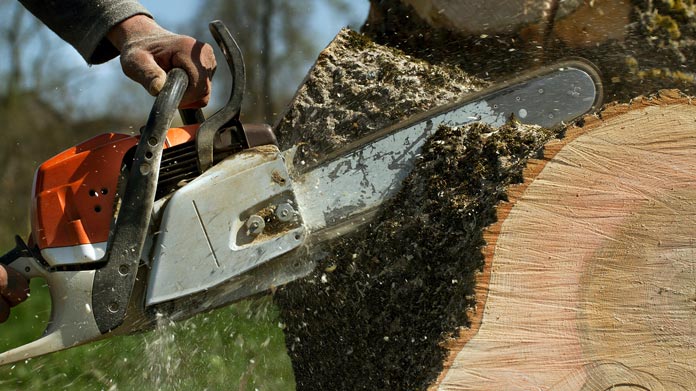
Tree service providers are incredibly important to homeowners. Responsible for the installation and removal of trees, these businesses take care of households and businesses alike. They additionally help property owners with weekly, monthly and annual maintenance, including trimming and pruning. In the event of an emergency, a tree service business will remove roots, remove stumps, move fallen tree branches and remove entire trees. They’re knowledgeable about local codes and regulations, helping property owners maintain operations legally.
Our guide is in 3 parts:
A tree service business’ startup costs are typically between $10,000 and $50,000. It’s a hefty sum, accounting for a business license, liability insurance, disability insurance, a warehouse, auto insurance, equipment insurance, umbrella insurance and workers’ comp. The cost additionally includes your business’s many equipment needs, including trucks, safety gear, ladders, chainsaws, a wood chipper, pruning shears, computers, wheelbarrows, invoicing software, an accounting system, a payroll system, business cards, a professional website and estimate forms.
Firstly, a tree service provider must pay its technicians between $10 and $23, per hour, to work. This approximates to between $21,000 and $49,700 per year—on average. You’ll need to purchase safety equipment whenever your current equipment is degraded or outdated. Gas, too, is a common expense. As part of your financial planning, you’ll need to take care of vehicle and equipment depreciation. Aside from these expenses, much of your ongoing money will be directed towards promotion and insurance costs.
Tree service companies thrive when working for commercial clients. While you’ll mostly encounter residential clients, commercial land owners require constant tree upkeep to maintain land permit standards. They’re lucrative, professional and easy to work with. Because commercial property owners require consistent services, they’re easy to profile—making services quick, effective and thus incredibly cost effective.
As a tree care provider, your business will make most of its money by maintaining various properties. While installation, removal and emergency services offer decent lump-sum payoffs, monthly trimming and pruning are far more reliable. Tree rescue, root removal, pressure cutting and branch removal, too, are lucrative jobs. Because they’re in high demand—as not purchasing them can be disastrous—a tree service provider offering highly skilled services can make decent money.
You should charge clients between $75 and $1,400 per job, depending upon the task’s complexity. Additionally, you can charge more if a lot of time—or a lot of risk—is involved. Artisan tree cutting and large projects, on average, cost more. If you want to be a competitive provider, consider offering free, or low-priced, emergency services.
Individual tree service providers, as stated above, make between $21,000 and $49,000 per year. A tree service business, however, can make about $100,000 to $200,000 in annual gross income. After expenses are deducted, annual profit is around $50,000. These profits are, however, based on average-sized tree service businesses—which are mostly small businesses. It’s entirely possible to shoot past these numbers, becoming a preferred provider in your area.
Make the jump to commercial tree care as soon as possible, as it pays better, has more reliability and will fortify your promotion network. A lot of businesses have partners—and these partners can become your partners. Get good at networking, and prioritize quick, consistent services. Consider expanding your services to other outdoor or garden services for additional income.
As a tree care business owner, you’ll be responsible for securing relationships with lenders while registering with local, county and state agencies. You’ll also need to secure and maintain operating permits and licenses. As a decision maker, you’ll conduct competitive analysis and make long-range objectives. Your workers will need to be skilled, insured and understand your business’s equipment intimately. On the service end, day-to-day activities include tree installation and removal quoting, actual installation and removal, trimming, pruning and emergency services. During bad weather—or other emergencies—your business will need to be “on call,” to help local property owners.
Before taking on an administrative role, you’ll need to understand the basics of tree care. On the technician level, you’ll need to have experience with tree felling, knot creation, A-1 climber use, tree rescue, tree trimming, pressure cutting, chainsaw usage, equipment maintenance and wood disposal. Joining a trade school can help.
From an administrative standpoint, you’ll need to be a capable advertiser. You’ll also need to garner service leads. Tree care, in particular, is a lead-heavy business practice. It’s a good idea to obtain small business consulting, too. It additionally pays off to be well-versed in your area’s property regulations, landscaping laws and hardscaping laws.
A good tree service provider can become a cross-state staple. That said, a lot of tree service providers are local businesses. Property owners have surprisingly little knowledge about tree service providers, which keeps the market open from a small business standpoint. If a local provider offers competitive pricing, incredibly fast services and skilled labor, it will experience a lot of service. A local tree service business can grow large if its business plan capably serves multiple areas.
As a tree service provider, you should specialize in either personal lawn trimming or commercial tree care. By having such a niche, you’ll hit a much-needed market angle to get off the ground. By focusing on public spaces, you’ll secure more consistent work. You will, however, need to have a bigger team. If you want to provide personalized lawn care, you can get by with a smaller but highly skilled team.
You’ll need to hire independent contractors immediately. They’re cheaper than highly-skilled tree care labor. That said, you should invest in a highly-trained tree crew as soon as you can afford it. If you have friends in the business who are looking for work, offer them a job. You could also search for general labor on Craigslist. Because tree care is incredibly labor-intensive, you’ll need human resources as soon as possible. Aim for at least 10 technicians, as a starting point.
Business Evaluation & Strategy Tool
We'll walk you through the four pillars every business needs: Points of Leverage, Marketing Strategy, Financial Model, and Personal Compatibility. At the end you'll see a personalized report and your action plan below will be tailored to your answers.
Every viable business has natural advantages. Below are common leverage points across four categories. Pick the ones that apply to your Tree Service business. We've pre-suggested a few based on your idea — review and adjust.
Without a way to connect with customers, even great businesses fail. Pick the channels you plan to use to reach your customers.
Enter your monthly baseline costs — the minimum overhead to keep the business running. Then we'll calculate how many sales per month you need to break even.
A business that doesn't fit your life will fail no matter how good the numbers look. Tell us how this business fits you.
Complete the four pillars and your personalized summary will appear here.
Nine concrete steps to take you from idea to open business, grouped into 30-day phases. Complete the planner above and we'll highlight what's most important for your situation.
An LLC keeps your personal assets separate from business debts and lawsuits — the most common reason small business owners choose this structure. Sole proprietorships and partnerships do not provide this protection.
Apply for your free Employer Identification Number through the IRS, then register for any state or local taxes that apply to your business (sales tax, franchise tax).
A dedicated business account is required to maintain personal asset protection. Mixing personal and business finances ('piercing the corporate veil') can void your LLC's liability shield.
Recording expenses and income from day one makes tax filing easier and lets you see when the business is actually profitable. Use software (QuickBooks, Wave) or a part-time bookkeeper.
State and local requirements vary widely. Brick-and-mortar businesses typically need a Certificate of Occupancy; service businesses may need specific professional licensing; food businesses need health permits.
General Liability Insurance is the most common starting point. If you'll have employees, most states require Workers' Compensation. Specific industries need additional coverage (product liability, professional liability, etc.).
Your brand is how customers perceive and remember you. A clear name, logo, and visual identity make every later marketing decision easier and protect you legally as you grow.
Every legitimate business needs a website. Social media pages are not a substitute — you don't own the platform. Modern website builders mean you can launch a clean site in a weekend without a developer.
A dedicated business number keeps your personal life private, makes the business look legitimate, and lets you route calls professionally. Cloud phone services start under $20/month.
Starting a Tree Service business typically costs $10,000 to $50,000. It is considered a medium capital-intensity business.
A Tree Service business runs roughly a 25% net profit margin, and most owners reach break-even in about 9 to 24 months.
You can usually launch a Tree Service business in about 2 to 12 weeks, and it is commonly run full time.
A Tree Service business is generally an expert-skill business to start, with stable demand. TRUiC rates it 71 out of 100 on our Idea Score.
Most Tree Service businesses register as an LLC or other legal entity and obtain a general business license. Depending on your state and city you may also need industry-specific permits, sales tax registration, and zoning or health approvals, so check your local requirements before you launch.