Startup cost
$20k–$50k
TRUiC Business Ideas
Decision Snapshot
Idea Score
67
Startup cost
$20k–$50k
Profit margin
25%
Break-even
4 mo–12 mo
Time to launch
12 wk–36 wk
Demand trend
Stable
5-yr failure rate
—
Capital intensity
High
Time commitment
Full time
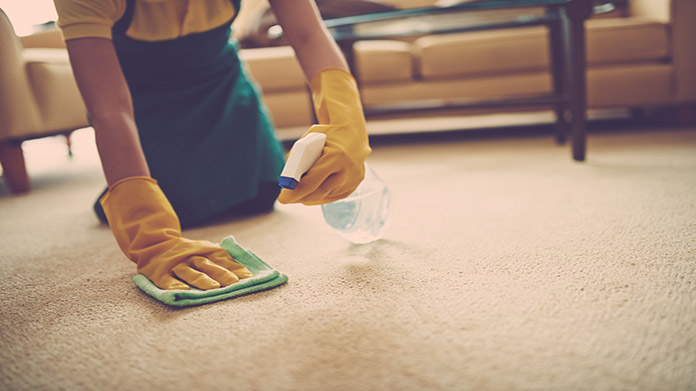
Just about everybody with carpeting can require deep-cleaning services at one time or another. This includes private homes as well as commercial and public spaces. The same equipment used to clean carpets can also be used on upholstery and in cars, boats and anywhere else carpeted or fabric surfaces can be found. As the business owner, you’ll either make contact with customers directly or through a bevy of contractors who’ll bring you customers: caterers, restaurateurs, hotel culinary contacts, wedding planners and party and event planners.
Our guide is in 3 parts:
You could either buy a franchise from an existing operation or start an independent service. According to the trade association Institute of Inspection Cleaning and Restoration Certification (IICRC), franchising fees can run from about $20,000 to $50,000. That doesn’t cover equipment, cleaning solutions or transport vehicles, but does include include training and the support of a known brand. For example, if you represent yourself as a Stanley Steemer company, customers will be familiar with your brand and perhaps have used Stanley Steemer services in the past. If they were satisfied then, you’ll get the credit even if you had no association with that previous company.
Whether you buy into an existing franchise or go on your own, your startup costs will include the following:
Carpet cleaning equipment, which includes a commercial rug cleaner with attachments and holding tank for wastewater, and long hoses to water supply
Cleaning solvents, for which a startup supply can cost several hundred dollars
A van for transport of equipment and possibly for operation
Business licenses and insurance (consult your attorney and independent insurance broker to see what you’ll need in these areas)
Website development and/or other means of promoting your business, including van signage and logo (Consider contacting the graphic design department of your nearby university or community college for talented students who can design logos or create websites at a much lower cost than through an ad agency or even freelance experienced designers.)
The equipment and supplies can run from several thousand dollars to $30,000 for a new truck-mounted system. All of the supplies and equipment can be bought used online much less expensively at sites such as this. A used van can cost as little as $5,000.
Once you’ve initially bought your major equipment and transport vehicle, your ongoing expenses will mostly be cleaning supplies which you’ll find through janitorial service vendors. Shop to find the lowest prices on these commodity products. Your other ongoing expense will be payroll costs for your workforce, which will be determined at least in part on prevailing wages within your region, and gasoline for your vehicles. This cost is difficult to quantify since it involves a number of variable factors: the size and mileage and condition of the vehicle, distances within your market, numbers of jobs per day, etc.
As your business grows, you might add teams to meet growing scheduling demands. If that’s the case, you’ll eventually have to invest in additional equipment and transport vans.
Anyone who owns carpeting, rugs or upholstered furniture and wants to keep them clean is a potential customer. That’s virtually every household in America—or, more realistically, in your marketing area.
While residential cleaning is where the customer volume is, commercial customers are likelier to use your services more frequently. That’s because they have more foot traffic, so their carpets and upholstery get dirtier faster. And since their facilities are in the public eye, the decision makers are more motivated to maintain appearances. They’re also likelier to have more square footage of need, so one stop can generate more income than an average-size private home. These public spaces include office buildings, apartment buildings, shopping centers, auto showrooms, churches and other places of worship.
The business charges home residents, business owners, property managers and other customer types for cleaning services. The going rate is about 30 cents a square foot and business owners in this category try to average at least $100 an hour per visit. (The actual rate tends to range from about $75-$150 an hour.)
The going rate for carpet cleaning services is about 30 cents per square foot. But many customer relationships are developed from couponing or by offering contract discounts. The goal, from the business owner’s viewpoint, is to gross $75 to $150 per hour in the field.
Carpet cleaning businesses bill at least 30 cents per square foot and try to gross at least $100 an hour per job. Top-scale hourly is about $150. With that figure, if a single truck can stay in operation seven hours a workday, it will gross about $700 per day for 240 workdays. However, the work is seasonal in some areas of the country, so it’s not always possible to bill for 240 days. Experts expect to net anywhere from 10 percent to 50 percent pre-tax profit.
There are many additional sources of related business you can undertake. The same equipment and cleaning supplies can be used to deep-clean cars, boats and recreational vehicles. Similar supplies can be used to clean tile and grout, natural stone and even hardwood floors. And since you’re already in homes and businesses, consider expanding your service offering to include duct cleaning. Minor carpet repair and restoration and drapery cleaning services might also be extended.
Your typical business day might include the following activities:
Networking on the phone, online or in person to find customers and encourage additional business from them
Training and supervising your work crew, which often means accompanying them on-site to inspect their work and help them overcome obstacles
Handling the cleaning operation yourself if you have few or no employees, you overbook or workers fail to show up as scheduled
Ordering cleaning supplies
Handling the day-to-day business of operating your own company: paying bills, invoicing customers and staying current on taxes, insurance and other issues
Your planning skills are critical. Start by writing a business plan as a strategic blueprint. It should answer the following questions: What services will you offer? Who is your market, both geographically and by customer type? Who are your competitors and how is your company different? Where will you get your equipment and supplies, and at what cost? What must you charge to be profitable on every job?
You must also be adept at making sales, maintaining work schedules and managing a workforce if you have one. And finally, you must be able to maintain your poise under pressure and to be committed to keeping your customers happy. A satisfied customer will continue to call for your services until they’re no longer satisfied.
According to business research firm IBIS World, the industry’s annual growth rate was projected at 1.9 percent between 2011 and 2016. The firm also pointed out that rising per-capita income is likely to increase business and that customers use such services every year or two, on average. (Many commercial users are much more frequent customers.)
When your bookings exceed your ability to service the business by yourself or with one or two employees, that’s when it’s time to consider investing in growth. First make sure that the sales growth is real and long-term so you don’t put several thousand dollars into your business for another van and more cleaning equipment unless you can generate steady income to cover the expense.
Business Evaluation & Strategy Tool
We'll walk you through the four pillars every business needs: Points of Leverage, Marketing Strategy, Financial Model, and Personal Compatibility. At the end you'll see a personalized report and your action plan below will be tailored to your answers.
Every viable business has natural advantages. Below are common leverage points across four categories. Pick the ones that apply to your Carpet Cleaning business. We've pre-suggested a few based on your idea — review and adjust.
Without a way to connect with customers, even great businesses fail. Pick the channels you plan to use to reach your customers.
Enter your monthly baseline costs — the minimum overhead to keep the business running. Then we'll calculate how many sales per month you need to break even.
A business that doesn't fit your life will fail no matter how good the numbers look. Tell us how this business fits you.
Complete the four pillars and your personalized summary will appear here.
Nine concrete steps to take you from idea to open business, grouped into 30-day phases. Complete the planner above and we'll highlight what's most important for your situation.
An LLC keeps your personal assets separate from business debts and lawsuits — the most common reason small business owners choose this structure. Sole proprietorships and partnerships do not provide this protection.
Apply for your free Employer Identification Number through the IRS, then register for any state or local taxes that apply to your business (sales tax, franchise tax).
A dedicated business account is required to maintain personal asset protection. Mixing personal and business finances ('piercing the corporate veil') can void your LLC's liability shield.
Recording expenses and income from day one makes tax filing easier and lets you see when the business is actually profitable. Use software (QuickBooks, Wave) or a part-time bookkeeper.
State and local requirements vary widely. Brick-and-mortar businesses typically need a Certificate of Occupancy; service businesses may need specific professional licensing; food businesses need health permits.
General Liability Insurance is the most common starting point. If you'll have employees, most states require Workers' Compensation. Specific industries need additional coverage (product liability, professional liability, etc.).
Your brand is how customers perceive and remember you. A clear name, logo, and visual identity make every later marketing decision easier and protect you legally as you grow.
Every legitimate business needs a website. Social media pages are not a substitute — you don't own the platform. Modern website builders mean you can launch a clean site in a weekend without a developer.
A dedicated business number keeps your personal life private, makes the business look legitimate, and lets you route calls professionally. Cloud phone services start under $20/month.
Starting a Carpet Cleaning business typically costs $20,000 to $50,000. It is considered a high capital-intensity business.
A Carpet Cleaning business runs roughly a 25% net profit margin, and most owners reach break-even in about 4 to 12 months.
You can usually launch a Carpet Cleaning business in about 12 to 36 weeks, and it is commonly run full time.
A Carpet Cleaning business is generally an intermediate-skill business to start, with stable demand. TRUiC rates it 67 out of 100 on our Idea Score.
Most Carpet Cleaning businesses register as an LLC or other legal entity and obtain a general business license. Depending on your state and city you may also need industry-specific permits, sales tax registration, and zoning or health approvals, so check your local requirements before you launch.