Startup cost
$5k–$50k
TRUiC Business Ideas
Decision Snapshot
Idea Score
67
Startup cost
$5k–$50k
Profit margin
25%
Break-even
9 mo–24 mo
Time to launch
12 wk–36 wk
Demand trend
Stable
5-yr failure rate
—
Capital intensity
High
Time commitment
Full time
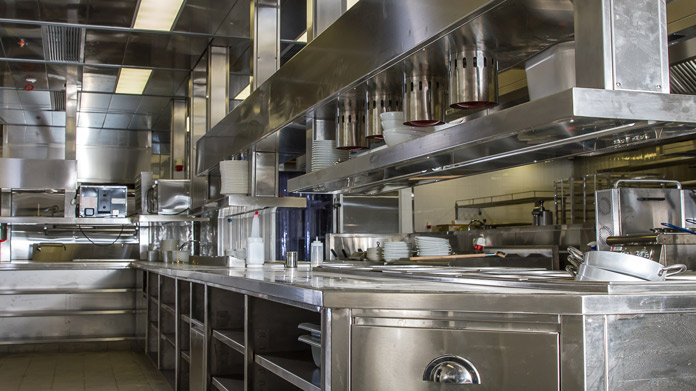
This business is needed because not all businesses can afford (or don’t want) to maintain in-house cleaning staff. These companies fill in the gaps needed to maintain a business without requiring the business to commit to the full costs and overhead of an employee.
Our guide is in 3 parts:
Costs to start a cleaning business are minimal. It can be started on a shoestring budget for less than $500. A larger company may budget up to $100,000 and start with professional cleaning equipment like floor waxing machines, floor washers, commercial mops and cleaning buckets, and cleaning and service vans.
Ongoing expenses for a cleaning company include cleaning supplies, utilities, insurance, and maintenance for transport vehicles. These costs may range from a few hundred dollars for smaller operations to many thousands of dollars (or millions of dollars) for larger companies.
Preferred client types are large commercial clients. Most cleaning businesses work with big chain restaurants. Undesirable clients are companies that have no need for ongoing cleaning services.
These businesses make money by charging clients a fee for cleaning services.
Businesses can charge clients an hourly rate between $50 to $150 per hour, with a small crew of 2 cleaners typically charging $50 per hour. Smaller crews tend to take longer to complete jobs, however, so the total cost may be higher for the client. Cleaners can also charge a flat-rate for services. This makes sense when you know you can complete a job on time or under an equivalent hourly billing time.
For example, let’s say you know a job normally takes 10 hours to complete. If you charge the customer $50 per hour, you will end up with $500 in billable cleaning hours. However, you may decide to charge a flat fee for services of $600 to $750. The higher fee guarantees that you’ll finish on time and protects the customer from unexpected expenses due to longer-than-expected cleaning requirements.
The risk to the business is that a job may actually take longer than expected to complete, resulting in a partial or total loss of profit on the job.
Profit margins for a cleaning company can be thin. Some companies only profit 1% to 5%. However, if you’re a smaller company working with a small cleaning crew, it’s entirely possible to price your services at a 20% to 40% profit. Local markets will dictate your pricing unless you offer value-added services that can’t easily be compared to the competition.
Making your business more profitable usually means specializing in one type of industry or offering value-added services. For example, you might specialize in cleaning hospital kitchens, which may require certain specialized knowledge of hospital cleaning procedures and processes (including sanitation requirements).
You might also choose to offer value-added services, like complimentary cleaning of blinds and doing laundry service for clients. You could also increase the value of your services by offering cleaning services for special equipment, like ice cream machines.
Day-to-day activities of a kitchen cleaning service include cleaning and maintenance of kitchens and related areas. Daily cleaning regimens include:
Changing foil linings for grills, ranges, and flattops
Disinfecting prep areas
Wiping and cleaning grills, ranges, fryers, and underneath all equipment
Washing can openers and meat slicers
Wiping down walls and back splashes
Mopping floors
Cleaning machines
Disinfecting waste disposal areas
Running hood filters through the company’s dishwasher
Washing and sanitizing walk-in coolers
Deliming sinks and faucets
Cleaning floor drains
Changing pest traps
Being a successful cleaning business means that you have staff that are well-versed in various cleaning methodologies, have good attention to detail, and are knowledgeable about how to mix and use cleaning products and equipment. This is a very labor-intensive job and, while not heavily skill-dependent, it does require stamina.
Growth potential for this business is significant.
Small cleaning operations can be run by a staff of one person, but at least 2 to 3 is preferable. Larger operations can employ 10 to 50 employees, or even hundreds of cleaners. HOODZ and Janiking are examples of large cleaning companies that operate as a franchise.
Focus on small business owners instead of large chain restaurants because large corporations may already have long term partnerships with professional (and established) cleaning services. Smaller companies may also have a greater need for services but can’t afford to hire a full-time employee. These may be smaller jobs but will form your “core clients.”
Building a team is necessary usually from the start. Unless you are working with very small businesses, it’s easy to get overwhelmed. Start by hiring a small cleaning crew and expand as revenue and profit allows. A small business can be started with just one or two cleaners. You can expand the business to accommodate anywhere between 10 and 100 employees. This would be considered a mid-sized company. Large commercial cleaners employ thousands of people or franchise the business.
Business Evaluation & Strategy Tool
We'll walk you through the four pillars every business needs: Points of Leverage, Marketing Strategy, Financial Model, and Personal Compatibility. At the end you'll see a personalized report and your action plan below will be tailored to your answers.
Every viable business has natural advantages. Below are common leverage points across four categories. Pick the ones that apply to your Commercial Kitchen Cleaning business. We've pre-suggested a few based on your idea — review and adjust.
Without a way to connect with customers, even great businesses fail. Pick the channels you plan to use to reach your customers.
Enter your monthly baseline costs — the minimum overhead to keep the business running. Then we'll calculate how many sales per month you need to break even.
A business that doesn't fit your life will fail no matter how good the numbers look. Tell us how this business fits you.
Complete the four pillars and your personalized summary will appear here.
Nine concrete steps to take you from idea to open business, grouped into 30-day phases. Complete the planner above and we'll highlight what's most important for your situation.
An LLC keeps your personal assets separate from business debts and lawsuits — the most common reason small business owners choose this structure. Sole proprietorships and partnerships do not provide this protection.
Apply for your free Employer Identification Number through the IRS, then register for any state or local taxes that apply to your business (sales tax, franchise tax).
A dedicated business account is required to maintain personal asset protection. Mixing personal and business finances ('piercing the corporate veil') can void your LLC's liability shield.
Recording expenses and income from day one makes tax filing easier and lets you see when the business is actually profitable. Use software (QuickBooks, Wave) or a part-time bookkeeper.
State and local requirements vary widely. Brick-and-mortar businesses typically need a Certificate of Occupancy; service businesses may need specific professional licensing; food businesses need health permits.
General Liability Insurance is the most common starting point. If you'll have employees, most states require Workers' Compensation. Specific industries need additional coverage (product liability, professional liability, etc.).
Your brand is how customers perceive and remember you. A clear name, logo, and visual identity make every later marketing decision easier and protect you legally as you grow.
Every legitimate business needs a website. Social media pages are not a substitute — you don't own the platform. Modern website builders mean you can launch a clean site in a weekend without a developer.
A dedicated business number keeps your personal life private, makes the business look legitimate, and lets you route calls professionally. Cloud phone services start under $20/month.
Starting a Commercial Kitchen Cleaning business typically costs $5,000 to $50,000. It is considered a high capital-intensity business.
A Commercial Kitchen Cleaning business runs roughly a 25% net profit margin, and most owners reach break-even in about 9 to 24 months.
You can usually launch a Commercial Kitchen Cleaning business in about 12 to 36 weeks, and it is commonly run full time.
A Commercial Kitchen Cleaning business is generally an intermediate-skill business to start, with stable demand. TRUiC rates it 67 out of 100 on our Idea Score.
Most Commercial Kitchen Cleaning businesses register as an LLC or other legal entity and obtain a general business license. Depending on your state and city you may also need industry-specific permits, sales tax registration, and zoning or health approvals, so check your local requirements before you launch.