Startup cost
$25k–$250k
TRUiC Business Ideas
Decision Snapshot
Idea Score
59
Startup cost
$25k–$250k
Profit margin
25%
Break-even
4 mo–12 mo
Time to launch
12 wk–36 wk
Demand trend
Stable
5-yr failure rate
—
Capital intensity
Very high
Time commitment
Full time
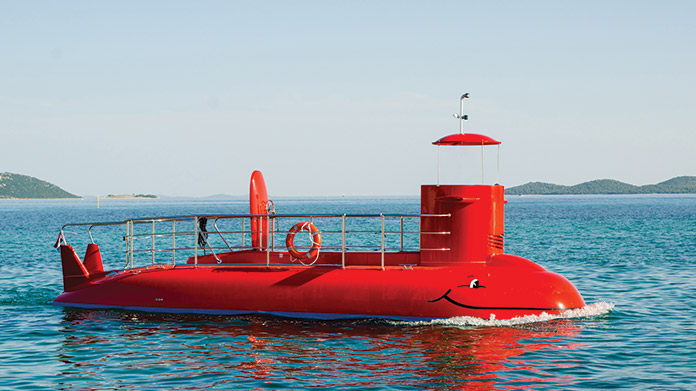
Approximately two-thirds of the Earth is composed of water, yet a staggering 95% has yet to be explored. With so much left to be discovered, consumers are captivated and anxious to explore the deep blue ocean. To meet these needs, tourism entrepreneurs and travel operators are investing in submarines and, offering guided tours for both small and large parties.
Our guide is in 3 parts:
A new submarine tour business incurs a number of standard start-up expenses, including licenses and certifications, payroll, rent/mortgage for office space, website, attorney’s fees, and business and liability insurance. Your greatest expense, however, will lie in the submarines themselves. The price tag of a private sub ranges anywhere from $1 million to over $20 million, depending upon payload capacity, size, customized features, and maximum depth.
Like most small businesses, your budget should include standard expenses such as mortgage/rent for office space, website fees, utilities costs, insurance, and payroll. Your submersible watercraft should also be on a routine maintenance plan, ensuring every guest has a safe underwater experience. One submarine tour business estimates between $3,000 and $4,000 per day in operating costs.
While the target market was previously limited to travelers able to afford the somewhat hefty price tag, the industry is starting to see some changes. Start-up and ongoing expenses are taking a downward turn, making it an affordable experience for travelers of all tax brackets.
Tour guests pay submarine tour businesses to take them on guided underwater tours.
The price for an underwater tour varies, depending upon location, tour specifics, and group size. An organization based out of Curacao charges $800 for a 90-minute shipwreck and reef tour, while an underwater tour of the Titanic comes with a price tag of over $105,000 per person.
If your business operates six tours per day, with six people per tour, at a cost of $210 per ticket, this would generate a revenue of $7,560. With operating costs at $3,500 per day, this would yield a profit of $4,060 per day.
Entrepreneurs are encouraged to invest profits back into the business and get creative with the experiences they offer. One submarine tour business based out of St. Lucia now offers guests the opportunity to spend the night underwater. The submarine comes with a full staff and private room, costing almost $275,000 per night. Business owners should also capitalize on the fact that consumers love to purchase merchandise related to their experience. Merchandise sales can generate additional revenue between 10% and 15%.
A business of this magnitude means managing a number of moving parts. Operators will take guests on guided tours, while the maintenance team is there to ensure each submersible is well-maintained. This is all for naught, however, unless a strong marketing strategy is in place, with team members working tirelessly to ensure a steady stream of tour guests. Additional activities should include facility maintenance, employee certification and training, and administrative tasks.
What are some skills and experiences that will help you build a successful submarine tour business?
A comprehensive understanding of the tourism industry, including the most scenic and desirable underwater regions, is critical. New business owners who do not possess a strong business background should consider taking a business course at their local college or hiring an expert to assist them with the myriad of decisions to be made. Strong interpersonal skills and general advertising knowledge is also beneficial for a relatively niche business, such as this.
Due to burgeoning consumer interest and the development of newer, safer underwater technology, the underwater tourism industry has recently realized significant growth. Entrepreneurs striving for long-term growth and success are encouraged to thoroughly research high-demand areas and identify needs that are not currently being met.
Due to high start-up and ongoing expenses, entrepreneurs considering this business venture are encouraged to conduct thorough research prior to developing their business plan. A detailed plan ensures potential unexpected costs and roadblocks are considered, thus maximizing profits.
Before your submarine takes its first flight, you will need to surround yourself with a knowledgeable and dedicated team. Enlist the help of an attorney to ensure all legal and liability concerns are addressed. An accountant should oversee the financials. Additionally, piloting a submersible watercraft requires a specific set of skills – the safety of your customers is dependent on you hiring the very best guide for the job.
Business Evaluation & Strategy Tool
We'll walk you through the four pillars every business needs: Points of Leverage, Marketing Strategy, Financial Model, and Personal Compatibility. At the end you'll see a personalized report and your action plan below will be tailored to your answers.
Every viable business has natural advantages. Below are common leverage points across four categories. Pick the ones that apply to your Submarine Tour business. We've pre-suggested a few based on your idea — review and adjust.
Without a way to connect with customers, even great businesses fail. Pick the channels you plan to use to reach your customers.
Enter your monthly baseline costs — the minimum overhead to keep the business running. Then we'll calculate how many sales per month you need to break even.
A business that doesn't fit your life will fail no matter how good the numbers look. Tell us how this business fits you.
Complete the four pillars and your personalized summary will appear here.
Nine concrete steps to take you from idea to open business, grouped into 30-day phases. Complete the planner above and we'll highlight what's most important for your situation.
An LLC keeps your personal assets separate from business debts and lawsuits — the most common reason small business owners choose this structure. Sole proprietorships and partnerships do not provide this protection.
Apply for your free Employer Identification Number through the IRS, then register for any state or local taxes that apply to your business (sales tax, franchise tax).
A dedicated business account is required to maintain personal asset protection. Mixing personal and business finances ('piercing the corporate veil') can void your LLC's liability shield.
Recording expenses and income from day one makes tax filing easier and lets you see when the business is actually profitable. Use software (QuickBooks, Wave) or a part-time bookkeeper.
State and local requirements vary widely. Brick-and-mortar businesses typically need a Certificate of Occupancy; service businesses may need specific professional licensing; food businesses need health permits.
General Liability Insurance is the most common starting point. If you'll have employees, most states require Workers' Compensation. Specific industries need additional coverage (product liability, professional liability, etc.).
Your brand is how customers perceive and remember you. A clear name, logo, and visual identity make every later marketing decision easier and protect you legally as you grow.
Every legitimate business needs a website. Social media pages are not a substitute — you don't own the platform. Modern website builders mean you can launch a clean site in a weekend without a developer.
A dedicated business number keeps your personal life private, makes the business look legitimate, and lets you route calls professionally. Cloud phone services start under $20/month.
Starting a Submarine Tour business typically costs $25,000 to $250,000. It is considered a very high capital-intensity business.
A Submarine Tour business runs roughly a 25% net profit margin, and most owners reach break-even in about 4 to 12 months.
You can usually launch a Submarine Tour business in about 12 to 36 weeks, and it is commonly run full time.
A Submarine Tour business is generally an intermediate-skill business to start, with stable demand. TRUiC rates it 59 out of 100 on our Idea Score.
Most Submarine Tour businesses register as an LLC or other legal entity and obtain a general business license. Depending on your state and city you may also need industry-specific permits, sales tax registration, and zoning or health approvals, so check your local requirements before you launch.