Startup cost
$125k
TRUiC Business Ideas
Decision Snapshot
Idea Score
45
Startup cost
$125k
Profit margin
6%
Break-even
18 mo–36 mo
Time to launch
12 wk–36 wk
Demand trend
Stable
5-yr failure rate
—
Capital intensity
High
Time commitment
Full time
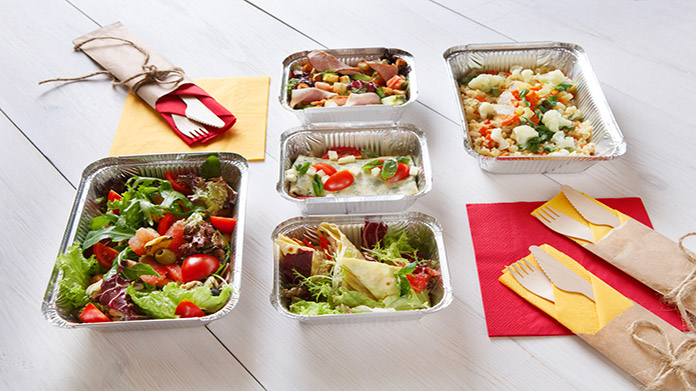
Meals-to-go businesses prepare and deliver home-cooked meals to busy customers who prefer to save time on cooking and grocery shopping. They can afford to bring home or have delivered great meals for their family. What they do not have is the time it takes to find and select quality ingredients, spend the time cooking the meal, and then prepare a meal that is hot and fresh for their families.
The most successful meals-to-go organizations provide delicious and nutritious food according to diet planning that moderates the unhealthy choices and leans towards healthier choices. This is where the big successes in this business are now coming from. Companies that provide these great meals are making records profits.
Our guide is in 3 parts:
It is possible to start a business like this from home as long as you can get the health department to approve the kitchen for operations. However; most businesses in this sector start as a commercial operation. This requires leasing an appropriate space and having the equipment necessary to cook the food. You will also need delivery vehicles if you offer home delivery services.
A typical startup will incur these costs:
Formation of the Limited Liability Company and Getting a Business Permit – About $1,000 depending on the jurisdiction. You will need to have an inspection by the health department to approve your operations as well.
Lease Payment and Security Deposit. This amount will depend on the square footage of the facility, with typical rates being $3 to $5 per square foot.
Equipment Leasing – You will need ovens, stoves, refrigerators, food preparation stands, dishwashers, dishes for serving and utensils. This equipment can easily cost over $100,000 but it can be leased as part of a master equipment lease if you have a decent credit history.
The total budget (some of which can be financed) for opening a new food-to-go place is about $125,000.
The ongoing expenses include marketing costs, rent, utilities, staff costs, materials, and insurance.
The preferred customers are those with disposable income who like good food and do not have the time required to prepare it for their families. They do not want to go to the trouble to visit a restaurant and they find fast-food less than satisfying. They are willing to pay more for the quality of food that is made using better types of ingredients.
Meals-to-go businesses prepare home-cooked food for customers, and sell these meals (often with a delivery service). In any food preparation business, there is a markup on ingredient costs and labor costs with some allowance for waste. For example, if the ingredients for a meal cost $10 and the labor to prepare it costs $4, and then we add in a contribution to overhead and allowance for waste the meal should sell for about $24 to include some profit for the business owner. This is a great price for a quality gourmet meal for two people. Delivery charges are usually factored into the price of the meal. Selling wine to make extra revenues and deserts as an up-sell item, makes the profits go up.
The successful businesses in this sector spend 32% for the materials, 33% for the labor and about 5% for overhead. Typical prices for two people are in the range of $24 to $28 dollars, depending on the area. Naturally, an operation in New York City will charge more because the cost of overhead is higher than in other parts of the country.
Investopedia says the average profit margin for a food and beverage business is 5.5%. If the business is selling about $50,000 per month, the owner can expect to take home profits of 5.5% of that amount or $2,750 per month. You have to sell a lot of food per month to make good profits. This business is low margin/high volume in order to be successful.
This business model lends itself well to offering catering services. Providing food for large groups such as office parties, convention attendees, events, or large private dinner parties is an added revenue stream for these businesses.
The most successful business owners in this sector take to time to hand-select the best ingredients. They get up early to go to the wholesale markets and pick out the very best things that they can find in order to prepare delicious meals.
One of the greatest challenges in this business is to buy enough materials to make the food that is ordered and at the same time control waste. Since many items are perishable the balancing act is to get enough supplies and sell out the food, without having to throw much of it away. Controlling waste is a big issue because it can be as much as 20% of the raw materials cost.
Another big part of your day is to make sure there is sufficient staff given that your business employs multiple people, and if that is the case, owners must make sure that employees show up on time. Food preparation is very time dependent and being late is not acceptable. There is a tremendous rush to prepare orders at certain times of day and being short-staffed during those periods of heavy daily activity can cause a disaster.
The most critical skill is the ability to make food that is very tasty and to keep materials and labor costs under control. Great tasting food that is prepared in such a way that costs too much to make it will drive a food-to-go operation out of business. Being a good chef, understanding cost controls, and knowing how to promote your business effectively are the main things that will make you successful.
Each meals-to-go operation will serve a local area that has a limit of its geography because the food cannot be taken further away and still remain hot and fresh. Because of this need for localization, it is possible to expand the operations to other nearby areas to grow the business. There are plenty of national franchise chains that started out with a single location and expanded in this way to serve other communities.
Once the number of clients that your business serves becomes too large for you to handle on your own, it is time to start building a team of employees. Since you will be bringing food to your customers, your team will mostly consist of chefs and delivery drivers. Your delivery drivers can deliver food, accept payment on your company’s behalf, and take down future orders from your client. It is important that you hire chefs that create a quality products and delivery drivers that are trustworthy and practice great customer service.
Business Evaluation & Strategy Tool
We'll walk you through the four pillars every business needs: Points of Leverage, Marketing Strategy, Financial Model, and Personal Compatibility. At the end you'll see a personalized report and your action plan below will be tailored to your answers.
Every viable business has natural advantages. Below are common leverage points across four categories. Pick the ones that apply to your Meals To Go business. We've pre-suggested a few based on your idea — review and adjust.
Without a way to connect with customers, even great businesses fail. Pick the channels you plan to use to reach your customers.
Enter your monthly baseline costs — the minimum overhead to keep the business running. Then we'll calculate how many sales per month you need to break even.
A business that doesn't fit your life will fail no matter how good the numbers look. Tell us how this business fits you.
Complete the four pillars and your personalized summary will appear here.
Nine concrete steps to take you from idea to open business, grouped into 30-day phases. Complete the planner above and we'll highlight what's most important for your situation.
An LLC keeps your personal assets separate from business debts and lawsuits — the most common reason small business owners choose this structure. Sole proprietorships and partnerships do not provide this protection.
Apply for your free Employer Identification Number through the IRS, then register for any state or local taxes that apply to your business (sales tax, franchise tax).
A dedicated business account is required to maintain personal asset protection. Mixing personal and business finances ('piercing the corporate veil') can void your LLC's liability shield.
Recording expenses and income from day one makes tax filing easier and lets you see when the business is actually profitable. Use software (QuickBooks, Wave) or a part-time bookkeeper.
State and local requirements vary widely. Brick-and-mortar businesses typically need a Certificate of Occupancy; service businesses may need specific professional licensing; food businesses need health permits.
General Liability Insurance is the most common starting point. If you'll have employees, most states require Workers' Compensation. Specific industries need additional coverage (product liability, professional liability, etc.).
Your brand is how customers perceive and remember you. A clear name, logo, and visual identity make every later marketing decision easier and protect you legally as you grow.
Every legitimate business needs a website. Social media pages are not a substitute — you don't own the platform. Modern website builders mean you can launch a clean site in a weekend without a developer.
A dedicated business number keeps your personal life private, makes the business look legitimate, and lets you route calls professionally. Cloud phone services start under $20/month.
Starting a Meals To Go business typically costs $125,000. It is considered a high capital-intensity business.
A Meals To Go business runs roughly a 6% net profit margin, and most owners reach break-even in about 18 to 36 months.
You can usually launch a Meals To Go business in about 12 to 36 weeks, and it is commonly run full time.
A Meals To Go business is generally an intermediate-skill business to start, with stable demand. TRUiC rates it 45 out of 100 on our Idea Score.
Most Meals To Go businesses register as an LLC or other legal entity and obtain a general business license. Depending on your state and city you may also need industry-specific permits, sales tax registration, and zoning or health approvals, so check your local requirements before you launch.