Startup cost
$1.0M–$5.0M
TRUiC Business Ideas
Decision Snapshot
Idea Score
28
Startup cost
$1.0M–$5.0M
Profit margin
4%
Break-even
4 mo–12 mo
Time to launch
12 wk–36 wk
Demand trend
Stable
5-yr failure rate
—
Capital intensity
Very high
Time commitment
Full time
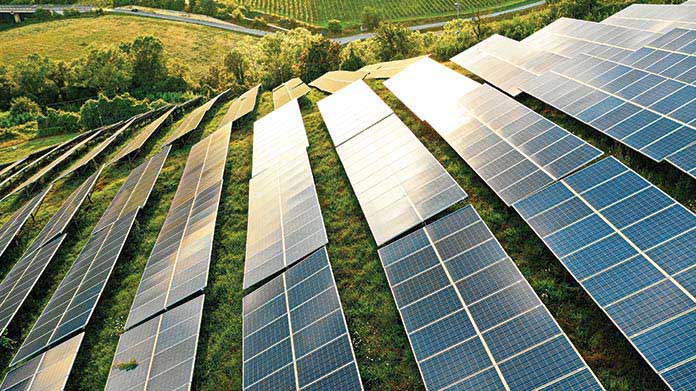
The solar industry experienced exponential growth during the last decade, making solar energy more affordable and increasing overall demand. As energy companies push to increase their investments in renewable energy, landowners face a unique business opportunity. Solar farms, also known as photovoltaic power stations, are large plots of land with rows of solar panels installed in a grid system. Land owners then sell the solar energy they generated back to the utility grid.
Our guide is in 3 parts:
Landowners should consider a number of factors when launching a solar farming business. You will need to gain permission from the local utility company to connect and run your solar project in parallel with the utility grid. The cost to gain permission to interconnect can run up to $30,000 in some states.
On a large scale, your solar farm should be a minimum of one megawatt — enough to supply energy to approximately 200 households. Installation costs for a one-megawatt farm typically total about $1 million. This includes land, solar equipment, office setup, payroll, and marketing.
For solar farmers with less start-up capital, leasing the land to a utility company is a more affordable option. The utility company you partner with pays the cost of installation and maintenance of the panels. While the profits are significantly lower with this option, so too are the initial expenses.
Ongoing expenses for your solar farm include your mortgage, insurance, property taxes, licensing, and attorney and financial advisor fees. Those offering additional services beyond land leasing also must consider payroll costs, higher insurance expenses, travel costs, and continuing education fees.
It’s a common misconception that only utility companies require the services of solar farms. If you don’t want to lease your land to a utility company, consider approaching these other types of organizations:
Financial institutions
Manufacturers and distributors
Blue chip companies
Real estate developers and contractors
Public works departments
Sports facilities
Television stations
The most effective way to make money is by leasing the land to a utility company. They pay you an annual lease payment in exchange for the use of your land — for an agreed upon period of time.
A number of factors will influence the lease rate your land can yield, including its size and quality as well as market demand and local land prices. On average, farms yield between $500 and $800 per acre per month.
If your 100-acre land lease yields $700 per acre per month, your solar farm could yield $840,000 in annual revenue.
Solar farm business owners seeking to boost their profitability should consider using their annual profits to buy additional land. Continuing education and the proper certifications also could help a business owner expand their services, making them more valuable to current and potential clients.
After setup, a solar farm requires little work on your part. The utility company to which you lease the land will require full access to the property through a dedicated access road so its employees and construction crews may enter on an as-needed basis. Your role involves ensuring the land remains mowed and clean of debris. You also must maintain the fencing around your property to prevent wild animals and trespassers from entering.
What are some skills and experiences that will help you build a successful solar farm?
Utility workers will install and maintain the solar panels on your farm. You must only supply the land and possess basic negotiation skills to enter into a profitable lease agreement. A business background also would prove beneficial for farmers seeking significant long-term growth and expansion.
Solar farmers who wish to take a more hands-on approach will need to obtain the proper professional certifications. The North American Board of Certified Energy Practitioners® (NABCEP® ) and the Solar Energy Industries Association® (SEIA) are both excellent resources for farmers planning to install, maintain, and repair their farm’s solar panels.
The solar industry is expected to experience record growth in the next decade, offering significant profits for landowners. Farm owners looking to expand their businesses and increase profits need only invest in additional land that meets the criteria set by utility companies.
Carefully consider all your options. Learn the risks and anticipate the challenges you may face along the way. Before entering into a lease agreement, have a professional review all the documents to ensure you understand what’s expected from you and what insurance coverage you’ll need.
The level of support you require will depend on the scope of your business. Landowners who lease their land will need little more than the guidance of an attorney and a financial advisor.
Solar farmers installing their own panels or offering services to community members will need a much larger support team, including mechanical and/or electrical engineers with the proper certifications, an accountant, an attorney, and administrative staff. Because your team members must interact and consult with clients, they should possess strong interpersonal and communication skills.
Business Evaluation & Strategy Tool
We'll walk you through the four pillars every business needs: Points of Leverage, Marketing Strategy, Financial Model, and Personal Compatibility. At the end you'll see a personalized report and your action plan below will be tailored to your answers.
Every viable business has natural advantages. Below are common leverage points across four categories. Pick the ones that apply to your Solar Farm business. We've pre-suggested a few based on your idea — review and adjust.
Without a way to connect with customers, even great businesses fail. Pick the channels you plan to use to reach your customers.
Enter your monthly baseline costs — the minimum overhead to keep the business running. Then we'll calculate how many sales per month you need to break even.
A business that doesn't fit your life will fail no matter how good the numbers look. Tell us how this business fits you.
Complete the four pillars and your personalized summary will appear here.
Nine concrete steps to take you from idea to open business, grouped into 30-day phases. Complete the planner above and we'll highlight what's most important for your situation.
An LLC keeps your personal assets separate from business debts and lawsuits — the most common reason small business owners choose this structure. Sole proprietorships and partnerships do not provide this protection.
Apply for your free Employer Identification Number through the IRS, then register for any state or local taxes that apply to your business (sales tax, franchise tax).
A dedicated business account is required to maintain personal asset protection. Mixing personal and business finances ('piercing the corporate veil') can void your LLC's liability shield.
Recording expenses and income from day one makes tax filing easier and lets you see when the business is actually profitable. Use software (QuickBooks, Wave) or a part-time bookkeeper.
State and local requirements vary widely. Brick-and-mortar businesses typically need a Certificate of Occupancy; service businesses may need specific professional licensing; food businesses need health permits.
General Liability Insurance is the most common starting point. If you'll have employees, most states require Workers' Compensation. Specific industries need additional coverage (product liability, professional liability, etc.).
Your brand is how customers perceive and remember you. A clear name, logo, and visual identity make every later marketing decision easier and protect you legally as you grow.
Every legitimate business needs a website. Social media pages are not a substitute — you don't own the platform. Modern website builders mean you can launch a clean site in a weekend without a developer.
A dedicated business number keeps your personal life private, makes the business look legitimate, and lets you route calls professionally. Cloud phone services start under $20/month.
Starting a Solar Farm business typically costs $1,000,000 to $5,000,000. It is considered a very high capital-intensity business.
A Solar Farm business runs roughly a 4% net profit margin, and most owners reach break-even in about 4 to 12 months.
You can usually launch a Solar Farm business in about 12 to 36 weeks, and it is commonly run full time.
A Solar Farm business is generally an intermediate-skill business to start, with stable demand. TRUiC rates it 28 out of 100 on our Idea Score.
Most Solar Farm businesses register as an LLC or other legal entity and obtain a general business license. Depending on your state and city you may also need industry-specific permits, sales tax registration, and zoning or health approvals, so check your local requirements before you launch.