Startup cost
$50k–$500k
TRUiC Business Ideas
Decision Snapshot
Idea Score
35
Startup cost
$50k–$500k
Profit margin
4%
Break-even
4 mo–12 mo
Time to launch
12 wk–36 wk
Demand trend
Rising
5-yr failure rate
—
Capital intensity
Very high
Time commitment
Full time
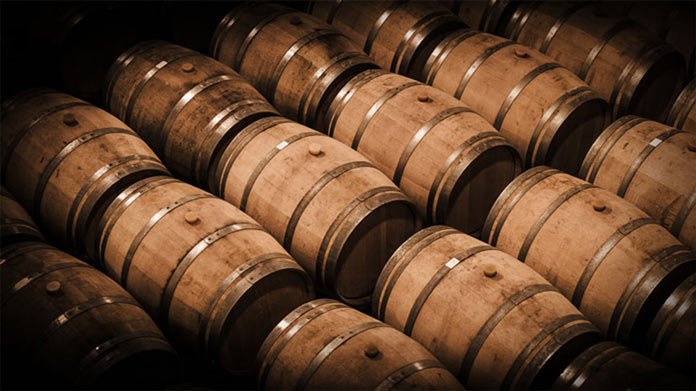
A barrel making business, or cooperage, as traditionally named, is a business which specializes in the crafting and construction of wooden barrels and casks.
Our guide is in 3 parts:
Initial costs for opening a barrel making business will mainly reflect tools, materials and, potentially, a rental space as a workshop and storage facility. Wood and metal banding can be relatively inexpensive, with pricing depending on the type of wood used and availability in your region. The tools needed will be a mix of hand and power tools with circular and mitre saws, jigsaws, planers, and sanders representing many of the power tools and hammers, chisels, and other woodworking and finishing hand tools comprising the hand tools. You will also need a fire source, such as a propane cooker or small flamethrower, for the “toasting” process of the barrels, in which the inside is fired to help seal and flavor the barrels. Additionally, you will need insurance for the business and yourself or workers, a business license, rent, and utilities for your workshop and a few delivery and work vehicles for hauling raw materials, as well as finished products.
Material and shipping costs will comprise a majority of your overhead, as well as rent and utilities, as needed.
Your target market will mainly consist of breweries, wineries and distilleries. By creating products these companies are looking for, you wildest likely fill a niche, which has little competition.
The wholesale and retail sales of barrels and casks generates the revenue for a barrel making business.
Individual barrels will often run between $350-450, with more specialized wood, such as French oak fetching upwards of $1500 per barrel.
With the demand for quality wood barrels on the rise, the potential for earnings can be quite high. If a barrel business averages $400 per barrel and sells 400 barrels per year, their gross returns will be $160,000.
Although a majority of your barrels will go to liquor manufacturers, there is also a residential and commercial application for barrels as furniture and themed installs, such as table bases, chairs and coffee tables. Some older or damaged barrels may also be resold as planters for flowers and gardens. Finally, there is also an industry in refurbishing or reselling used barrels. If a barrel is of a certain wood, it may be more profitable or cost-effective to repair or refurbish for resale. Many craft beer companies are also using bourbon, scotch, and cognac barrels to flavor and infuse their brews. This trend is starting to cross-pollinate to numerous types of spirits.
Since the focus of a cooperage is to make barrels, much of the day to day business will consist of the forming and carpentry of barrels, as well as the finishing and aging processes. The bending of the wood slats, in addition to the gathering of materials for barrel construction, will also occupy a good amount of the daily schedule.
As barrel making is hands-on wood crafting, carpentry skills are necessary. Experience in steaming or soaking and bending wood is also necessary to help successfully get started with minimal training. Banding and finishing the barrels also takes a careful touch and should be performed by someone with an eye for detail and meticulous craftsmanship. It is also advisable to be knowledgeable in small business management, as you will more than likely be creating and steering this ship with only a few resources to guide you. You will need to be well-spoken and able to address potential clients with a clear and concise message about the virtues of your products and company.
The demand for barrels for craft beer and wine, as well as liquors, is on the rise. More and more spirits companies are returning to wooden barrels for storage and aging of their products. Fortunately for barrel makers, the demand is growing, but the field of cooperage companies is small, which means a barrel company may be able to position itself as the barrel supplier for quite a few businesses. And, since demand is growing, so should the potential for growth in this field.
A majority of your revenue will stem from sales to beer, wine, and liquor companies. You should familiarize yourself with the various breweries, wineries, and distilleries in your area. Set up meetings with owners or representatives and take some samples of your work. Your initial push will be to create outlets for your creations. Without buyers, your barrels will simply gather dust. Research local and regional beer, wine, and spirits organizations and industry trade shows. Find out who your high end craft spirits companies are, as many of these companies will often be looking to add a more traditional flare and flavor to their products. Finally, create an online presence for yourself and constantly push content to keep your name and reputation known and relevant.
As you begin your new barrel making venture, you will more than likely want at least a few other assistants or partners to help shoulder the burden of production. Barrel making is a craft, so you will need individuals who equally possess woodworking experience and related skills. The quality of your work needs to be consistent, so set up a training regiment and production quality standards for all employees to adhere to. As you grow in size, bring on more barrel constructors, which will allow you more time to market and promote and focus on the financial aspects of a growing business.
Business Evaluation & Strategy Tool
We'll walk you through the four pillars every business needs: Points of Leverage, Marketing Strategy, Financial Model, and Personal Compatibility. At the end you'll see a personalized report and your action plan below will be tailored to your answers.
Every viable business has natural advantages. Below are common leverage points across four categories. Pick the ones that apply to your Barrel Making business. We've pre-suggested a few based on your idea — review and adjust.
Without a way to connect with customers, even great businesses fail. Pick the channels you plan to use to reach your customers.
Enter your monthly baseline costs — the minimum overhead to keep the business running. Then we'll calculate how many sales per month you need to break even.
A business that doesn't fit your life will fail no matter how good the numbers look. Tell us how this business fits you.
Complete the four pillars and your personalized summary will appear here.
Nine concrete steps to take you from idea to open business, grouped into 30-day phases. Complete the planner above and we'll highlight what's most important for your situation.
An LLC keeps your personal assets separate from business debts and lawsuits — the most common reason small business owners choose this structure. Sole proprietorships and partnerships do not provide this protection.
Apply for your free Employer Identification Number through the IRS, then register for any state or local taxes that apply to your business (sales tax, franchise tax).
A dedicated business account is required to maintain personal asset protection. Mixing personal and business finances ('piercing the corporate veil') can void your LLC's liability shield.
Recording expenses and income from day one makes tax filing easier and lets you see when the business is actually profitable. Use software (QuickBooks, Wave) or a part-time bookkeeper.
State and local requirements vary widely. Brick-and-mortar businesses typically need a Certificate of Occupancy; service businesses may need specific professional licensing; food businesses need health permits.
General Liability Insurance is the most common starting point. If you'll have employees, most states require Workers' Compensation. Specific industries need additional coverage (product liability, professional liability, etc.).
Your brand is how customers perceive and remember you. A clear name, logo, and visual identity make every later marketing decision easier and protect you legally as you grow.
Every legitimate business needs a website. Social media pages are not a substitute — you don't own the platform. Modern website builders mean you can launch a clean site in a weekend without a developer.
A dedicated business number keeps your personal life private, makes the business look legitimate, and lets you route calls professionally. Cloud phone services start under $20/month.
Starting a Barrel Making business typically costs $50,000 to $500,000. It is considered a very high capital-intensity business.
A Barrel Making business runs roughly a 4% net profit margin, and most owners reach break-even in about 4 to 12 months.
You can usually launch a Barrel Making business in about 12 to 36 weeks, and it is commonly run full time.
A Barrel Making business is generally an intermediate-skill business to start, with rising demand. TRUiC rates it 35 out of 100 on our Idea Score.
Most Barrel Making businesses register as an LLC or other legal entity and obtain a general business license. Depending on your state and city you may also need industry-specific permits, sales tax registration, and zoning or health approvals, so check your local requirements before you launch.