Startup cost
$25k–$250k
TRUiC Business Ideas
Decision Snapshot
Idea Score
38
Startup cost
$25k–$250k
Profit margin
4%
Break-even
4 mo–12 mo
Time to launch
12 wk–36 wk
Demand trend
Stable
5-yr failure rate
—
Capital intensity
Very high
Time commitment
Full time
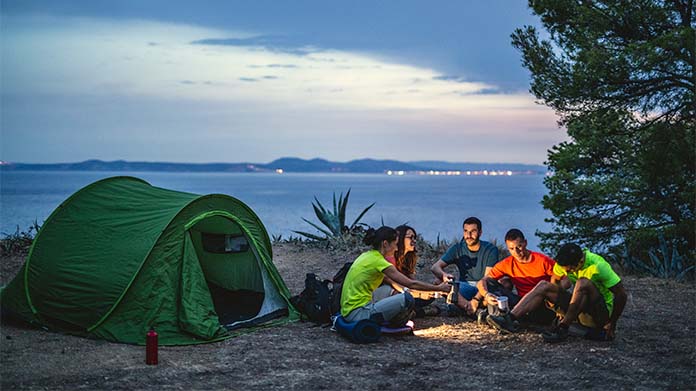
A camp retreat business combines the bliss of visiting nature with the added benefits of having activities planned for the whole trip. Depending on what you specialize in, you can offer a number of camping retreats for individuals of all ages. What you choose to offer at your camping retreat business is only limited by your imagination, skills, and ability to put on a spectacular time for your guests. Without further ado, let’s explore what you need to know about starting your new business venture.
Our guide is in 3 parts:
The costs to start this business will depend entirely on what you already have on hand. If you are the local camping expert, you will likely already have all of the gear you need to get started. At that point, you will only need to worry about your business license, any required state certifications (such as CPR training), and marketing costs. Those who do not have all of the camping gear they need will want to visit their local sporting goods store and stock up on all of the essentials.
In addition to basic camping gear, you will also need any required supplies for your retreat. These are often recurring costs, so your opening costs should only include what will be required on your first retreat.
Ongoing expenses are mostly related to materials. Some examples of these costs are dependent on the retreat type itself. A science retreat for kids or adults will have recurring costs for experiment materials. Yoga retreats will need to keep additional mats, blocks, and straps readily available. Those focused on a business retreat may simply need to have extra camping supplies readily available.
The target market for this business is gender and age-neutral. Of course, each activity offered at a camping retreat will reflect the age of the individuals that should be there. Otherwise, the target market is truly those who are interested in or love camping. Furthermore, these individuals should also have a passion for the type of retreating you are offering.
A camping retreat makes money when a booking is completed. This business may opt to have individuals purchase tickets, or the business can require groups of a minimum to maximum number of guests to book all at once. Regardless, the business does not make money until a booking is completed. Depending on payment terms, payment may be required upfront or guests may pay an initial deposit with full payment due by the beginning of the retreat.
The price you charge for this service can depend on a number of factors. If you do not have your own land and must use a campground, you need to factor in the nightly camping cost into your price. In addition, recurring material costs must also be considered. An average camping retreat costs between $20 to $75 per person per night.
As with most businesses, the potential profit is dependent on operating costs and expenses. Retreats with few added material costs can expect to profit more than other types of retreats. Business licenses and other certifications must also be considered. These will all vary by state. It is safe to say that a camping retreat business can expect to make a minimum profit of $25 per person per night.
This type of business can become more profitable by establishing relationships with campgrounds that offer significant discounts for businesses that regularly book stays. In addition, operating your own marketing campaigns can keep advertising costs down. If possible, requiring groups to come prepared with all of their own supplies will keep costs for camping materials down too.
A typical day for a camping retreat business will be dependent on how involved the owner of the business is in the day-to-day activities. For owners that will be running the business and leading the retreat, their day will be full of adventure from one day to the next. Days when you are not leading the retreat will be filled with lead follow-ups, managing bookings, and doing any financial reporting.
When it is time for a retreat, your days will be focused on waking up before your customers, leading the activities for the day, and making sure everyone is following all safety guidelines. Regardless of your level of engagement in the various aspects of the business, marketing the retreats and reaching the right target audience should be a daily task for your business.
In order to be successful, you will need to understand how to have a good time camping and incorporate manageable activities. As the one offering this service, you will be expected to either assist with setting up camping tents and activities and/or hiring individuals who can assist your guests. In addition, basic survival skills are a must. You cannot guarantee that your guests will actually know what berries not to eat and how to read a compass should they get off the main trail.
The growth potential for a camping retreat business is exponential Depending on the region’s weather, camping retreats may be completed during any season of the year in whatever region your business serves. Furthermore, camping retreat businesses can collaborate with masters in their craft to further expand their reach – this includes yoga teachers, pottery instructors, science teachers for children, and many more.
The best way to launch a successful camping retreat business is to have connections already established. By having a network of individuals who already enjoy camping and the activities you will be offering during the retreat, you already have close connections who will likely be interested in your service. Additionally, having personal pictures of your camping areas will help elevate your image to customers. After all, no one wants their camping adventure in the hands of a company that is unacquainted with the outdoors.
If you do not have experience with camping, guiding, or leading the retreat you wish to offer, you should assemble a team immediately. How you assemble this team is up to you. You can look at local associations that specialize in certifying these individuals and let them know you have open positions. You may also reach out to your network and see who you know that meets your criteria.
If you have the skills you need to start this business on your own, you should create a team as soon as you cannot deliver exceptional quality to your guests. Whether it be online customer service, bookkeeping, or a new retreat leader, add the individuals you need to keep your business moving forward.
Business Evaluation & Strategy Tool
We'll walk you through the four pillars every business needs: Points of Leverage, Marketing Strategy, Financial Model, and Personal Compatibility. At the end you'll see a personalized report and your action plan below will be tailored to your answers.
Every viable business has natural advantages. Below are common leverage points across four categories. Pick the ones that apply to your Camping Retreat business. We've pre-suggested a few based on your idea — review and adjust.
Without a way to connect with customers, even great businesses fail. Pick the channels you plan to use to reach your customers.
Enter your monthly baseline costs — the minimum overhead to keep the business running. Then we'll calculate how many sales per month you need to break even.
A business that doesn't fit your life will fail no matter how good the numbers look. Tell us how this business fits you.
Complete the four pillars and your personalized summary will appear here.
Nine concrete steps to take you from idea to open business, grouped into 30-day phases. Complete the planner above and we'll highlight what's most important for your situation.
An LLC keeps your personal assets separate from business debts and lawsuits — the most common reason small business owners choose this structure. Sole proprietorships and partnerships do not provide this protection.
Apply for your free Employer Identification Number through the IRS, then register for any state or local taxes that apply to your business (sales tax, franchise tax).
A dedicated business account is required to maintain personal asset protection. Mixing personal and business finances ('piercing the corporate veil') can void your LLC's liability shield.
Recording expenses and income from day one makes tax filing easier and lets you see when the business is actually profitable. Use software (QuickBooks, Wave) or a part-time bookkeeper.
State and local requirements vary widely. Brick-and-mortar businesses typically need a Certificate of Occupancy; service businesses may need specific professional licensing; food businesses need health permits.
General Liability Insurance is the most common starting point. If you'll have employees, most states require Workers' Compensation. Specific industries need additional coverage (product liability, professional liability, etc.).
Your brand is how customers perceive and remember you. A clear name, logo, and visual identity make every later marketing decision easier and protect you legally as you grow.
Every legitimate business needs a website. Social media pages are not a substitute — you don't own the platform. Modern website builders mean you can launch a clean site in a weekend without a developer.
A dedicated business number keeps your personal life private, makes the business look legitimate, and lets you route calls professionally. Cloud phone services start under $20/month.
Starting a Camping Retreat business typically costs $25,000 to $250,000. It is considered a very high capital-intensity business.
A Camping Retreat business runs roughly a 4% net profit margin, and most owners reach break-even in about 4 to 12 months.
You can usually launch a Camping Retreat business in about 12 to 36 weeks, and it is commonly run full time.
A Camping Retreat business is generally an intermediate-skill business to start, with stable demand. TRUiC rates it 38 out of 100 on our Idea Score.
Most Camping Retreat businesses register as an LLC or other legal entity and obtain a general business license. Depending on your state and city you may also need industry-specific permits, sales tax registration, and zoning or health approvals, so check your local requirements before you launch.