Startup cost
$25k–$250k
TRUiC Business Ideas
Decision Snapshot
Idea Score
55
Startup cost
$25k–$250k
Profit margin
21%
Break-even
4 mo–12 mo
Time to launch
12 wk–36 wk
Demand trend
Stable
5-yr failure rate
—
Capital intensity
Very high
Time commitment
Full time
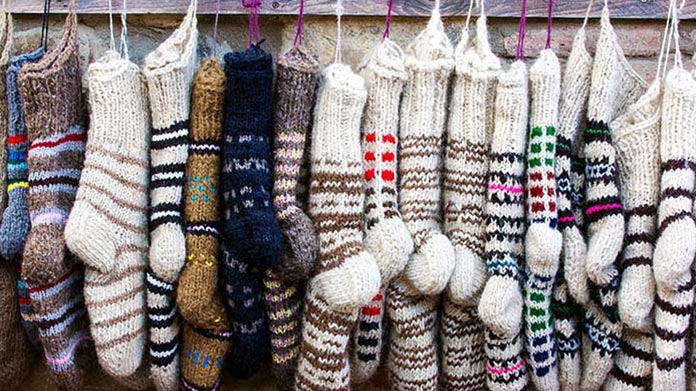
A sock shop will sell a variety of socks to customers. Owners may sell novelty socks at a premium or bulk socks for a discount.
Our guide is in 3 parts:
A sock shop will need the following in order to function:
Retail space
Inventory
Employees
Infrastructure (e.g., display racks, etc.)
Commercial insurance
Website
Ongoing expenses include the cost of inventory, employee salaries and benefits, rent/mortgage, and the cost of maintaining your website. Another ongoing expense will be business insurance, and owners are strongly encouraged to purchase a good plan. While a sock shop isn’t typically considered a hazardous place, you may have people trying on inventory in the store. If they slip at any point, they may hold you responsible for their injuries.
The target market can be anyone who wants a pair of socks. Realistically, if you’re selling novelty socks, the market is more likely to be young women in their teens and 20s. However, the demographic can be as wide as you make. For example, you can sell matching socks for parents and children, or men’s dress socks in new designs.
Owners will set a profit margin on all socks sold. They may choose to make small margins off large orders or sell smaller quantities of novelty socks at a higher margin.
Luxury knitwear socks can sell for well more than $1,000 per sock. However, you likely won’t get very far if you price your socks that high. Novelty socks can sell for about $15 a pair and regular bulk socks can sell for about $2 per pair. Research sock prices in your area before setting your own retail price list.
Average profit for a sock shop can be as high as $10 a pair. If you sell 50 pairs a day at a profit average of $5, you would make $250 per day.
Consider selling additional accessories, such as ankle bracelets or simple pairs of shoes. These items can help customers complete their look before they walk out of the store.
Owners may perform the following tasks on a regular day:
Helping customers
Stocking inventory
Researching new designs
Setting prices
Managing website
Scheduling employees
Creating new marketing campaigns
Fulfilling large orders
You should have some experience in fashion. Owners will need to know the styles and sizes (e.g., knee socks, no-shows, etc.) that will best appeal to your audience. You’ll also need excellent people skills, as you’ll need to handle both customers and employees.
Many people will purchase their socks at big box stores or online, so the growth potential may not be readily apparent for your business. However, the more intriguing your designs are, the more likely it is your sock shop will thrive. Many people buy cheap socks only to find that they need to throw them away because they fall apart after only a few wears. If you can give people quality socks that last, you’ll be more likely to make a name for yourself.
A sock shop is a really fun idea for many owners, but the reality isn’t always as glamorous. Most people already have their own preferred way of buying socks, and it’s often done for practicality reasons rather than for fashion. You’ll first need to recognize the inherent challenges of standing out in a crowded market before searching for ways to enter the industry.
Successful sock entrepreneurs carve out a niche by looking at what’s missing in their industry as opposed to what’s popular. Most people need to wear socks when they’re at work or due to the weather, so you’ll always have customers who need your services. If you hear complaints from people that low socks tend to slip off their feet, you may want to sell a premium brand that’s guaranteed not to sag. Or you may want to sell more crew socks so customers don’t have to worry about their socks bunching up mid-way through the day.
Owners should also think about what people are wearing beyond socks. So if the latest fashion trend in your area is miniskirts, you can start marketing your socks as the perfect accessory to the skirts. Or if you find that combat boots are starting to come back in style, you can start selling matching socks to complete the trend.
When you’re first getting started, you’ll want to be stingy with your money and overly generous on customer service. Social media can be a good way to get free marketing, especially considering that bright and colorful socks are already an eye-catcher. Everyone who interacts with your business should feel special, even if they just came into your shop because their friend asked them to.
You should ideally be hiring at least one employee if you’re planning to offer typical retail hours. Look for people who are friendly and experienced in sales. Ideally, they should also have some insights into the fashion market. This can help you keep your ideas fresh as you change out your inventory for the upcoming season.
Business Evaluation & Strategy Tool
We'll walk you through the four pillars every business needs: Points of Leverage, Marketing Strategy, Financial Model, and Personal Compatibility. At the end you'll see a personalized report and your action plan below will be tailored to your answers.
Every viable business has natural advantages. Below are common leverage points across four categories. Pick the ones that apply to your Sock Shop business. We've pre-suggested a few based on your idea — review and adjust.
Without a way to connect with customers, even great businesses fail. Pick the channels you plan to use to reach your customers.
Enter your monthly baseline costs — the minimum overhead to keep the business running. Then we'll calculate how many sales per month you need to break even.
A business that doesn't fit your life will fail no matter how good the numbers look. Tell us how this business fits you.
Complete the four pillars and your personalized summary will appear here.
Nine concrete steps to take you from idea to open business, grouped into 30-day phases. Complete the planner above and we'll highlight what's most important for your situation.
An LLC keeps your personal assets separate from business debts and lawsuits — the most common reason small business owners choose this structure. Sole proprietorships and partnerships do not provide this protection.
Apply for your free Employer Identification Number through the IRS, then register for any state or local taxes that apply to your business (sales tax, franchise tax).
A dedicated business account is required to maintain personal asset protection. Mixing personal and business finances ('piercing the corporate veil') can void your LLC's liability shield.
Recording expenses and income from day one makes tax filing easier and lets you see when the business is actually profitable. Use software (QuickBooks, Wave) or a part-time bookkeeper.
State and local requirements vary widely. Brick-and-mortar businesses typically need a Certificate of Occupancy; service businesses may need specific professional licensing; food businesses need health permits.
General Liability Insurance is the most common starting point. If you'll have employees, most states require Workers' Compensation. Specific industries need additional coverage (product liability, professional liability, etc.).
Your brand is how customers perceive and remember you. A clear name, logo, and visual identity make every later marketing decision easier and protect you legally as you grow.
Every legitimate business needs a website. Social media pages are not a substitute — you don't own the platform. Modern website builders mean you can launch a clean site in a weekend without a developer.
A dedicated business number keeps your personal life private, makes the business look legitimate, and lets you route calls professionally. Cloud phone services start under $20/month.
Starting a Sock Shop business typically costs $25,000 to $250,000. It is considered a very high capital-intensity business.
A Sock Shop business runs roughly a 21% net profit margin, and most owners reach break-even in about 4 to 12 months.
You can usually launch a Sock Shop business in about 12 to 36 weeks, and it is commonly run full time.
A Sock Shop business is generally an intermediate-skill business to start, with stable demand. TRUiC rates it 55 out of 100 on our Idea Score.
Most Sock Shop businesses register as an LLC or other legal entity and obtain a general business license. Depending on your state and city you may also need industry-specific permits, sales tax registration, and zoning or health approvals, so check your local requirements before you launch.