Startup cost
$1.0k–$3k
TRUiC Business Ideas
Decision Snapshot
Idea Score
65
Startup cost
$1.0k–$3k
Profit margin
21%
Break-even
4 mo–12 mo
Time to launch
12 wk–36 wk
Demand trend
Stable
5-yr failure rate
—
Capital intensity
Low
Time commitment
Full time
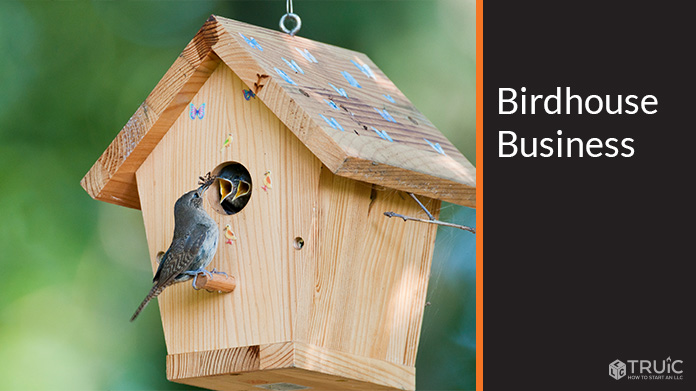
A birdhouse business manufactures and sells birdhouses, typically built from wood. The birdhouses can range from simple to extravagant. Some are small enough for just a single bird, while others have multiple compartments for multiple birds. Most entrepreneurs who sell birdhouses do so as a side project instead of as their primary business. However, the right approach could lead to a full-time business depending on the circumstances.
Our guide is in 3 parts:
You can start a birdhouse business without spending an arm and a leg – especially if you already have tools. But even if you don’t have tools, you can purchase them used at pawn shops for a reasonable price. You can even get your materials for free. Many birdhouse business owners use pallets which they get free from businesses looking to dispose of them.
You can probably start a birdhouse business for $1,000-$2,000 or less, depending on what you are starting with.
The ongoing costs of a birdhouse business include materials, tools, shop space, store maintenance (online and/or brick and mortar), and possibly employee wages. You can do a lot to keep your costs down (like using found materials for building), but some costs are unavoidable, like tool maintenance.
The target market for your birdhouses includes homeowners and birdwatchers. Many homeowners are interested in attracting more birds to their yards and want birdhouses for this purpose. Birdwatchers want to attract birds as well, and your birdhouses can help keep birds around the neighborhood. Depending on where you are located, tourists could be another market segment worth considering.
A birdhouse business makes money by selling birdhouses. Sale channels can include your company website, auction sites like eBay, online marketplaces like Etsy, craft fairs, and brick-and-mortar stores. Many craftspeople find that it’s easier to sell less expensive products online and more expensive products in person because customers are willing to spend more when they can see the craftsmanship in person.
Some birdhouse businesses charge as little as $10 a birdhouse. Others build elaborate birdhouses that sell for $500. You will probably have to sell products on the lower end as you establish your reputation. But if you can develop a strong customer base and create birdhouses that justify the cost, you can eventually start charging more.
Some companies earn substantial profits selling birdhouses, but they tend to be larger corporations that get their products in big box stores. While you may eventually grow that big, it’s probably wise to have modest expectations. Most birdhouse businesses are side gigs. It’s difficult to graduate to the point where you earn enough to quit your day job. However, some entrepreneurs do it. Depending on your angle and your motivation, you could too.
You can make your business more profitable by improving your carpentry skills. The more refined you can make your birdhouses and/or the more elaborate you can make your designs, the more you can charge. If you want to charge $500 for a birdhouse, you need to be capable of creating something that most other birdhouse makers cannot easily replicate.
There are two “typical” days at a birdhouse business. The first is the type of day that is focused on crafting birdhouses. This process can include drawing up plans, acquiring materials, making measurements and initial cuts, as well as performing finer and more detailed work. It can also include basic joinery and painting.
The other type of day that is common in the birdhouse business is fair days. You will most likely want to rent space at crafts fairs, farmers’ markets, and similar events to sell your products. These days start with setting up your displays and then talking with potential customers in order to sell birdhouses.
Carpentry skills are important when you are starting a birdhouse business. You want to make quality products and good carpentry is part of that. However, it’s also worth pointing out that birdhouses are not complex carpentry projects. You don’t have to be a master craftsman to make high-quality birdhouses. Strong communication and sales skills will also help you get your business off the ground. The better you can charm customers, the more likely they are to buy your birdhouses.
It’s difficult to find market information specifically for birdhouses, but the overall North American handicraft market is expected to exceed $400 billion by 2024. Researchers attribute the market growth to increased tourism – tourists like to purchase local handicrafts – and to online marketplaces. There has probably never been a better time to start a handicrafts business because of how easily you can reach customers online, and birdhouses are no exception.
Look for free materials. As mentioned above, you can make birdhouses out of pallets which you can get for free from local businesses. You can use small pieces of wood that won’t work for the actual houses to create signs, such as “No Crows,” or the name of the family that buys the house. You can even use old soda cans for decoration.
The less you spend on materials, the more profit you will make from each birdhouse you sell.
Most birdhouse businesses are small operations, often a one-person show. But, some birdhouse businesses may eventually need employees. If you are unable to fulfill all of the orders that keep pouring in, you probably need to hire someone to help. You can hire help for all the other things you need to get done or for assistance with constructing the actual birdhouses – it all depends on where you would like to put most of your energy.
Business Evaluation & Strategy Tool
We'll walk you through the four pillars every business needs: Points of Leverage, Marketing Strategy, Financial Model, and Personal Compatibility. At the end you'll see a personalized report and your action plan below will be tailored to your answers.
Every viable business has natural advantages. Below are common leverage points across four categories. Pick the ones that apply to your Birdhouse business. We've pre-suggested a few based on your idea — review and adjust.
Without a way to connect with customers, even great businesses fail. Pick the channels you plan to use to reach your customers.
Enter your monthly baseline costs — the minimum overhead to keep the business running. Then we'll calculate how many sales per month you need to break even.
A business that doesn't fit your life will fail no matter how good the numbers look. Tell us how this business fits you.
Complete the four pillars and your personalized summary will appear here.
Nine concrete steps to take you from idea to open business, grouped into 30-day phases. Complete the planner above and we'll highlight what's most important for your situation.
An LLC keeps your personal assets separate from business debts and lawsuits — the most common reason small business owners choose this structure. Sole proprietorships and partnerships do not provide this protection.
Apply for your free Employer Identification Number through the IRS, then register for any state or local taxes that apply to your business (sales tax, franchise tax).
A dedicated business account is required to maintain personal asset protection. Mixing personal and business finances ('piercing the corporate veil') can void your LLC's liability shield.
Recording expenses and income from day one makes tax filing easier and lets you see when the business is actually profitable. Use software (QuickBooks, Wave) or a part-time bookkeeper.
State and local requirements vary widely. Brick-and-mortar businesses typically need a Certificate of Occupancy; service businesses may need specific professional licensing; food businesses need health permits.
General Liability Insurance is the most common starting point. If you'll have employees, most states require Workers' Compensation. Specific industries need additional coverage (product liability, professional liability, etc.).
Your brand is how customers perceive and remember you. A clear name, logo, and visual identity make every later marketing decision easier and protect you legally as you grow.
Every legitimate business needs a website. Social media pages are not a substitute — you don't own the platform. Modern website builders mean you can launch a clean site in a weekend without a developer.
A dedicated business number keeps your personal life private, makes the business look legitimate, and lets you route calls professionally. Cloud phone services start under $20/month.
Starting a Birdhouse business typically costs $1,000 to $3,000. It is considered a low capital-intensity business.
A Birdhouse business runs roughly a 21% net profit margin, and most owners reach break-even in about 4 to 12 months.
You can usually launch a Birdhouse business in about 12 to 36 weeks, and it is commonly run full time.
A Birdhouse business is generally an intermediate-skill business to start, with stable demand. TRUiC rates it 65 out of 100 on our Idea Score.
Most Birdhouse businesses register as an LLC or other legal entity and obtain a general business license. Depending on your state and city you may also need industry-specific permits, sales tax registration, and zoning or health approvals, so check your local requirements before you launch.