Startup cost
$1.0k–$50k
TRUiC Business Ideas
Decision Snapshot
Idea Score
50
Startup cost
$1.0k–$50k
Profit margin
4%
Break-even
4 mo–12 mo
Time to launch
2 wk–12 wk
Demand trend
Stable
5-yr failure rate
—
Capital intensity
High
Time commitment
Flexible
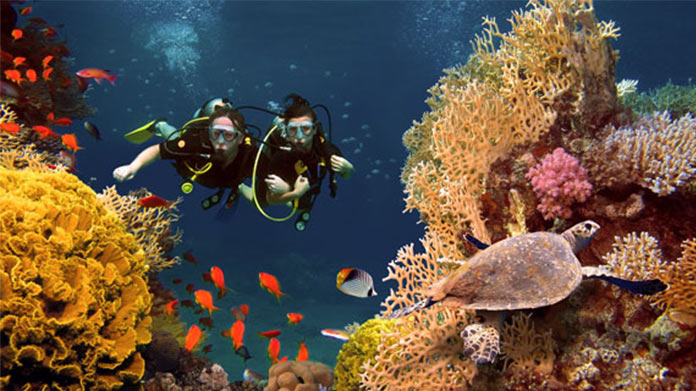
Scuba diving affords an unparalleled experience with the underwater world. However, safe diving requires training, equipment, and often a guide. Scuba diving businesses provide divers with the training, equipment, and local knowledge they need to have a fun and safe time under water.
With between 2.7 and 3.5 million active scuba divers in the United States and 6 million worldwide, there is significant demand for scuba lessons and guided dives.
Our guide is in 3 parts:
The startup costs for a scuba diving business are significant, for businesses must have:
A commercial space for teaching classes
A boat for getting to open-water dive sites
Equipment for students to use
Property and liability insurance policies
Equipment costs alone can run nearly $1,000 per set, for each student needs a regulator, air tank, wetsuit, booties and other items. Businesses that need to keep startup costs low can rent commercial space and a boat on an as-needed basis.
In total, business owners should expect to spend between $10,000 and $50,000 to start up a new scuba diving business.
Established businesses can sell for much more. At the time of writing, the prices for successful businesses in North America ranged from $30,000 to $1.5 million.
The ongoing expenses for a scuba diving business are significant. They include:
Boat and facility maintenance costs
Fuel costs
Salaries and wages for employees
Equipment replacement costs
Because equipment is used regularly and sometimes abused, it needs to be replaced frequently. A wetsuit that would last a single individual years, for instance, might need to be replaced in just a few months.
SSI-affiliated businesses must also purchase training materials for students, but these are usually passed on directly to students.
Most open water divers are affluent, typically owning their home and having an annual household income between $100,000 and $150,000. They have enough discretionary income to spend on vacations and pricey recreational sports, such as scuba diving.
A scuba diving business primarily makes money by charging customers for classes or guided dives. Many businesses also rent equipment, including necessary essentials, optional dive computers and underwater cameras to generate additional revenue.
The prices for scuba diving classes and tours range depending on the duration, level of expertise and location. For example, National Aquatic Service in Syracuse, NY has a learn-to-dive program for $399. Multi-night scuba vacations on liveaboard boats can cost thousands of dollars per person.
Even though scuba diving businesses have substantial expenses, successful ones can bring in significant revenues. A class of just 12 beginner divers could bring in nearly $4,800, and guided tours with groups can bring in much more. It’s these revenues that make established businesses worth so much more than starting a new business normally costs.
Scuba diving businesses can add revenue streams by renting equipment to private divers when the equipment isn’t being used by a class. They also can offer to service students and private divers’ gear.
Business owners who are extremely familiar with a particular dive spot might bring in a little additional revenue by writing a book on scuba diving in the area.
A typical day at a scuba diving business is full of activity. Business owners and employees spend time:
Servicing equipment (e.g. refilling air tanks, checking masks, etc.)
Maintaining the business’ building and boat (if they’re owned)
Teaching in classroom settings
Going on guided dives
Ordering more supplies and equipment
Filing paperwork for students (see Skills & Experiences)
Business owners should themselves be competent and experienced dive instructors, certified with either the Professional Association of Diving Instructors (PADI) or the Scuba Schools International (SSI).
The scuba diving business will be affiliated with one of these organizations. Which of the two organizations a business is affiliated with has a significant impact on what the business is responsible for and what support it receives.
In PADI’s system, instructors themselves certify students. This means that instructors are responsible for purchasing training materials and filing paperwork upon course completion. They communicate directly with PADI and can even run a business entirely on their own.
Despite their independence, many instructors partner with diving businesses. In these arrangements, businesses usually provide facilities, equipment and marketing. Businesses can expect only basic support from PADI.
In SSI’s system, it’s the businesses that certify students. Instructors still teach courses, but businesses order training materials, file certification paperwork and communicate with SSI. Instructors work for the businesses and can’t themselves certify students.
Thus, businesses that work with SSI are responsible for the entire training process. SSI also provides more support for businesses, although the support packages come with price tags.
Because diving requires an intimate knowledge of the local underwater features, most scuba diving businesses have just one location. If well chosen, this location can provide access to multiple dive sites.
Most people picture scuba diving businesses in tropical locations, but diving businesses can be opened anywhere where there’s open water. Businesses in colder places have limited seasons and may not get much tourist business, but they can still see a decent demand for classes from local divers who want certifications before traveling to more scenic dive spots. (Open water is required for many certifications.)
Because there’s a lot of work to do, business owners normally hire a few employees from the outset. Instructors, dive guides and shop assistants are among the first employees or independent contractors that business owners bring on.
Business Evaluation & Strategy Tool
We'll walk you through the four pillars every business needs: Points of Leverage, Marketing Strategy, Financial Model, and Personal Compatibility. At the end you'll see a personalized report and your action plan below will be tailored to your answers.
Every viable business has natural advantages. Below are common leverage points across four categories. Pick the ones that apply to your Scuba Diving business. We've pre-suggested a few based on your idea — review and adjust.
Without a way to connect with customers, even great businesses fail. Pick the channels you plan to use to reach your customers.
Enter your monthly baseline costs — the minimum overhead to keep the business running. Then we'll calculate how many sales per month you need to break even.
A business that doesn't fit your life will fail no matter how good the numbers look. Tell us how this business fits you.
Complete the four pillars and your personalized summary will appear here.
Nine concrete steps to take you from idea to open business, grouped into 30-day phases. Complete the planner above and we'll highlight what's most important for your situation.
An LLC keeps your personal assets separate from business debts and lawsuits — the most common reason small business owners choose this structure. Sole proprietorships and partnerships do not provide this protection.
Apply for your free Employer Identification Number through the IRS, then register for any state or local taxes that apply to your business (sales tax, franchise tax).
A dedicated business account is required to maintain personal asset protection. Mixing personal and business finances ('piercing the corporate veil') can void your LLC's liability shield.
Recording expenses and income from day one makes tax filing easier and lets you see when the business is actually profitable. Use software (QuickBooks, Wave) or a part-time bookkeeper.
State and local requirements vary widely. Brick-and-mortar businesses typically need a Certificate of Occupancy; service businesses may need specific professional licensing; food businesses need health permits.
General Liability Insurance is the most common starting point. If you'll have employees, most states require Workers' Compensation. Specific industries need additional coverage (product liability, professional liability, etc.).
Your brand is how customers perceive and remember you. A clear name, logo, and visual identity make every later marketing decision easier and protect you legally as you grow.
Every legitimate business needs a website. Social media pages are not a substitute — you don't own the platform. Modern website builders mean you can launch a clean site in a weekend without a developer.
A dedicated business number keeps your personal life private, makes the business look legitimate, and lets you route calls professionally. Cloud phone services start under $20/month.
Starting a Scuba Diving business typically costs $1,000 to $50,000. It is considered a high capital-intensity business.
A Scuba Diving business runs roughly a 4% net profit margin, and most owners reach break-even in about 4 to 12 months.
You can usually launch a Scuba Diving business in about 2 to 12 weeks, and it is commonly run flexible.
A Scuba Diving business is generally an expert-skill business to start, with stable demand. TRUiC rates it 50 out of 100 on our Idea Score.
Most Scuba Diving businesses register as an LLC or other legal entity and obtain a general business license. Depending on your state and city you may also need industry-specific permits, sales tax registration, and zoning or health approvals, so check your local requirements before you launch.