Startup cost
$25k–$250k
TRUiC Business Ideas
Decision Snapshot
Idea Score
38
Startup cost
$25k–$250k
Profit margin
4%
Break-even
4 mo–12 mo
Time to launch
12 wk–36 wk
Demand trend
Stable
5-yr failure rate
—
Capital intensity
Very high
Time commitment
Flexible
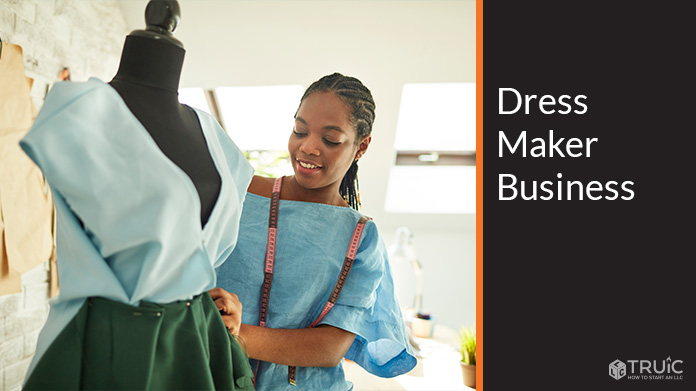
A dressmaker business specializes in creating unique, one-of-a-kind dresses for clients and customers.
Our guide is in 3 parts:
A dressmaking business can be launched for a fairly small amount. Most dressmakers operate out of their houses, so you most likely won’t spend money renting an additional space. If you don’t already have sewing equipment, or need to upgrade to more professional strength machines, you’ll need to factor in those costs.
You’ll also want to pick up business insurance to cover liabilities associated with customers who come into your house for measurements and fittings. And, you’ll need to budget for advertising, internet, and a website. Your grand opening needs to be announced far and wide and should direct customers to your website to show your wares.
A dressmaking business can maintain fairly low overhead costs, since much of your materials and sewing accessories are bought as needed for customer orders. If you’re working out of your home, you can designate a portion of the utilities, internet, and phone to the business. You’ll also want to keep business insurance for when customers visit for measurements and fittings. Website hosting and maintenance is also a necessary ongoing expense.
Dressmakers appeal to individuals with a decent amount of disposable income. They may be commissioning for a child or for themselves. Upper-middle class women ages 35-65 are a reasonable demographic to target.
A dressmaker makes their money from the sale of the custom dresses they create.
A custom dress can range anywhere in price from hundreds to thousands. Material, design, and specific ornamentation can really add to a dress maker’s price. Research competitors and similar businesses to see how they price their work.
Since there are few outlets for this work, dressmakers can command premium prices. If you have steady clients, you could earn $60,000-75,000 annually.
Alterations and repairs are excellent methods for supplementing your income and can happen more often than full dress orders. Offering alterations on existing garments requires much less time to complete and can still command a good price.
Consider offering sewing or pattern-making classes. Sewing and clothes making isn’t nearly as prevalent as it used to be, but that doesn’t mean people don’t want to learn these skills.
Dressmaker businesses rely on customer orders. Most days, they will focus on taking orders, completing measurements and fittings, creating the dresses and clothing for clients, and shipping out or fitting the finished dresses on to clients in the store.
You’ll also need to spend a solid amount of your time promoting what you do. Since this business is so niche, you have to really show off your work. Social media and the internet are excellent broadcasters. Your business website will also need to be regularly updated and full of pictures and testimonials.
Your biggest skill test will always be your sewing/seamstress/tailor abilities and how they translate to what customers want. You’ll need to be able to work fast yet accurately and meticulously.
Your customer service and communication skills should also be top notch. One pitfall to this business is fickle customers who commission work but then change their minds. You’ll need to learn to ask questions, in different ways, to different customers. And, you’ll need to consistently communicate progress and expectations.
Finally, you’ll want some experience in small business management. Having the technical skills to do the work is essential, but these skills do not matter if your business fails to exist. Running a business will require you to learn many different facets of business management.
Dressmaking businesses are specific and attract customers looking for one-of-a-kind creations. You can earn a good living if you connect with customers and charge an amount that makes it worth your time, plus some. The challenge will be to maintain a level of output and customer demand.
Advertise! You’ll have to let the public know you exist. You’ll also want to show off your previous creations. Start by building a website well before you take any orders. Display your previous creations and chat up potential customers. You’ll need to be able to switch to sales mode when needed.
Ask to put up flyers in specialty dress shops and fabric shops, and look for local publications that will be pursued by potential clientele.
More than likely, you’ll run your business as an individual. But, if you find you are more successful than anticipated, you may hire an additional seamstress/tailor to help sew orders.
Business Evaluation & Strategy Tool
We'll walk you through the four pillars every business needs: Points of Leverage, Marketing Strategy, Financial Model, and Personal Compatibility. At the end you'll see a personalized report and your action plan below will be tailored to your answers.
Every viable business has natural advantages. Below are common leverage points across four categories. Pick the ones that apply to your Dress Maker business. We've pre-suggested a few based on your idea — review and adjust.
Without a way to connect with customers, even great businesses fail. Pick the channels you plan to use to reach your customers.
Enter your monthly baseline costs — the minimum overhead to keep the business running. Then we'll calculate how many sales per month you need to break even.
A business that doesn't fit your life will fail no matter how good the numbers look. Tell us how this business fits you.
Complete the four pillars and your personalized summary will appear here.
Nine concrete steps to take you from idea to open business, grouped into 30-day phases. Complete the planner above and we'll highlight what's most important for your situation.
An LLC keeps your personal assets separate from business debts and lawsuits — the most common reason small business owners choose this structure. Sole proprietorships and partnerships do not provide this protection.
Apply for your free Employer Identification Number through the IRS, then register for any state or local taxes that apply to your business (sales tax, franchise tax).
A dedicated business account is required to maintain personal asset protection. Mixing personal and business finances ('piercing the corporate veil') can void your LLC's liability shield.
Recording expenses and income from day one makes tax filing easier and lets you see when the business is actually profitable. Use software (QuickBooks, Wave) or a part-time bookkeeper.
State and local requirements vary widely. Brick-and-mortar businesses typically need a Certificate of Occupancy; service businesses may need specific professional licensing; food businesses need health permits.
General Liability Insurance is the most common starting point. If you'll have employees, most states require Workers' Compensation. Specific industries need additional coverage (product liability, professional liability, etc.).
Your brand is how customers perceive and remember you. A clear name, logo, and visual identity make every later marketing decision easier and protect you legally as you grow.
Every legitimate business needs a website. Social media pages are not a substitute — you don't own the platform. Modern website builders mean you can launch a clean site in a weekend without a developer.
A dedicated business number keeps your personal life private, makes the business look legitimate, and lets you route calls professionally. Cloud phone services start under $20/month.
Starting a Dress Maker business typically costs $25,000 to $250,000. It is considered a very high capital-intensity business.
A Dress Maker business runs roughly a 4% net profit margin, and most owners reach break-even in about 4 to 12 months.
You can usually launch a Dress Maker business in about 12 to 36 weeks, and it is commonly run flexible.
A Dress Maker business is generally an intermediate-skill business to start, with stable demand. TRUiC rates it 38 out of 100 on our Idea Score.
Most Dress Maker businesses register as an LLC or other legal entity and obtain a general business license. Depending on your state and city you may also need industry-specific permits, sales tax registration, and zoning or health approvals, so check your local requirements before you launch.