Startup cost
$25k–$250k
TRUiC Business Ideas
Decision Snapshot
Idea Score
38
Startup cost
$25k–$250k
Profit margin
4%
Break-even
4 mo–12 mo
Time to launch
12 wk–36 wk
Demand trend
Stable
5-yr failure rate
—
Capital intensity
Very high
Time commitment
Flexible
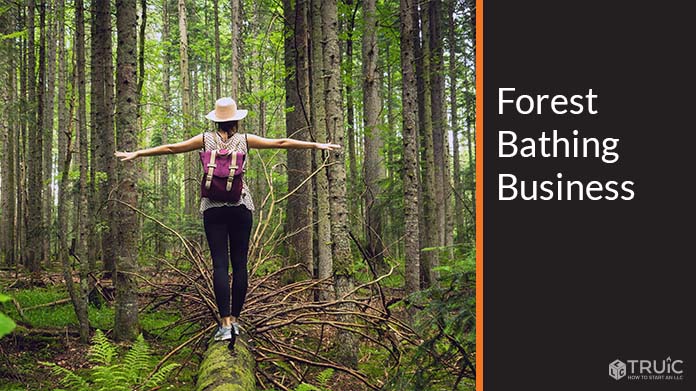
A forest bathing business offers guide services to clients who want to benefit from forest therapy – the practice of mindfulness in a natural setting, preferably in a forest. The term “forest bathing” is a translation of the Japanese “shinrin-yoku.” The practice of forest bathing developed in Japan but is now frequently employed in the US. The practice has been shown to lower blood pressure, stress hormones, and heart rates. A forest bathing business offers these benefits to clients by taking them through specific forest bathing practices in a natural setting.
Our guide is in 3 parts:
Opening your forest bathing business can be relatively affordable because you can do business out of your home. However, if you are not yet certified in forest therapy, you will need to go through a training program. Tuition for a six-month core training program at the Association of Nature & Forest Therapy (ANFT) is $2,995. After you complete the initial training program, you will need to go through a four-day immersion program, which costs $495.
The ongoing cost of operating a forest bathing business is minimal. You only need a phone and a laptop to communicate with clients and market your services. Depending on how often you are out on the trail, you will need to replace your outdoor gear – but your work does not involve strenuous hiking, just walking on easy trails. Likely the biggest ongoing expense will be post-certification courses like the $495 four-day immersion courses offered by the ANFT.
The target market for a forest bathing business is anyone who can benefit from stress reduction and a focus on their general health. But, while anyone can probably benefit from your services, you will still want to hone in on a more niche market so you can gain traction at the beginning. You will have to decide who you think will be most interested in your business. Some possible target markets could be mental healthcare facilities, customers of outdoor stores, and business executives.
A forest bathing business makes money by charging clients for guided forest bathing sessions. Some businesses will offer multiple types of sessions, including half-day, all-day, and even multi-day forest bathing experiences.
The cost of forest bathing varies depending on what organization is offering the service and depending on the length and complexity of the guided trips. One guide offers three-hour walks for $30 and a $199 all-day experience at a spa. Another company offers a 50-minute guided experience for $160.
Forest bathing businesses are not typically big profit earners on their own. Of course, if your services become popular enough and you have a steady business, you could make more than most similar businesses do. As stated before, most forest bathing guides offer their services as a side gig or as one of several services, such as running an outdoor holiday retreat center.
Probably the most surefire way to increase your profits is to build a business that offers more than just forest bathing. For example, if you started an outdoor-oriented health retreat that offered massage, spa services, and forest bathing guided trips, you would be able to significantly increase your profits.
A typical day in a forest bathing business begins with meeting clients at the beginning of a forest trail. After you explain the basic guidelines of a forest bathing session, you will take your clients on a slow walk through the forest. The walks are typically a short distance – a half-mile or less – and not physically demanding. The goal is to get your clients into a natural environment and help them to gently focus on the environment around them. At the end of the session, you will guide your clients out and do a final recap before parting ways.
When you are not guiding clients, you will be answering inquiries from potential clients, handling billing and bookkeeping, and establishing working relationships with those responsible for the land you use – such as landowners or foundations.
Compassion and patience are two qualities that can help you improve as a forest bathing guide. Clients can struggle when first introduced to the practice, and it’s your job to carefully keep them on track. It’s also important to train yourself in the practice of forest bathing by taking a course and getting your certification. Forest bathing has been carefully developed over the decades into a refined practice, and your clients will get the most benefit if you practice as directed.
While forest bathing is becoming more well-known, thus far it has not become a “hot” type of therapy. Forest bathing on its own may not be guaranteed to become a major profit producer, but the complementary and alternative medicine market overall is growing. In 2020, the global market was valued at over $82 billion and predicted to grow substantially in the coming years.
Like all health-promoting businesses, improving your ability to help clients is only part of the equation for a successful business. You certainly want to steadily improve your guiding skills – but you also need to pay attention to the business side of your startup. Write a business plan so you can start out knowing how you plan to make money and what your costs will be. Keep up with bookkeeping to ensure your business is on the path to profitability. It may be helpful to take some small business classes in addition to your forest therapy classes.
Most forest bathing businesses are operated by individual entrepreneurs and are small – many times they are not the primary source of income for the owner. However, it is possible that your business could grow into something larger – just like the ANFT did. Or, you may choose to offer other complementary therapies either alone or by teaming up with others.
As a general rule, if you cannot do everything yourself, you probably shouldn’t be. If you have enough clients that you cannot keep up with answering potential client inquiries, you may need an administrative assistant. If you want to build a treatment center that offers other therapies, you may want to recruit other practitioners to join in your work.
Business Evaluation & Strategy Tool
We'll walk you through the four pillars every business needs: Points of Leverage, Marketing Strategy, Financial Model, and Personal Compatibility. At the end you'll see a personalized report and your action plan below will be tailored to your answers.
Every viable business has natural advantages. Below are common leverage points across four categories. Pick the ones that apply to your Forest Bathing business. We've pre-suggested a few based on your idea — review and adjust.
Without a way to connect with customers, even great businesses fail. Pick the channels you plan to use to reach your customers.
Enter your monthly baseline costs — the minimum overhead to keep the business running. Then we'll calculate how many sales per month you need to break even.
A business that doesn't fit your life will fail no matter how good the numbers look. Tell us how this business fits you.
Complete the four pillars and your personalized summary will appear here.
Nine concrete steps to take you from idea to open business, grouped into 30-day phases. Complete the planner above and we'll highlight what's most important for your situation.
An LLC keeps your personal assets separate from business debts and lawsuits — the most common reason small business owners choose this structure. Sole proprietorships and partnerships do not provide this protection.
Apply for your free Employer Identification Number through the IRS, then register for any state or local taxes that apply to your business (sales tax, franchise tax).
A dedicated business account is required to maintain personal asset protection. Mixing personal and business finances ('piercing the corporate veil') can void your LLC's liability shield.
Recording expenses and income from day one makes tax filing easier and lets you see when the business is actually profitable. Use software (QuickBooks, Wave) or a part-time bookkeeper.
State and local requirements vary widely. Brick-and-mortar businesses typically need a Certificate of Occupancy; service businesses may need specific professional licensing; food businesses need health permits.
General Liability Insurance is the most common starting point. If you'll have employees, most states require Workers' Compensation. Specific industries need additional coverage (product liability, professional liability, etc.).
Your brand is how customers perceive and remember you. A clear name, logo, and visual identity make every later marketing decision easier and protect you legally as you grow.
Every legitimate business needs a website. Social media pages are not a substitute — you don't own the platform. Modern website builders mean you can launch a clean site in a weekend without a developer.
A dedicated business number keeps your personal life private, makes the business look legitimate, and lets you route calls professionally. Cloud phone services start under $20/month.
Starting a Forest Bathing business typically costs $25,000 to $250,000. It is considered a very high capital-intensity business.
A Forest Bathing business runs roughly a 4% net profit margin, and most owners reach break-even in about 4 to 12 months.
You can usually launch a Forest Bathing business in about 12 to 36 weeks, and it is commonly run flexible.
A Forest Bathing business is generally an intermediate-skill business to start, with stable demand. TRUiC rates it 38 out of 100 on our Idea Score.
Most Forest Bathing businesses register as an LLC or other legal entity and obtain a general business license. Depending on your state and city you may also need industry-specific permits, sales tax registration, and zoning or health approvals, so check your local requirements before you launch.