Startup cost
$30k–$100k
TRUiC Business Ideas
Decision Snapshot
Idea Score
51
Startup cost
$30k–$100k
Profit margin
6%
Break-even
4 mo–12 mo
Time to launch
2 wk–12 wk
Demand trend
Stable
5-yr failure rate
—
Capital intensity
High
Time commitment
Flexible
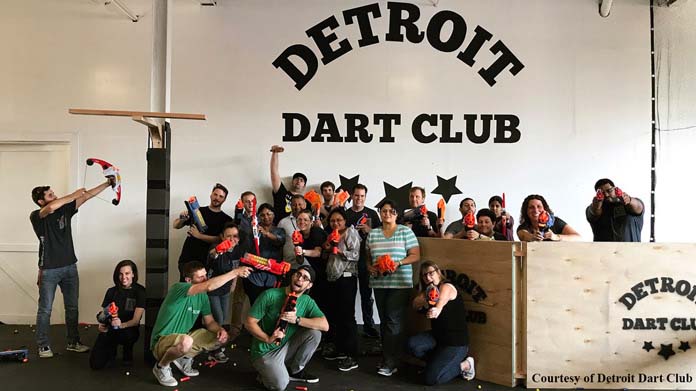
A Nerf arena provides a large indoor or outdoor space for customers to battle each other with Nerf guns and foam bullets. Courses and game play are designed for multiple skill levels and age groups.
You may also be interested in additional unique business ideas.
Our guide is in 3 parts:
Your Nerf arena will require a significant amount of space, either indoor or outdoor, and equipment. Total costs depend on a number of factors, including: whether it will be an indoor or outdoor facility, what type of “courses” you plan to offer customers, and how large of a staff you plan to employ. Start-up entrepreneurs recommend a budget of $30,000 to $75,000, depending upon the specifics of the arena and the region in which you reside.
Consider the following when planning your budget:
Lease building – a minimum of 2,000 to 5,000 square feet is recommended.
Build-out and decor for arena course – $5,000 to $10,000
Insurance – cost varies depending upon a number of factors. Seek the advice of a trusted insurance agent.
Nerf guns, ammunition, eyewear, and colored vests – guns range anywhere from $15 to $75. Ammunition refill packs can run upwards of $40.
Point of sale/management software – items – $3,000 to $9,000
While this is a fairly new idea in the entertainment industry, several Nerf arena owners are now offering franchise opportunities. Entrepreneurs who lack relevant experience are encouraged to consider these options when constructing their business plan.
Nerf arena business owners report an annual ongoing expenses of $155,000 to $230,000, depending upon the size and scope.
Ongoing expenses include the following:
Lease
Utilities, phone, etc
Payroll
Marketing and printed material
Insurance
Business management software upgrades and credit card fees
Miscellaneous supplies
Routine maintenance, repair, and replacement of equipment
Fortunately, Nerf arenas are the type of adventure that appeals to individuals of every age group. Your core audience will be aged six to fourteen. However, many facilities have found that, with the right course design and equipment, much of their revenue is derived from corporate groups looking for a fun way to solidify business teams and reward employees for their hard work.
Nerf arenas generate revenue from each individual that visits the establishment. A majority of the business’ income will come from groups that reserve the space for a birthday party or company event.
Customers are charged per hour, with a national average of $8 to $12 per hour. Rounds generally last three to five minutes, allowing players to get in twelve or more rounds in an hour. Admission includes basic Nerf guns and ammo, with the option to upgrade for additional fees.
Annual profits depend upon a number of factors. A well-designed facility of 3,000 square feet, has the potential to generate profits upwards of $50,000 annually in the first three years.
To maximize profits, maintain a facility that keeps up with the latest trends and a course consistently changes. Boost excitement for Nerf gameplay by implementing the following strategies:
Offer something different and exciting on the weekends. Blacklight play has proven popular at other facilities across the country.
Market to schools and churches in your area, offering your facilities for team sports practice during off hours.
Host tournaments and consider starting a Nerf league.
Offer food and drink.
Focus on large parties and group events.
Include other entertainment options, such as an arcade, to attract those who aren’t interested in Nerf battles.
Mobile Nerf gameplay will attract an additional demographic and is a great service for families wanting to host birthday parties at their homes.
A Nerf arena owner will spend a good deal of time actively playing with customers, as interaction with customers is priority number one. Visitors who walk away with a smile on their face will not only become regular customers, they will share their experience with others in the community. Direct involvement in game play will safeguard against injury. Additionally, it will offer your team an opportunity to note customer feedback, adjusting business strategies accordingly.
In addition, your Nerf arena team will need to:
Place vendor orders when supplies run low
Routine maintenance and cleaning of arena and equipment
Safety check of course and all equipment
Conduct market research regularly to ensure your business keeps up with the latest trends
Schedule parties and host events
Implement marketing strategy and network within the community
Accounting and administrative duties
Experience in the entertainment industry, particularly one involving gameplay, would prove beneficial. This would help ensure the safety of your clients and offer a clearer understanding as to what visitors expect from your facility.
Attention to detail and strong leadership skills are critical for the entrepreneur seeking long-term success and growth. Additionally, since your days will be spent interacting with customers and staff, sound social and communication skills will be paramount to your success. This will assist in networking and implementing a marketing strategy and will leave a lasting impression on your customers, ensuring a more positive experience. If you do not have business management experience and knowledge, consider taking a basic business course at your local college.
Battlefield Sports University is a wonderful resource for those starting out in this industry. They offer insider tips on everything from marketing to technical advice and industry trends.
Nerf guns have regained popularity over the last decade, offering entrepreneurs a unique opportunity to invest in a fairly new business venture. This growing trend, however, has yet to reach many cities across the U.S. Those who possess both vision and drive can expand their enterprise to entertain Nerf gun enthusiasts in every major city.
Industry leaders offer the following advice to those interested in starting their own arena:
Keep your target market in mind when investing in equipment. Offer a variety of different Nerf guns, including ones that are light enough to be carried by young visitors and heavy duty ones that appeal to the Nerf enthusiast.
Make sure your arena offers the “three P’s” – parking, space for battle play, and a place to “pee.”
Your hours of operation are critical to the arena’s overall success. The facility should have daytime hours for organizations who wish to host business events and evening/weekend hours for children to attend during non-school hours.
Make sure your course is exciting and includes places for customers to hunker down. Consider changing the course periodically to keep things interesting for repeat customers.
Much like laser tag, this is a limited occupancy activity. When designing your space, at least 165 square feet per player is recommended.
Each player should sign a waiver before entering battle play to help reduce business liability.
In the beginning, many Nerf arena business owners run the entire facility on their own. As the business grows in popularity, however, it may be necessary to build a small team. Employees of any age are acceptable, as long as they are dedicated to delivering a positive experience. They should be outgoing and friendly, properly trained on all equipment, and should possess safety and first aid knowledge should an emergency occur.
Business Evaluation & Strategy Tool
We'll walk you through the four pillars every business needs: Points of Leverage, Marketing Strategy, Financial Model, and Personal Compatibility. At the end you'll see a personalized report and your action plan below will be tailored to your answers.
Every viable business has natural advantages. Below are common leverage points across four categories. Pick the ones that apply to your Nerf Arena business. We've pre-suggested a few based on your idea — review and adjust.
Without a way to connect with customers, even great businesses fail. Pick the channels you plan to use to reach your customers.
Enter your monthly baseline costs — the minimum overhead to keep the business running. Then we'll calculate how many sales per month you need to break even.
A business that doesn't fit your life will fail no matter how good the numbers look. Tell us how this business fits you.
Complete the four pillars and your personalized summary will appear here.
Nine concrete steps to take you from idea to open business, grouped into 30-day phases. Complete the planner above and we'll highlight what's most important for your situation.
An LLC keeps your personal assets separate from business debts and lawsuits — the most common reason small business owners choose this structure. Sole proprietorships and partnerships do not provide this protection.
Apply for your free Employer Identification Number through the IRS, then register for any state or local taxes that apply to your business (sales tax, franchise tax).
A dedicated business account is required to maintain personal asset protection. Mixing personal and business finances ('piercing the corporate veil') can void your LLC's liability shield.
Recording expenses and income from day one makes tax filing easier and lets you see when the business is actually profitable. Use software (QuickBooks, Wave) or a part-time bookkeeper.
State and local requirements vary widely. Brick-and-mortar businesses typically need a Certificate of Occupancy; service businesses may need specific professional licensing; food businesses need health permits.
General Liability Insurance is the most common starting point. If you'll have employees, most states require Workers' Compensation. Specific industries need additional coverage (product liability, professional liability, etc.).
Your brand is how customers perceive and remember you. A clear name, logo, and visual identity make every later marketing decision easier and protect you legally as you grow.
Every legitimate business needs a website. Social media pages are not a substitute — you don't own the platform. Modern website builders mean you can launch a clean site in a weekend without a developer.
A dedicated business number keeps your personal life private, makes the business look legitimate, and lets you route calls professionally. Cloud phone services start under $20/month.
Starting a Nerf Arena business typically costs $30,000 to $100,000. It is considered a high capital-intensity business.
A Nerf Arena business runs roughly a 6% net profit margin, and most owners reach break-even in about 4 to 12 months.
You can usually launch a Nerf Arena business in about 2 to 12 weeks, and it is commonly run flexible.
A Nerf Arena business is generally an intermediate-skill business to start, with stable demand. TRUiC rates it 51 out of 100 on our Idea Score.
Most Nerf Arena businesses register as an LLC or other legal entity and obtain a general business license. Depending on your state and city you may also need industry-specific permits, sales tax registration, and zoning or health approvals, so check your local requirements before you launch.