Startup cost
$1.0k–$50k
TRUiC Business Ideas
Decision Snapshot
Idea Score
52
Startup cost
$1.0k–$50k
Profit margin
5%
Break-even
4 mo–12 mo
Time to launch
2 wk–8 wk
Demand trend
Stable
5-yr failure rate
—
Capital intensity
High
Time commitment
Flexible
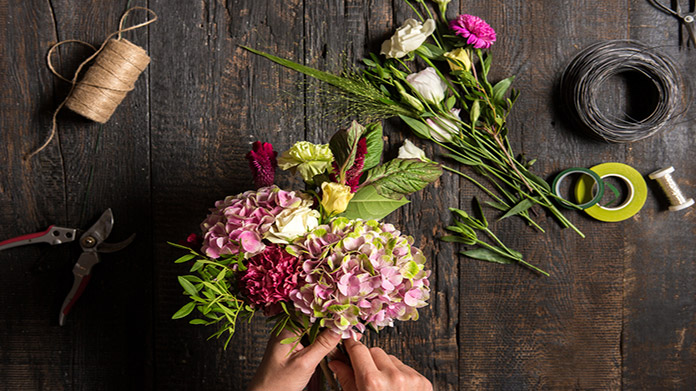
Starting a flower shop can be an exciting and rewarding business venture for entrepreneurs who have a genuine passion for floral design and enjoy the creative, hands-on work of arranging flowers.
Having said that, you should keep in mind that launching a successful flower shop requires careful planning, dedication, and a strong understanding of both floral design and business management.
In this comprehensive guide, we’ll walk you through all the essential steps you’ll need to take to start your own flower shop, from conducting market research and sourcing suppliers to crafting beautiful arrangements and getting your business licensed.
Our guide is in 3 parts:
The global cut flower market — which describes flowers that are specifically grown to be cut, arranged, and sold for decorative purposes — was valued at $37.45 billion in 2023, with projections indicating it could grow at a steady rate of up to 4.80% per year between 2024 and 2030.
In particular, this growth is largely thought to be as a result of significant technological advancements in the floriculture domain, which have driven innovations in cultivation efficiency, sustainability, and higher-quality blooms.
Due to these improvements, producers are increasingly able to offer fresher and more sustainable flowers while reducing costs, which — coupled with the higher disposable incomes in many regions — has only further propelled consumer demand and industry growth.
One key challenge to new and existing flower shops alike is the increasingly strict regulation of packaging materials and the way in which cut flowers can be transported. As an example, certain types of plastic are now prohibited to be used in packaging due to their negative effect on the environment.
The reason this is an issue for flower shops is because many eco-friendly alternatives lack the necessary durability as they’re not water resistant — this can cause problems when delivering flowers since their stems are typically wrapped with wet materials (e.g., dampened cloth) to maintain freshness during travel.
While a positive step forward for the industry as a whole, these packaging changes can significantly impact costs for flower shop owners because eco-friendly materials that are sufficiently durable (e.g., biodegradable cellophane or cardboard with a wax coating) are often more expensive than plastic alternatives.
If you’re considering whether a flower shop is right for you, the first thing you’ll need to know is whether it’s a) affordable, and b) worth the investment. I mean, how much can you actually make running your own flower shop?
Well, it depends; the initial investment for a flower shop varies widely based on factors such as your location, the quality and size of your inventory, and whether or not you run a home-based shop:
Lease and Location Costs: When thinking about setting up a flower shop, the most significant cost you’ll likely be faced with is that associated with leasing a retail space. Depending on where exactly you plan to set up shop, this cost could range anywhere between $1,000 and $3,500 per month in smaller towns or up to $5,000 or more in high-traffic urban locations. Including deposits, this means that the initial amount you could spend on your lease will typically fall somewhere between $3,000 and $15,000 in total.
Equipment and Furnishings: Perhaps the most significant cost to be aware of after your lease, you can typically expect to spend between $5,000 and $10,000 on essential equipment like coolers, tables, vases, pruning tools, ribbons, and cards form a significant part of initial expenses. Coolers in particular — which are key for preserving flower freshness — are often the largest part of this upfront investment as a high-quality one generally ranges between $2,500 and $6,000 in price.
Initial Inventory and Supplies: In general, you should expect to budget between $4,000 and $8,000 for your initial inventory of flowers and floral supplies, such as floral tape, wire, foam, and preservatives. However, you may end up spending outside this range depending on the variety and volume of flowers and supplies you deem necessary for your shop to be fully stocked.
Overall, you can typically expect to invest between $40,000 and $50,000 upfront in order to get your flower shop up and running, assuming it doesn’t need too many renovations or layout changes — this figure also includes a few months of working capital to give your business a little breathing room.
Of course, if you decide to run a home-based shop your costs will be drastically lower than this estimation — not only because you’ll save on a commercial lease, but also because you’ll likely have a smaller selection of products too.
In terms of ongoing costs, the main ones to be aware of will include your rent and utilities, employee wages, insurance, and any regular supply or inventory expenses.
According to the Society of American Florists, the average retail flower shop brought in around $679,000 in revenue in 2022, though this amount can vary significantly by area.
In general, flower shops make a large portion of their income from the seasonal spikes in revenue they receive around holidays such as Valentine’s Day, Mother’s Day, and Father’s Day. However, year-round income typically comes from events like weddings and funerals.
The typical markup for cut flowers in the retail florist industry is around 300%, meaning that a bouquet costing $20 to assemble is often sold for around $60. However, due to the perishable nature of flowers a portion of inventory inevitably goes unsold, meaning actual profit margins are normally quite a bit lower.
For instance, after accounting for costs like inventory and labor, the profit margin for a florist shop typically narrows to between 5% and 10% of sales. Despite this modest margin, a flower shop can still make significant profit if it manages its inventory well and offers a differentiated product mix that attracts a loyal customer base.
One of the main threats to the earning potential of a typical flower shop is how saturated this industry is — there’s always someone who’ll sell more cheaply than you, particularly with the entrance of supermarkets and online florists to this space.
The way to overcome this hurdle is by focusing on building strong customer relationships and a reputation for exceptional service. This is a little less challenging in this market since flower shops typically cater to important life events like weddings and funerals, which makes customers less price-sensitive as they’re more focused on quality and personalization.
The primary target market for a flower shop consists of customers aged 45 to 64, as they are more likely to purchase flowers as gifts.
However, younger consumers aged 25 to 44 are also a valuable audience, particularly when the shop is positioned conveniently for quick stops and impulse purchases.
Flower shops typically mark up cut flowers by around 300%, meaning that if it costs $10 to assemble a bouquet, it might be sold for $30.
With that being said, prices will vary based on the type of flowers used and complexity of arrangements, with high-end custom bouquets for special occasions fetching much higher profit margins.
A flower shop’s profit margin generally falls between 5% and 10% of sales, as perishable inventory can drive up costs.
With annual sales averaging nearly $700,000 in traditional flower shops, this can allow well-managed businesses in this area to make very healthy profits.
To improve profitability, a flower shop should focus on minimizing inventory waste by aligning purchases with demand, such as holidays and special events.
Offering premium custom arrangements, building strong relationships for event-based sales, and enhancing customer service can also increase repeat business and boost revenue.
Business Evaluation & Strategy Tool
We'll walk you through the four pillars every business needs: Points of Leverage, Marketing Strategy, Financial Model, and Personal Compatibility. At the end you'll see a personalized report and your action plan below will be tailored to your answers.
Every viable business has natural advantages. Below are common leverage points across four categories. Pick the ones that apply to your Flower Shop business. We've pre-suggested a few based on your idea — review and adjust.
Without a way to connect with customers, even great businesses fail. Pick the channels you plan to use to reach your customers.
Enter your monthly baseline costs — the minimum overhead to keep the business running. Then we'll calculate how many sales per month you need to break even.
A business that doesn't fit your life will fail no matter how good the numbers look. Tell us how this business fits you.
Complete the four pillars and your personalized summary will appear here.
Nine concrete steps to take you from idea to open business, grouped into 30-day phases. Complete the planner above and we'll highlight what's most important for your situation.
An LLC keeps your personal assets separate from business debts and lawsuits — the most common reason small business owners choose this structure. Sole proprietorships and partnerships do not provide this protection.
Apply for your free Employer Identification Number through the IRS, then register for any state or local taxes that apply to your business (sales tax, franchise tax).
A dedicated business account is required to maintain personal asset protection. Mixing personal and business finances ('piercing the corporate veil') can void your LLC's liability shield.
Recording expenses and income from day one makes tax filing easier and lets you see when the business is actually profitable. Use software (QuickBooks, Wave) or a part-time bookkeeper.
State and local requirements vary widely. Brick-and-mortar businesses typically need a Certificate of Occupancy; service businesses may need specific professional licensing; food businesses need health permits.
General Liability Insurance is the most common starting point. If you'll have employees, most states require Workers' Compensation. Specific industries need additional coverage (product liability, professional liability, etc.).
Your brand is how customers perceive and remember you. A clear name, logo, and visual identity make every later marketing decision easier and protect you legally as you grow.
Every legitimate business needs a website. Social media pages are not a substitute — you don't own the platform. Modern website builders mean you can launch a clean site in a weekend without a developer.
A dedicated business number keeps your personal life private, makes the business look legitimate, and lets you route calls professionally. Cloud phone services start under $20/month.
Starting a Flower Shop business typically costs $1,000 to $50,000. It is considered a high capital-intensity business.
A Flower Shop business runs roughly a 5% net profit margin, and most owners reach break-even in about 4 to 12 months.
You can usually launch a Flower Shop business in about 2 to 8 weeks, and it is commonly run flexible.
A Flower Shop business is generally an intermediate-skill business to start, with stable demand. TRUiC rates it 52 out of 100 on our Idea Score.
Most Flower Shop businesses register as an LLC or other legal entity and obtain a general business license. Depending on your state and city you may also need industry-specific permits, sales tax registration, and zoning or health approvals, so check your local requirements before you launch.