Startup cost
$25k–$250k
TRUiC Business Ideas
Decision Snapshot
Idea Score
41
Startup cost
$25k–$250k
Profit margin
6%
Break-even
4 mo–12 mo
Time to launch
12 wk–36 wk
Demand trend
Stable
5-yr failure rate
—
Capital intensity
Very high
Time commitment
Flexible
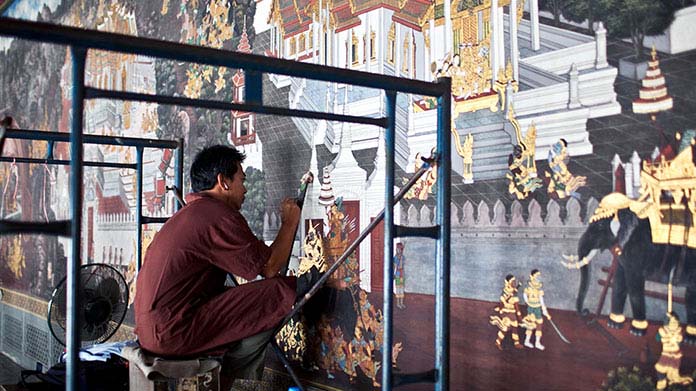
An art restoration business restores works of art for clients, such as paintings and sculptures. These businesses focus on repairing damage and degradation of art and usually attempt to return art to its original condition. The damage may be due to an accident – such as someone falling through a painting – or due to time and natural causes. Some of these businesses serve the general public, while others work for museums and similar organizations.
Our guide is in 3 parts:
Most of the initial costs of starting an art restoration business are educational costs. Completing a graduate degree in conservation is expensive. During your education, you are going to purchase a variety of art supplies to do your work which is also costly. Fortunately, starting your actual business will not require too much additional investment if you are doing it on your own and out of your home. As long as you have the proper art supplies, you can market yourself fairly inexpensively using online options and social media.
The ongoing expenses for an art restoration business include rent for space (if you aren’t working out of your home), art supplies and equipment, staff wages, marketing costs, and association dues with the American Institute for Conservation (AIC). Other expenses include the cost of lab work and similar services, but these are costs you can pass on to the client directly.
The target market is anyone in possession of art that needs to be restored. These include private owners and larger institutions like museums. Many museums have restorationists on staff, so they may not be interested in hiring other businesses to do restoration work for them. However, there is always the chance that the restoration staff will need help so don’t rule museums and similar organizations out completely.
A small art restoration business can expect to earn between $50,000-$100,000 a year, depending on what types of clients it serves and how well-established it is.
Many art restorationists charge $100 per hour or more for their services. The work is something that only extremely skilled artists can do, so it makes sense that the cost for restoration is high. And if you are restoring something more precious, such as a historically significant piece of art for a collector, you can charge much more. The size of the job plays a big part on the cost as well. While a small painting may cost around $1,000 to restore, a large painting may cost $10,000 or more.
A small art restoration business can expect to earn between $50,000-$100,000 a year, depending on what types of clients it serves and how well-established it is.
You can make your business more profitable by developing a strong reputation for your services. When you are just opening your business, you will probably be doing more work for clients who do not have a lot of money to spend on your services. For instance, a family that wants to restore a painting grandma made when she was young. However, if you steadily demonstrate your knowledge and skill – and form strong relationships with others in the industry – you can gain the attention of clients with more money to spend, such as wealthy art collectors. It will take time, but the same is true for most businesses.
A typical day at an art restoration business includes a lot of time spent restoring works of art – but it also includes other less exciting tasks. Art restorationists who run their own businesses need to spend time meeting clients, determining estimates, surveying artworks, marketing their services, and more. Often, the daytime will be spent handling these various tasks and the evenings and nights will be spent on restoration work.
You must have the necessary artistic skills to recreate the works of art you are asked to restore. Proper training in the right areas – such as painting if you are restoring paintings – is a must so you can do your work with confidence. Understanding the science of the art you focus on is a must as well. For example, you want to be capable of identifying what materials were used in the original piece, what chemical reactions have occurred to cause degradation, and how to correct the degradation without compromising the underlying materials.
The art restoration industry has remained relatively stable and will likely remain so. The number of artworks that need to be restored may not increase suddenly, as the market for new tech often does, but the number is also unlikely to decrease drastically, either. Museums and collectors will continue to need the services of art restorationists as time takes its toll on older works of art and accidents happen.
Clients that come to you for restoration services are going to want to know that you have what it takes to do things right. That’s why it’s a good idea to complete your education in restoration and learn as much as you can about the process. Once you graduate, spend a few years working for other, well-established art restorationists to get more experience. You want to attract high-paying clients – but those clients expect you to know what you are doing and are unlikely to hire you straight out of school.
It’s impossible to do everything on your own when you are restoring art. At the least, you will need to send out samples to labs so you can identify what you are working with. But you will likely need more help than that if you want to serve multiple clients at the same time. It’s helpful to have a team that can take photographs, produce documentation, contact clients, create reports, and do all the other things that must happen before you can start restoration work.
Before you open for business, consider what kind of team you might need and where you might find them. If you can get the funding to hire some help, you are more likely to develop momentum and build a client base sooner rather than later.
Business Evaluation & Strategy Tool
We'll walk you through the four pillars every business needs: Points of Leverage, Marketing Strategy, Financial Model, and Personal Compatibility. At the end you'll see a personalized report and your action plan below will be tailored to your answers.
Every viable business has natural advantages. Below are common leverage points across four categories. Pick the ones that apply to your Art Restoration business. We've pre-suggested a few based on your idea — review and adjust.
Without a way to connect with customers, even great businesses fail. Pick the channels you plan to use to reach your customers.
Enter your monthly baseline costs — the minimum overhead to keep the business running. Then we'll calculate how many sales per month you need to break even.
A business that doesn't fit your life will fail no matter how good the numbers look. Tell us how this business fits you.
Complete the four pillars and your personalized summary will appear here.
Nine concrete steps to take you from idea to open business, grouped into 30-day phases. Complete the planner above and we'll highlight what's most important for your situation.
An LLC keeps your personal assets separate from business debts and lawsuits — the most common reason small business owners choose this structure. Sole proprietorships and partnerships do not provide this protection.
Apply for your free Employer Identification Number through the IRS, then register for any state or local taxes that apply to your business (sales tax, franchise tax).
A dedicated business account is required to maintain personal asset protection. Mixing personal and business finances ('piercing the corporate veil') can void your LLC's liability shield.
Recording expenses and income from day one makes tax filing easier and lets you see when the business is actually profitable. Use software (QuickBooks, Wave) or a part-time bookkeeper.
State and local requirements vary widely. Brick-and-mortar businesses typically need a Certificate of Occupancy; service businesses may need specific professional licensing; food businesses need health permits.
General Liability Insurance is the most common starting point. If you'll have employees, most states require Workers' Compensation. Specific industries need additional coverage (product liability, professional liability, etc.).
Your brand is how customers perceive and remember you. A clear name, logo, and visual identity make every later marketing decision easier and protect you legally as you grow.
Every legitimate business needs a website. Social media pages are not a substitute — you don't own the platform. Modern website builders mean you can launch a clean site in a weekend without a developer.
A dedicated business number keeps your personal life private, makes the business look legitimate, and lets you route calls professionally. Cloud phone services start under $20/month.
Starting an Art Restoration business typically costs $25,000 to $250,000. It is considered a very high capital-intensity business.
An Art Restoration business runs roughly a 6% net profit margin, and most owners reach break-even in about 4 to 12 months.
You can usually launch an Art Restoration business in about 12 to 36 weeks, and it is commonly run flexible.
An Art Restoration business is generally an expert-skill business to start, with stable demand. TRUiC rates it 41 out of 100 on our Idea Score.
Most Art Restoration businesses register as an LLC or other legal entity and obtain a general business license. Depending on your state and city you may also need industry-specific permits, sales tax registration, and zoning or health approvals, so check your local requirements before you launch.