Startup cost
$25k–$250k
TRUiC Business Ideas
Decision Snapshot
Idea Score
41
Startup cost
$25k–$250k
Profit margin
6%
Break-even
4 mo–12 mo
Time to launch
12 wk–36 wk
Demand trend
Stable
5-yr failure rate
—
Capital intensity
Very high
Time commitment
Flexible
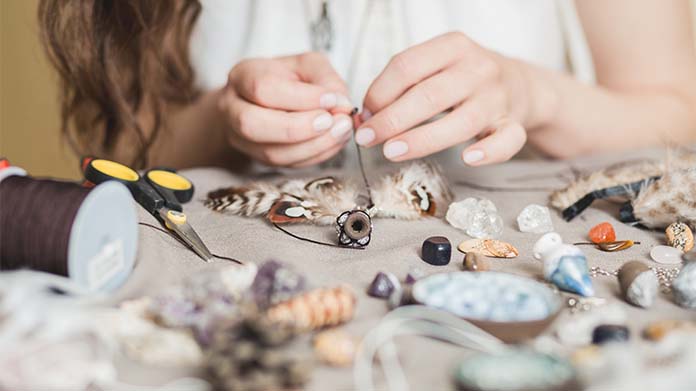
From its shiny metals, remarkable stones, and unique shapes, jewelry has been worn by both men and women since 3,000 BC. The remains of royalty have been discovered buried with their jewels, including everything from necklaces to earrings and crowns.
Today, jewelry is worn as a statement of personal style. It is an excellent gift idea that is even exchanged by many couples as a sign of their marriage commitment. Jewelry designers turn their creative ideas into unique treasures with the hope that they speak to others’ personal style.
Our guide is in 3 parts:
Startup costs for this type of business vary depending upon the type of jewelry sold, the raw materials used, and the complexity of production. The initial investment for a fine jewelry business is significantly higher than that of a fashion jewelry business as it requires special equipment and expensive raw materials. The following expenses should be considered when determining your startup budget:
Workspace and equipment — If you elect to design and produce the jewelry in-house, you will need enough space to safely store all raw materials, design new pieces, and handcraft each item. If your designs involve silversmithing or metalwork, you will need quite a bit more space than what a home office might offer.
Raw materials — Price out individual elements to ensure both quality and affordability. Events like The Tucson Gem & Jewelry Show are excellent places to network and source the newest stones and metal.
Production and packaging — Research potential manufacturers prior to starting your business. Price and quality should influence your final decision.
Website and marketing — Will you sell your pieces through sales channels such as Etsy, Amazon, and Instagram, or will you have your own website? Most jewelers find success using a combination of both. Regardless of which channel you choose, each item must be photographed and uploaded with a carefully crafted product description.
Insurance and permits — Work with a licensed professional to determine your business’s permitting and insurance needs.
Like your startup costs, ongoing expenses for this type of business vary depending upon the type of jewelry you design, raw materials used, and how large of a role you plan to take in the entire process. When drafting your business plan, consider the following potential ongoing expenses:
Location — As your business starts to flourish, you will likely outgrow your home workshop and need to move into a dedicated workspace. When scouting out a location, consider your overall budget and how this investment will impact your profits. The space should fit within your budget while allowing room for future growth.
Equipment and raw materials — Raw materials should be kept in stock, and all equipment should be properly maintained.
**Production, packaging, and shipping
**
**Website maintenance
**
**Photography
**
**Marketing
**
**Insurance
**
**Taxes
**
**Payroll and outsourcing fees
**
Travel
Due to high US manufacturing costs, many businesses in the fashion industry choose to utilize foreign manufacturers. Before going this route, weigh the financial savings against other costs. Will overseas manufacturing require additional travel? Does your target audience only purchase products made in the US?
The jewelry industry is expansive, with each brand’s style reaching a different target audience. When writing your business plan, narrow things down and define your ideal customer. Can your pieces be worn daily or are they more appropriate for specific occasions? How would you define your collection — fine, classic, socially conscious, or trendy? Consult with various jewelry and fashion publications and blogs to determine your target market and identify their habits and preferences. This will help you in creating a marketing strategy that effectively reaches the consumers you had in mind when designing your pieces.
As a jewelry designer, you will design, create, and sell your unique jewelry pieces. Your creations can be sold through a variety of sales channels.
Knowing your target audience is essential to setting jewelry prices. Cost for production, materials, and your own time investment should all be considered to ensure you make enough profit to sustain and grow. Take a look at what similar jewelers are charging, and price yourself competitively. If you price too low, you run the risk of losing money; price too high, and you may lose potential customers.
While global spending on jewelry is well over $400 billion annually, experts indicate it is a highly competitive market. The market, however, is expected to experience continued growth, leaving plenty of opportunity for newcomers to earn significant profits. Entrepreneurs are encouraged to keep a finger on the pulse and follow the latest trends and fluctuating prices to ensure long-term growth and profits.
As mentioned, proper pricing with overhead costs in mind is critical to maximizing profits. A strong marketing strategy will help reach your target audience. Many jewelry designers have found success in expanding their business to include custom jewelry and additional products such as metal picture frames. If you enjoy working with people, teaching jewelry-making classes is also a good source of additional income.
Each jewelry designer’s day-to-day activities are unique depending upon what role they decide to take in their company. Some design and handcraft each piece, while others send their designs to be manufactured, labeled, and shipped by a professional. As a jewelry designer, your daily activities could include:
Creating new designs
Crafting prototypes of new designs
Sharing prototypes with consumers to gauge interest
Researching current and emerging trends for new design ideas
Hunting for unique stones and metals to be used in your craft
Placing orders for raw materials
Researching and testing out new design methods
Addressing customer inquiries
Creating templates for assembly to be used by production staff
Crafting custom pieces
Marketing
Networking and fostering relationships within the industry
Filling orders and shipping pieces to their new homes
When developing your business plan, carefully consider what aspects of jewelry design will bring you joy. If your interests and strength lie solely in design, begin researching affordable ways to outsource the other business activities. This will help ensure your creative juices aren’t stifled and set your business up for long-term success.
If you are considering launching a jewelry designing business, you likely already possess the artistic skills necessary for designing and creating unique pieces. Running a successful business, however, will require more than just creative talent. Since this is a highly-competitive industry, a basic understanding of how to build a business is strongly recommended. If you do not have a business background, consider taking some courses through your local Small Business Administration office. A targeted marketing strategy will also be critical in reaching potential customers. If this isn’t your strong suit, many marketing companies cater to the jewelry industry.
Projected to be worth over $480 billion by 2025, jewelry sales experience growth of 5% to 6% annually. With a majority of those sales done online, designers can reach consumers on a global scale. While the jewelry industry is a saturated market, the potential for growth and significant profit is there. For long-term success, newcomers are urged to tap into a niche market and develop a targeted marketing strategy.
Industry leaders recommend that newcomers start out selling their products on ecommerce platforms like Etsy, eBay, or Amazon. Their built-in traffic will help boost sales and increase visibility for your new business. Once your website is built, consider enhancing the customer experience through apps such as Jewelfie and Loox.
The most common piece of advice from jewelry designers spanning every background — do not cut corners when it comes to photography. Improper lighting or a blurry photo is the quickest way to lose a jewelry sale.
How and when you build a team depends upon how active a role you wish to take in your design business. To create a successful business, you will need more than just beautiful jewelry. The jewelry must be produced and packaged. To satisfy the consumer, each piece should be photographed on a model and in a variety of settings. Once photographed, the items will need to be added to your website with a product description. Your jewelry line must also be promoted with a social media presence maintained at all times. As orders come in, they will need to be filled and shipped in a timely manner. Be honest with yourself regarding your strengths and weaknesses as well as the role you wish to play in all activities outside design, and hire accordingly.
Business Evaluation & Strategy Tool
We'll walk you through the four pillars every business needs: Points of Leverage, Marketing Strategy, Financial Model, and Personal Compatibility. At the end you'll see a personalized report and your action plan below will be tailored to your answers.
Every viable business has natural advantages. Below are common leverage points across four categories. Pick the ones that apply to your Jewelry Designing business. We've pre-suggested a few based on your idea — review and adjust.
Without a way to connect with customers, even great businesses fail. Pick the channels you plan to use to reach your customers.
Enter your monthly baseline costs — the minimum overhead to keep the business running. Then we'll calculate how many sales per month you need to break even.
A business that doesn't fit your life will fail no matter how good the numbers look. Tell us how this business fits you.
Complete the four pillars and your personalized summary will appear here.
Nine concrete steps to take you from idea to open business, grouped into 30-day phases. Complete the planner above and we'll highlight what's most important for your situation.
An LLC keeps your personal assets separate from business debts and lawsuits — the most common reason small business owners choose this structure. Sole proprietorships and partnerships do not provide this protection.
Apply for your free Employer Identification Number through the IRS, then register for any state or local taxes that apply to your business (sales tax, franchise tax).
A dedicated business account is required to maintain personal asset protection. Mixing personal and business finances ('piercing the corporate veil') can void your LLC's liability shield.
Recording expenses and income from day one makes tax filing easier and lets you see when the business is actually profitable. Use software (QuickBooks, Wave) or a part-time bookkeeper.
State and local requirements vary widely. Brick-and-mortar businesses typically need a Certificate of Occupancy; service businesses may need specific professional licensing; food businesses need health permits.
General Liability Insurance is the most common starting point. If you'll have employees, most states require Workers' Compensation. Specific industries need additional coverage (product liability, professional liability, etc.).
Your brand is how customers perceive and remember you. A clear name, logo, and visual identity make every later marketing decision easier and protect you legally as you grow.
Every legitimate business needs a website. Social media pages are not a substitute — you don't own the platform. Modern website builders mean you can launch a clean site in a weekend without a developer.
A dedicated business number keeps your personal life private, makes the business look legitimate, and lets you route calls professionally. Cloud phone services start under $20/month.
Starting a Jewelry Designing business typically costs $25,000 to $250,000. It is considered a very high capital-intensity business.
A Jewelry Designing business runs roughly a 6% net profit margin, and most owners reach break-even in about 4 to 12 months.
You can usually launch a Jewelry Designing business in about 12 to 36 weeks, and it is commonly run flexible.
A Jewelry Designing business is generally an intermediate-skill business to start, with stable demand. TRUiC rates it 41 out of 100 on our Idea Score.
Most Jewelry Designing businesses register as an LLC or other legal entity and obtain a general business license. Depending on your state and city you may also need industry-specific permits, sales tax registration, and zoning or health approvals, so check your local requirements before you launch.