Startup cost
$5k–$10k
TRUiC Business Ideas
Decision Snapshot
Idea Score
69
Startup cost
$5k–$10k
Profit margin
25%
Break-even
4 mo–12 mo
Time to launch
12 wk–36 wk
Demand trend
Stable
5-yr failure rate
—
Capital intensity
Medium
Time commitment
Full time
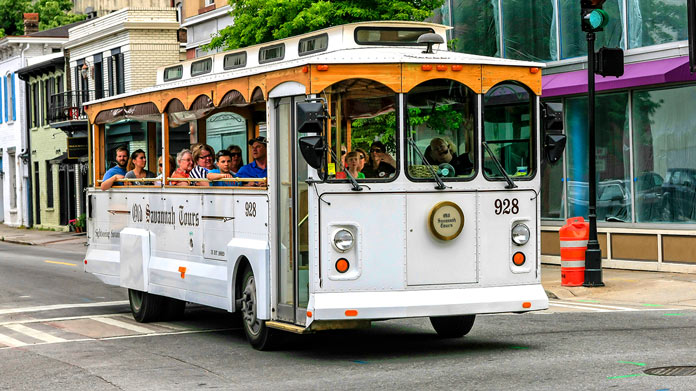
A bus tour business provides tours for tourists as well as locals. Tours of scenic and historical areas and other sites of interest are a valuable community service. Bus tours connect people with others for a shared experience. They also educate people about historical landmarks, local history, geography and other important aspects of your city and the surrounding area.
Our guide is in 3 parts:
A bus tour business requires at least one tour bus. This can be a traditional bus, party style bus, coach bus, or a double decker bus. You will need commercial auto insurance coverage for the bus. An intercom system including speakers must be installed, so the bus operator can provide details about the tour’s highlights to customers. People will not flock to this type of business through word-of-mouth referrals. Marketing is necessary. Employees are necessary though it is possible to run a one-man bus tour business if you are willing to work long hours.
Plan on spending at least $5,000 to $10,000 on a used bus. A new tour bus loaded with luxuries can cost upwards of $100,000 or more. However, most tour buses of moderate size will sell in the rage of $30,000 to $60,000. It is possible to rent a tour bus though the respectable models typically cost around $1,000 per day. It makes more financial sense to buy one or several tour buses. Plan on spending several hundred dollars per month for commercial auto insurance coverage. The installation of an intercom system and speakers will cost between a couple hundred dollars and a couple thousand dollars depending on the style of bus, the quality of system to be installed and the number of desired speakers.
The bus must be maintained and re-fueled. Budget at least several hundred dollars per week for fuel and maintenance. Bus drivers make between $10 and $25 per hour. Mechanics typically earn $20 to $40 an hour. Marketing and accounting professionals earn an annual salary of $30,000 to $60,000 or more. Budget at least $500 to $1,000 or more for monthly marketing. Commercial auto insurance will likely cost $100 to $200 per bus. Budget $50 to $100 each month for office supplies and utilities.
The target market is primarily tourists. These travelers are interested in learning about the local features and history. However, some bus tour companies operate in areas without a steady stream of tourists. Everyone from retirees to students and families will be interested in taking an informative, entertaining and insightful bus tour.
This type of business makes money by selling tour tickets. People will pay a considerable amount of money to enjoy a bus tour that allows them to take in the beauty of an area without having to worry about driving.
Bus tour tickets cost anywhere from $50 to $500 or more. The exact cost hinges on the area the tour passes through and the demand for tickets.
This type of business can rake in the cash if multiple buses are in operation. Another important factor is the location of the business and the tours. If the tour bus business operates in an area that is a hotbed for tourists, the business can make a profit in the six figure range in the first year of operation. Continue to add buses to the fleet and profits can reach the million dollar mark.
You can make more money by selling food, drinks and souvenirs before, during and after the bus tour. Consider charging extra for special seat-selection as well as priority boarding/exiting. If you have several different buses of varying quality, consider charging more for tickets on the buses that are more lavish.
Bus tour businesses drive customers from site to site, showing them the area’s highlights. People congregate at the bus tour’s pickup point, hop on the bus and enjoy a tour. Employees drive tour buses, sell tickets, narrate the tour, market tours, handle complaints, update the company website and maintain the tour buses.
An interest in history, geology, nature, and automotive maintenance will benefit those who are considering the launch of a bus tour business. You might start out as the sole bus tour driver so you should have a firm understanding of the area’s history, the most notable landmarks, local geology and other intriguing attractions. Furthermore, a cordial personality will also help as this business requires extensive interaction with the public.
Bus tours are extremely popular. Those who have an interest in the history of particular towns, cities and regions are willing to pay plenty of money for bus tours. If your bus tours are particularly informative and expose people to sections of towns that other tour companies do not reach, your business will grow. Add to your bus tour fleet and expand the business to additional locales as time progresses. Regional or even nationwide expansion is certainly possible.
Most people will perform research on a bus tour business before buying a ticket. So make sure your business has an informative website and a presence on social media. Check state requirements for registering vehicles that travel across state lines to conduct business. Operators of tour buses typically require a Class B CDL license. Certain states mandate an oversize vehicle permit for tour buses. Don’t forget to create a “bulletproof” waiver for customers to sign before boarding the bus. Once signed, your business will not be on the hook for harm or damages incurred during the bus tour.
You can operate your bus tour on your own if you own a single bus. However, employees must be added as the business expands. Consider adding a driver right away so you can focus on marketing and other responsibilities. An automotive technician will also be required. As time progresses, you will likely pass on the marketing and accounting duties to professionals in these fields.
Business Evaluation & Strategy Tool
We'll walk you through the four pillars every business needs: Points of Leverage, Marketing Strategy, Financial Model, and Personal Compatibility. At the end you'll see a personalized report and your action plan below will be tailored to your answers.
Every viable business has natural advantages. Below are common leverage points across four categories. Pick the ones that apply to your Bus Tour business. We've pre-suggested a few based on your idea — review and adjust.
Without a way to connect with customers, even great businesses fail. Pick the channels you plan to use to reach your customers.
Enter your monthly baseline costs — the minimum overhead to keep the business running. Then we'll calculate how many sales per month you need to break even.
A business that doesn't fit your life will fail no matter how good the numbers look. Tell us how this business fits you.
Complete the four pillars and your personalized summary will appear here.
Nine concrete steps to take you from idea to open business, grouped into 30-day phases. Complete the planner above and we'll highlight what's most important for your situation.
An LLC keeps your personal assets separate from business debts and lawsuits — the most common reason small business owners choose this structure. Sole proprietorships and partnerships do not provide this protection.
Apply for your free Employer Identification Number through the IRS, then register for any state or local taxes that apply to your business (sales tax, franchise tax).
A dedicated business account is required to maintain personal asset protection. Mixing personal and business finances ('piercing the corporate veil') can void your LLC's liability shield.
Recording expenses and income from day one makes tax filing easier and lets you see when the business is actually profitable. Use software (QuickBooks, Wave) or a part-time bookkeeper.
State and local requirements vary widely. Brick-and-mortar businesses typically need a Certificate of Occupancy; service businesses may need specific professional licensing; food businesses need health permits.
General Liability Insurance is the most common starting point. If you'll have employees, most states require Workers' Compensation. Specific industries need additional coverage (product liability, professional liability, etc.).
Your brand is how customers perceive and remember you. A clear name, logo, and visual identity make every later marketing decision easier and protect you legally as you grow.
Every legitimate business needs a website. Social media pages are not a substitute — you don't own the platform. Modern website builders mean you can launch a clean site in a weekend without a developer.
A dedicated business number keeps your personal life private, makes the business look legitimate, and lets you route calls professionally. Cloud phone services start under $20/month.
Starting a Bus Tour business typically costs $5,000 to $10,000. It is considered a medium capital-intensity business.
A Bus Tour business runs roughly a 25% net profit margin, and most owners reach break-even in about 4 to 12 months.
You can usually launch a Bus Tour business in about 12 to 36 weeks, and it is commonly run full time.
A Bus Tour business is generally an intermediate-skill business to start, with stable demand. TRUiC rates it 69 out of 100 on our Idea Score.
Most Bus Tour businesses register as an LLC or other legal entity and obtain a general business license. Depending on your state and city you may also need industry-specific permits, sales tax registration, and zoning or health approvals, so check your local requirements before you launch.