Startup cost
$100k–$250k
TRUiC Business Ideas
Decision Snapshot
Idea Score
60
Startup cost
$100k–$250k
Profit margin
25%
Break-even
4 mo–12 mo
Time to launch
12 wk–36 wk
Demand trend
Stable
5-yr failure rate
—
Capital intensity
Very high
Time commitment
Part time
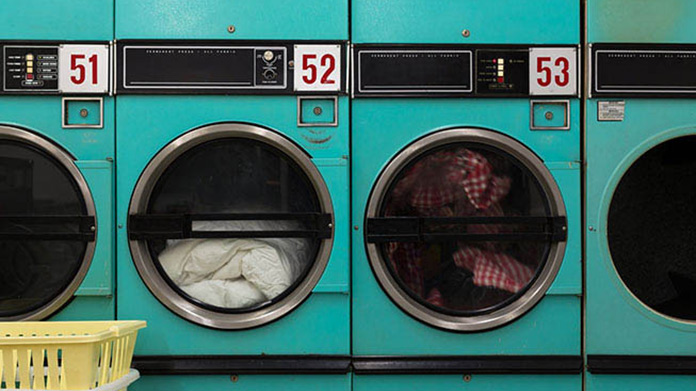
Laundromats make it easier to get laundry done when customers either don’t have a washing machine at home or need to wash more clothing than their machines can handle at home. Laundromats also sell detergents and soaps, dryer sheets, and other related items to help customers get their laundry done.
Our guide is in 3 parts:
Costs for starting a laundromat are significant. Depending on the location, it can cost you between $100,000 and $200,000 to buy an existing business or it can cost up to $1 million or more.
Businesses you buy in larger cities tend to cost more. Also, some states are inherently more expensive than others. For example, buying a laundromat in California, Florida, or New York may be much more expensive than buying one in Idaho or Alabama.
If you’re starting out of your home, you can start with little to no money upfront.
Expect total startup expenses for a small business outside the home to be between $100,000 and $250,000.
A big part of the startup cost is the machines. Get “like new” machines that have been well-serviced and you can save yourself some money and lower your startup costs. However, be aware that used machines may not come with reliable or accurate service records. New machines may initially cost more, but you will also know the entire service history.
If you finance the business, rather than pay cash, you may only need to put down 10% to 30% of the total cost. Utility costs are a big expense. While the machines themselves can cost you $500 to $700 each for top loader and $3,500 and $20,000 for front loaders, utilities to run them (water, heating, etc.) can run between $200 and $2,000 per month, each.
Read our laundromat purchasing guide to learn about the materials and equipment you’ll need to start a laundromat, how much to budget, and where to make purchases.
The biggest ongoing expenses are the utilities. Expect to pay between $200 and $2,000 per machine just for the water and heating. You should also set aside money for maintenance. Maintenance costs can range from $50 to $150 per machine for simple maintenance and repairs.
Preferred clients are businesses with long-term service contracts. However, a laundromat can also service the general public and bring in a consistent stream of revenue. Ideal customers are those living in apartments where there are no onsite laundry services or washers and dryers for self-service. This might mean placing the laundromat near low-rent or poor neighborhoods.
A laundromat makes money by charging customers to wash and dry their clothes. A laundromat may choose to operate as a self-serve operation, where customers insert quarters into machines to operate the washers and dryers, or it may be run as a full-service business in which customers pay to have staff do their laundry for them.
This business usually handles transactions in cash. However, some laundromats do offer the use of credit cards, checks, and even laundromat-specific cards. Cash-based transactions help to keep costs down for the customers and owner because there are no credit card fees. However, accepting credit cards increases convenience, potentially leading to more customers.
Costs for laundry services are driven almost entirely by the location. In bigger cities, you can charge more. In smaller towns, less. On average, you can charge customers $3 per load of laundry, washed and dried.
The average annual income of a laundromat in the U.S. ranges from $30,000 to $1 million, according to Brian Wallace of the Coin Laundry Association. Average profit margin is between 20% and 30%. Some laundromats make significantly less, however. An owner-operated laundromat may be able to sustain a high profit margin by doing his own maintenance, and working in the business instead of paying an employee.
A larger business, with multiple locations, may only net a 10% to 20% margin after operating costs.
One of the best ways to make your business more profitable is to offer additional services. For example, you could offer self-serve dry clean machines, sell detergent, snacks, and coat hangers, dry cleaning bags, and laundry bags. Offer free or discounted wifi Internet services for customers to help them pass the time while they wait for their laundry.
Another way to dramatically reduce costs is to operate your business in an area where taxes and utilities are lower. Check county taxes and water utility rates. These can vary significantly from one location to the next.
Do your own maintenance. Maintenance on washing machines and dryers isn’t too difficult for someone with basic handyman skills. If you purchase washers and dryers that are easily serviceable, you can save yourself several thousand dollars per year.
Running a laundromat can be simple or more involved. It all depends on the type of laundromat you want to run. A simple business model for this type of business is an unmanned laundromat service.
A more involved version of this business would include daily monitoring of the laundromat, collecting money from customers, folding clothes for those who paid for full service, and managing the books.
Aside from having good business sense, good negotiation skills, and being mechanically inclined, there are no special skills or education needed to start a laundromat.
Growth potential for this type of business is almost unlimited. Laundromats can be operated at a small scale, with a single building servicing many customers with a handful of machines. You can even start a small business out of your home, offering full-service laundry and folding services.
It can also be operated at scale with multiple locations across a town or city. Some laundromats operate near colleges and dorms where college students can easily access the building to wash their clothes.
Joining a laundromat franchise can be a good option for entrepreneurs who prefer to use a proven model rather than start from scratch. While joining one can mean slightly higher initial costs and less control, a quality franchise offers great benefits such as initial and ongoing support, marketing assistance, and brand recognition.
Opening a laundromat franchise typically requires $230,000-$600,000.
Interested in joining a laundromat franchise? Check out our favorites.
These businesses sink or swim based on location. Try to get good real estate for your laundromat. Usually, this means setting up shop in neighborhoods where local residents don’t have easy access to laundry services and machines.
Another tip is to focus on securing a few small corporate clients, like janitorial businesses and restaurants, as clients. This will give you a strong base of income to work off from.
A coin laundromat doesn’t need a large staff and might be able to be non-staffed. However, you should consider hiring at least one to two employees to watch over the place, encourage customers to pick up after themselves, and to keep the place clean.
Each location can be minimally staffed, however.
Business Evaluation & Strategy Tool
We'll walk you through the four pillars every business needs: Points of Leverage, Marketing Strategy, Financial Model, and Personal Compatibility. At the end you'll see a personalized report and your action plan below will be tailored to your answers.
Every viable business has natural advantages. Below are common leverage points across four categories. Pick the ones that apply to your Laundromat business. We've pre-suggested a few based on your idea — review and adjust.
Without a way to connect with customers, even great businesses fail. Pick the channels you plan to use to reach your customers.
Enter your monthly baseline costs — the minimum overhead to keep the business running. Then we'll calculate how many sales per month you need to break even.
A business that doesn't fit your life will fail no matter how good the numbers look. Tell us how this business fits you.
Complete the four pillars and your personalized summary will appear here.
Nine concrete steps to take you from idea to open business, grouped into 30-day phases. Complete the planner above and we'll highlight what's most important for your situation.
An LLC keeps your personal assets separate from business debts and lawsuits — the most common reason small business owners choose this structure. Sole proprietorships and partnerships do not provide this protection.
Apply for your free Employer Identification Number through the IRS, then register for any state or local taxes that apply to your business (sales tax, franchise tax).
A dedicated business account is required to maintain personal asset protection. Mixing personal and business finances ('piercing the corporate veil') can void your LLC's liability shield.
Recording expenses and income from day one makes tax filing easier and lets you see when the business is actually profitable. Use software (QuickBooks, Wave) or a part-time bookkeeper.
State and local requirements vary widely. Brick-and-mortar businesses typically need a Certificate of Occupancy; service businesses may need specific professional licensing; food businesses need health permits.
General Liability Insurance is the most common starting point. If you'll have employees, most states require Workers' Compensation. Specific industries need additional coverage (product liability, professional liability, etc.).
Your brand is how customers perceive and remember you. A clear name, logo, and visual identity make every later marketing decision easier and protect you legally as you grow.
Every legitimate business needs a website. Social media pages are not a substitute — you don't own the platform. Modern website builders mean you can launch a clean site in a weekend without a developer.
A dedicated business number keeps your personal life private, makes the business look legitimate, and lets you route calls professionally. Cloud phone services start under $20/month.
Starting a Laundromat business typically costs $100,000 to $250,000. It is considered a very high capital-intensity business.
A Laundromat business runs roughly a 25% net profit margin, and most owners reach break-even in about 4 to 12 months.
You can usually launch a Laundromat business in about 12 to 36 weeks, and it is commonly run part time.
A Laundromat business is generally an intermediate-skill business to start, with stable demand. TRUiC rates it 60 out of 100 on our Idea Score.
Most Laundromat businesses register as an LLC or other legal entity and obtain a general business license. Depending on your state and city you may also need industry-specific permits, sales tax registration, and zoning or health approvals, so check your local requirements before you launch.