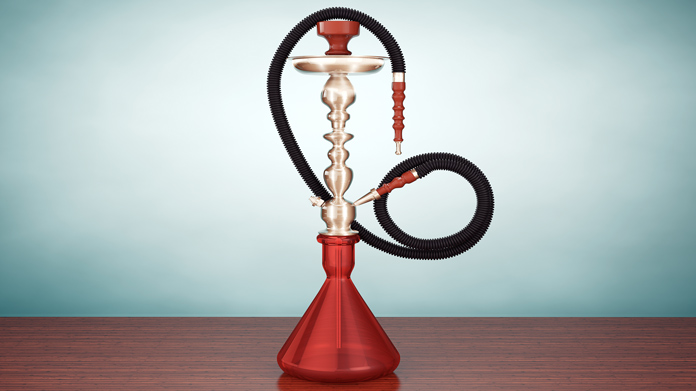
Part 1 - How to Start a Hookah Lounge - Background
A hookah venue may sell an on-site session, tobacco/products or separately permitted food/drinks, depending on the actual jurisdiction and business model. Tobacco, non-tobacco shisha, on-site use, retail sales and manufacture/import can have different rules. Confirm the exact site and activity before committing to a lease or equipment.
FDA’s current retail rules prohibit tobacco sales to anyone under 21 and require photo ID checks for everyone under 30 attempting a purchase. Local entry, indoor smoking and other rules can be stricter. CDC identifies smoke and charcoal toxicant risks, including carbon monoxide and secondhand exposure; cleaning or water filtration does not make smoking safe.
Our guide is in 3 parts:
- Part 1 - How to start a Hookah Lounge business - Background
- Part 2 - Our planner tool to see if this idea is the right fit for you
- Part 3 - Action plan to get started
What are the costs involved in opening a hookah lounge?
First establish whether the exact venue and products can operate lawfully. For a specific example checked November 14, 2026, NYC311 states that new non-tobacco hookah permit applications are not being accepted; existing holders can renew. NYC Health describes local permit, age, sanitation and fire conditions. A 2026 Council proposal to change licensing remains listed as an introduction in committee, not an enacted opening permission.
Then quote actual site/lease/buildout, approved occupancy/access/fire/air requirements, product sourcing and actual retail/manufacturing duties, appropriate equipment/cleaning/storage, tobacco and other permissions/taxes, coverage, qualified staffing/full owner work, marketing/admin and ramp cash. FDA explains that mixing, repacking, importing and other product activities can create manufacturer duties.
The old “$40,0000” text is an ambiguous unverified figure, not evidence for a $400,000 complete launch cost. No representative 10–30-pipe inventory or $150 maximum unit cost was verified. Equipment and ventilation purchases do not establish permission or a safe operating plan.
What are the ongoing expenses for a hookah lounge?
Include actual occupancy/utilities and required site/air/fire controls, product/coals/equipment/cleaning, safe storage/disposal, maintenance, actual permits/taxes/coverage, payment/admin, qualified supervision, age checks, full owner/staff work and working cash. No representative $2,000–$3,000 monthly operating total was verified.
A $10 material purchase used across sessions does not create $100 net profit. Cost each actual legally offered session, its duration and full service/turnover time; FDA retail/product duties and actual local venue requirements still apply.
Who is the target market?
Serve only customers eligible under the actual sale and venue-entry rules. The old 18-year minimum is incorrect for US tobacco retail sales: FDA states 21 or older, with photo ID checks for everyone under 30 attempting a purchase. A federal retail sale rule is not automatically a nationwide venue-entry rule; for example, NYC separately bars under-21 entry to hookah-serving establishments.
Validate actual lawful adult demand, customer conduct policies, competition, accessibility and safe qualified capacity. Quiet customers, repeat visits or discounts do not establish profitability or remove smoke risks.
How does a hookah lounge make money?
Charge for the actual lawful session/product scope with clear duration, participants, inclusions, equipment/product terms, additional charges and payment conditions. No universal two-to-four-person sharing or bowl-duration pricing model was established.
Retail product sales, on-site sessions, tobacco preparation/import and food/alcohol offers can trigger different duties. FDA states that mixing loose tobacco while selling it creates both retailer and manufacturer roles, and prohibits free hookah-tobacco samples. FDA’s food overview illustrates separate food/product and local facility requirements. Confirm lawful scope before adding an offer.
How much can you charge customers?
Compare dated local quotes for a matching lawful product/session, duration, group size, actual inclusions, service and venue conditions. The old $10/$15/$20 party prices were not verified as representative current charges.
Include actual product/coals/cleanup, full qualified service and turnover work, fees, site/coverage costs and overhead. Review actual promotion rules: FDA prohibits free hookah-tobacco samples, and local discount/product restrictions can differ. A refill, low price or loyalty plan does not guarantee repeat visits or profit.
How much profit can a hookah lounge make?
No representative $150,000 average profit, 3.7% net margin or 4–12-month investment recovery was established. Product markup and session receipts do not measure net earnings.
For an entirely assumed session worksheet, $50 collected less $15 product/coals/cleaning, $20 full qualified service work and $5 fees/other variable costs leaves $10 toward fixed overhead. Covering $8,000 monthly fixed costs would require 800 completed paid sessions, if lawful site/seat/session-time capacity and actual adult demand support them. These are teaching inputs, not typical prices, costs, service times or earnings.
Model actual required supervision, occupancy and session duration, nonbillable work, closure/permit risk, maintenance, replacements, collections and cash reserves. Operating cost coverage differs from recovering launch investment.
How can you make your business more profitable?
Evaluate a specific lawful product/session, service or separately permitted food/drink offer using paid legal adult demand, full qualified work, site/product requirements, collected contribution and cash. Discounts or more revenue can reduce earnings.
Confirm promotion, age, product and venue duties before offering loyalty schemes or refills; FDA prohibits free hookah-tobacco samples. Food/alcohol can change licensing, site and staffing requirements. Marketing must not imply that water, herbal products or a pleasant atmosphere make smoking safe.
Day-to-Day and Growth
What happens during a typical day at a hookah lounge?
Manage actual venue/product permissions, lawful age verification, qualified staffing, supplier/product records, appropriate sanitation and individual customer equipment, fire/coal/air controls, occupancy/supervision, payments, maintenance and administration. A generic pipe-cleaning checklist or solo operator assumption is not a complete operating plan.
NYC Health provides a local example of pipe sanitation, individual wrapped tips, coal/fire and carbon-monoxide controls. FDA describes manufacturer/retailer product roles. Use qualified jurisdiction/site-specific procedures; this guide does not approve a ventilation, fire, exposure or tobacco-preparation method.
What are some skills and experiences that will help you build a successful hookah lounge?
Develop actual product/retail/manufacturing-rule knowledge, lawful age verification, qualified site/fire/air/sanitation competence, staff supervision, accurate product information, customer service, full costing and administration. Cultural understanding and hospitality can help serve adult customers respectfully, but do not establish legal operation or safe smoking.
CDC identifies tobacco and herbal-shisha smoke/charcoal toxicants and secondhand risks. FDA and actual local authorities govern different parts of the activity. Staff knowledge and customer education cannot guarantee guests are safe at all times.
What is the growth potential for a hookah lounge?
Assess actual legal site/product feasibility, lawful adult demand, competition, session-time/seat and qualified staffing capacity, collected contribution and working cash. No evidence establishes limited national growth, guaranteed repeat visits or a store advantage from a broad claim of tobacco’s inelastic demand.
A desirable atmosphere or low price does not replace permits or demonstrate profit. Local permission can be a decisive constraint: NYC currently accepts no new non-tobacco hookah permit applications. A proposed Council licensing change is not current authority to open.
What are some insider tips for jump starting a hookah lounge?
Verify actual premises, product, manufacture/import, age, smoking, food/alcohol, fire, air, tax, coverage and worker requirements before commitments. Source lawful products with appropriate records and qualified preparation/handling scope; popularity or affordability does not establish authorization.
CDC explains that both tobacco and herbal hookah smoke can contain carbon monoxide and other toxicants. Tobacco-free is not a blanket exemption from venue rules or a safe-smoking claim. Test actual paid lawful adult demand and full economics within the approved capacity.
How and when to build a team
Set staffing from actual age checks, occupancy, qualified coal/fire/air/sanitation work, service turnover, supervision, required coverage and operating hours. No representative solo start followed by one-to-three workers was verified.
Use qualified people, lawful terms, training, appropriate coverage and full compensation. Add staff or capacity only when actual permissions, safe qualified operation, paid legal adult demand, collected contribution and cash support the commitments.
Part 2 - Is this business right for you?
Business Evaluation & Strategy Tool
We'll walk you through the four pillars every business needs: Points of Leverage, Marketing Strategy, Financial Model, and Personal Compatibility. At the end you'll see a personalized report and your action plan below will be tailored to your answers.
This guide's benchmarks are under editorial review. Enter your own figures and choose the assumptions that fit your business.
Step 1 of 4 — Points of Leverage
Every viable business has natural advantages. Below are common leverage points across four categories. Pick the ones that apply to your Hookah Lounge business.
Step 2 of 4 — Marketing Strategy
Without a way to connect with customers, even great businesses fail. Pick the channels you plan to use to reach your customers.
Step 3 of 4 — Financial Model
Enter your monthly baseline costs — the minimum overhead to keep the business running. Then we'll estimate how many customer transactions would cover that overhead before variable costs.
Step 4 of 4 — Personal Compatibility
A business that doesn't fit your life will fail no matter how good the numbers look. Tell us how this business fits you.
Your Hookah Lounge Evaluation Report
Complete the four pillars and your personalized summary will appear here.
Points of Leverage
Marketing Strategy
Financial Model
Personal Compatibility
Part 3 - Your business launch action plan
Before committing to launch costs, test your business idea with potential customers. Use the free worksheet to record the offer, evidence and next decision.
Nine concrete steps to take you from idea to open business, grouped into 30-day phases. Adjust the phases to fit your funding, permits, and operating needs. Complete the planner above and we'll highlight what's most important for your situation.
First 30 days — Foundation
-
Choose a permitted business structure
Compare structures permitted for your activity, location, ownership and tax situation. Professional practices can have special entity and ownership rules. Check those requirements before filing; an LLC does not protect against every kind of personal liability.
-
Check tax IDs and registrations
Determine whether you need an EIN based on ownership, tax treatment, employees and applicable tax obligations. Some sole-owner businesses do not need one for federal income-tax purposes, while a bank or state may still require it. Apply directly with the IRS when needed and check applicable state or local registrations.
-
Separate business finances
Choose an appropriate business account and keep clear financial records. Separating business and personal transactions supports bookkeeping and entity formalities. Banks have their own eligibility and documentation requirements; a separate account is not a guarantee against personal liability.
-
Set up business accounting
Recording expenses and income from day one makes tax filing easier and lets you see when the business is actually profitable. Use software (QuickBooks, Wave) or a part-time bookkeeper.
Days 30–60 — Compliance & Risk
-
Get permits and licenses
Check the authorities responsible for your business activity and operating location. Professional authorization, tax registration, facility permits and product requirements are different questions. Online or mobile operations can still have licensing and other regulatory obligations.
-
Get business insurance
Identify the risks and coverage obligations for your activities, workers and location. Review applicable liability, property, professional or product coverage and workers’ compensation with the relevant state authority and a licensed insurance professional. Required coverage varies by jurisdiction and operation.
Days 60–90 — Launch
-
Define your brand
Choose a name, message and visual identity that help your intended customers understand the business. Check relevant name and trademark requirements before investing in a brand; a logo or business-name registration alone does not establish complete legal protection.
-
Create your business website
Choose a web presence that fits how your customers research and buy. A website can explain your offer, support inquiries or sales, and connect your marketing channels. Plan the content, accessibility, privacy and maintenance requirements for the features you need.
-
Set up your business phone system
Choose a customer-contact setup that fits your sales and service process. Compare current provider terms, business-use eligibility, routing features and ongoing costs, and decide how you will keep personal contact details separate.