Startup cost
$20k–$60k
TRUiC Business Ideas
Decision Snapshot
Idea Score
50
Startup cost
$20k–$60k
Profit margin
8%
Break-even
4 mo–12 mo
Time to launch
12 wk–36 wk
Demand trend
Stable
5-yr failure rate
—
Capital intensity
High
Time commitment
Full time
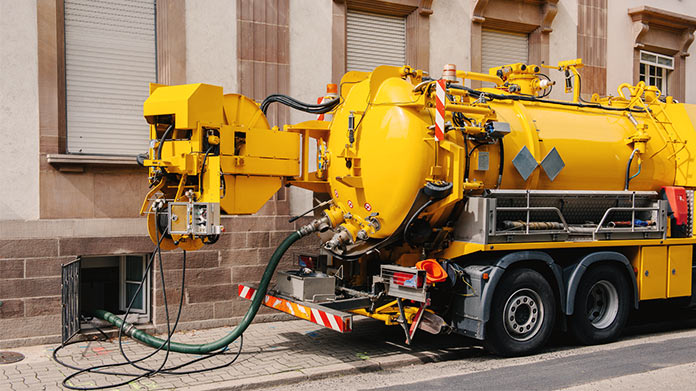
A grease removal business maintains their clients’ grease traps so the drainage system doesn’t interfere with the wastewater of the community. When grease hardens inside a trap, it can either cause a blockage of the water system or lead to the contamination of local bodies of water where wastewater flows.
Our guide is in 3 parts:
The price of direct materials to open the business is remarkably low. Supplies such as a putty knife, gloves, and scooper will cost less than $100. However, owners also need to factor in the cost of marketing and commercial insurance. The drainage system can be significantly impacted if the grease remover makes a mistake, so they’ll need liability insurance to ensure they don’t have to pay for damages out-of-pocket.
Liability insurance, permit renewal fees, and tool maintenance are the biggest costs for a grease removal businesses. Certain factors, such as liability insurance, are heavily dependent on the neighborhood a business owner operates out of. However, these expenses are generally fairly low in most areas.
Most grease removal businesses target restaurants or other food-service establishments (e.g., nursing homes, etc.) who need their grease traps cleaned on a regular basis. High-volume restaurants may need their traps cleaned out at least once a month, which can provide a lucrative target market for a removal business.
Grease removal businesses make money buy cleaning out the grease hoods at restaurants and other food service establishments
Grease trap removal is a special skill, which means you can charge anywhere from $75 to $150 for a single job. Check rates in your area to learn more about what the expectations are for business owners who pay for grease removal so you can set competitive rates.
Because the cost of business is so low, a successful grease removal business can make plenty of profits. Just completing two jobs a day at $150 will add up to $78,000 a year minus direct expenses.
Owners can consider offering general handyman services for restaurants once they get their primary business off the ground. Most grease removal owners are good with their hands and they have an opportunity to really learn about different types of restaurant equipment when going from business to business. They can use this knowledge to their advantage by offering additional services and maintenance for dishwashers, plumbing systems, etc.
Most days will be spent on the road, traveling from business to business to perform the actual grease removal. There will also need to be time devoted to marketing and invoicing clients.
People should have some type of experience working with grease traps in the past. They should be familiar with the kinds of traps used for both large- and small-scale operations. Owners should also understand the regulations that dictate what type of grease trap is appropriate for each type of operation, and have a basic system of keeping tabs on who owes what.
It may be difficult to get a foothold in grease removal if there’s already a lot of competition in the area. However, there is always potential for someone who finds an angle that isn’t being served. For example, if an owner can offer their services for a much lower price, or if they can quickly adapt to a wide variety of grease traps. Clients often don’t realize how important their grease traps are, so educating them about the consequences is a smart way to boost the growth potential of the business.
The best place to start with a grease removal business is to first learn the exact details of grease removal rules and recommendations in your area. From fines to shut-downs, failing to comply with local laws can really land a business in hot water. For example, communities may choose their department of water to check up on food-service establishments who have grease traps. In-ground outside grease traps may need to be cleared out when as little as ¼ of the trap becomes full of solids or grease (or at least once every three months.)
Chances are the restaurants you’re visiting will have their own means of grease removal, so your job is to convince them why they should choose you. This usually means going from door-to-door to meet business owners and to leave them with a business card or short pamphlet that tells them what you do. Ask them how they’re currently removing their grease, and if they’re aware of how quickly grease can build up. Make them aware of how you can take over the practical details of grease removal — including documentation, maintenance, and direct cleaning. Your efforts ultimately ensure their businesses don’t end up with a non-compliance notice or a fine from the enforcers of the law.
If food service establishments are having their employees complete the job, chances are it’s not being completed accurately (thus risking the drainage or wastewater system.) A clog can not only cost thousands of dollars worth of water damage, it can also have a significant impact on the restaurant’s direct business. If the clog interferes with the service and general operation of the restaurant, the reputation loss can be significant. You should also have a way of clear means of charging for your services (most will go by the job as opposed to by the hour) as well as a clear method of invoicing your clients. This can save billing nightmares and tax headaches down the line.
Most people begin this business as a means of making extra money as opposed to assembling a full squad of employees. You can consider hiring qualified handyman to help only when you’ve built up a sufficient clientele.
Business Evaluation & Strategy Tool
We'll walk you through the four pillars every business needs: Points of Leverage, Marketing Strategy, Financial Model, and Personal Compatibility. At the end you'll see a personalized report and your action plan below will be tailored to your answers.
Every viable business has natural advantages. Below are common leverage points across four categories. Pick the ones that apply to your Grease Removal business. We've pre-suggested a few based on your idea — review and adjust.
Without a way to connect with customers, even great businesses fail. Pick the channels you plan to use to reach your customers.
Enter your monthly baseline costs — the minimum overhead to keep the business running. Then we'll calculate how many sales per month you need to break even.
A business that doesn't fit your life will fail no matter how good the numbers look. Tell us how this business fits you.
Complete the four pillars and your personalized summary will appear here.
Nine concrete steps to take you from idea to open business, grouped into 30-day phases. Complete the planner above and we'll highlight what's most important for your situation.
An LLC keeps your personal assets separate from business debts and lawsuits — the most common reason small business owners choose this structure. Sole proprietorships and partnerships do not provide this protection.
Apply for your free Employer Identification Number through the IRS, then register for any state or local taxes that apply to your business (sales tax, franchise tax).
A dedicated business account is required to maintain personal asset protection. Mixing personal and business finances ('piercing the corporate veil') can void your LLC's liability shield.
Recording expenses and income from day one makes tax filing easier and lets you see when the business is actually profitable. Use software (QuickBooks, Wave) or a part-time bookkeeper.
State and local requirements vary widely. Brick-and-mortar businesses typically need a Certificate of Occupancy; service businesses may need specific professional licensing; food businesses need health permits.
General Liability Insurance is the most common starting point. If you'll have employees, most states require Workers' Compensation. Specific industries need additional coverage (product liability, professional liability, etc.).
Your brand is how customers perceive and remember you. A clear name, logo, and visual identity make every later marketing decision easier and protect you legally as you grow.
Every legitimate business needs a website. Social media pages are not a substitute — you don't own the platform. Modern website builders mean you can launch a clean site in a weekend without a developer.
A dedicated business number keeps your personal life private, makes the business look legitimate, and lets you route calls professionally. Cloud phone services start under $20/month.
Starting a Grease Removal business typically costs $20,000 to $60,000. It is considered a high capital-intensity business.
A Grease Removal business runs roughly a 8% net profit margin, and most owners reach break-even in about 4 to 12 months.
You can usually launch a Grease Removal business in about 12 to 36 weeks, and it is commonly run full time.
A Grease Removal business is generally an intermediate-skill business to start, with stable demand. TRUiC rates it 50 out of 100 on our Idea Score.
Most Grease Removal businesses register as an LLC or other legal entity and obtain a general business license. Depending on your state and city you may also need industry-specific permits, sales tax registration, and zoning or health approvals, so check your local requirements before you launch.