Startup cost
$2k–$10k
TRUiC Business Ideas
Decision Snapshot
Idea Score
58
Startup cost
$2k–$10k
Profit margin
8%
Break-even
4 mo–12 mo
Time to launch
12 wk–36 wk
Demand trend
Rising
5-yr failure rate
—
Capital intensity
Medium
Time commitment
Part time
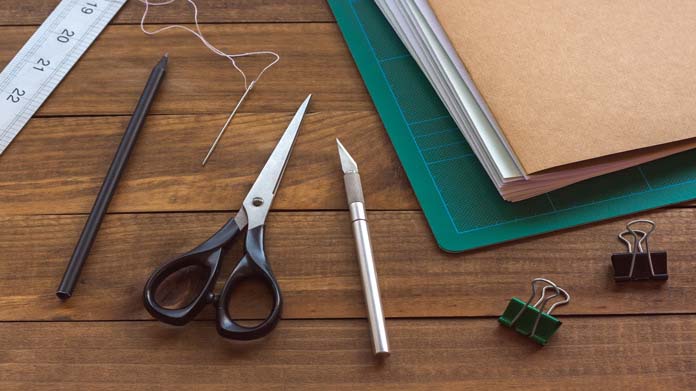
A bookbinding business (or bookbindery) binds books together. Rates are generally based on the size of the book. Even though physical book sales have been a little uneven for the past several years, there’s no reason to fear they’re going away anytime soon. Bookbinders have a unique opportunity to create more book buyers by using their creative visions to keep the public interested in having books on more than just their phone or e-reader.
Our guide is in 3 parts:
If you’re starting this as a hobby, you won’t need many supplies. Glue, leather, paper, and quality cardboard may cost you less than $200 just to get started. However, if you want to expand your business, then bookbinding equipment can get expensive. An industrial paper folder may cost up to $5,000 while a professional binder can cost up to $10,000. These products can certainly help you tackle the larger jobs, but they may limit the personality and character you can inject into binding.
If you choose to have your own shop, you’ll need to pay for the rental costs, and any employees you may hire. You’ll also need a Certificate of Occupancy with a brick-and-mortar store, with rates fluctuating depending on the neighborhood in which you open.
Ongoing expenses can be low for the smart business owner:
Equipment maintenance
Rental costs
Permit costs
Ongoing supplies (paper, glue, etc.)
The best client is a publisher who will contract you for all their new projects. Beyond this, you’re looking for someone who loves the concepts and designs you’ve already made. Normally customers will tell bookbinders specifically what they want their covers to look like, but some may treat the experience as a collaboration rather than a one-sided exchange. You want people who value what you do, and who care their book’s aesthetic value.
Bookbinders make money by setting a price for their services that covers the cost of equipment, rental space, and materials used to make the book. Generally, bookbinders will charge more for color photos than they will for standard black-and-white print.
Ultimately, this depends on the materials you use, but authors and publishers will generally invest to make sure their books appeal to their customers. One major bookbinder charges about $14 for a 200-page, black-and-white book with 5 color pages. You will need to set your own prices based on your own process.
Profit is based on the margins you set. If you sell 100 journals in a month at $30 with a $21 profit margin, you’d make about $2,000 a month. If you’re able to bind all of the books for even one mass printing in a year, you could make profits well into the 6 figures.
There are plenty of other services you can consider offering, such as book refurbishing or repairs. Once you understand the nature of binding, glue, and materials the book is made of, you can restore practically anything. This can ultimately expand your services to more people who want to preserve family heirlooms or who collect old books for fun.
Bookbinding owners may have the following to-do list on an average day:
Buying materials
Creating designs
Networking/finding new clients
Selling blank books
Binding books
Teaching employees the process
Those getting into this business should be a mix of both creative and logical thinkers. For bindings to be uniform in quality, you’ll need a certain amount of precision and accuracy. But it also takes a free thinker to come up with new designs that will entice a buyer to want to buy the object in their hands. You need to be known as both reliable and helpful before you start to make it is bookbinding.
In 2014, the physical book sales of Brazil doubled, even while other countries were struggling. The book world can be volatile, but it often only takes one book that can’t be put on a Kindle (think: a complicated cookbook or a photography coffee table book) to spark interest in the public. Plus, some people will always want a hard copy of a book, so they don’t have to worry about their machinery failing to provide a satisfying reading experience. The growth potential is definitely there for those devoted to the field.
Trends will teach a lot about where your business is headed. Customers are always looking for something new and different to catch their eyes. Whether it’s a book cover that’s covered in fur, says hello to the reader when they pick it up, or just made of incredibly soft leather, there are ways to make physical books stand out to people. When possible, recommend ways for your customers to stand out on shelves based on your own experience. Whether you have people making books for a million people or just one loved one, it never hurts to go the extra mile.
You may also want to start your business with blank books, like journals or sketchbooks. This not only ensures you have plenty of samples to show potential clients, but also gives you a chance to entice other kinds of clients (e.g., authors) while still making money. Or you can market yourself in a specialized area, such as turning people’s Facebook history into a custom book.
You should probably start off your business without any employees, potentially even on a part-time basis. Once you know you have a steady base of clients, you can start building a team.
Business Evaluation & Strategy Tool
We'll walk you through the four pillars every business needs: Points of Leverage, Marketing Strategy, Financial Model, and Personal Compatibility. At the end you'll see a personalized report and your action plan below will be tailored to your answers.
Every viable business has natural advantages. Below are common leverage points across four categories. Pick the ones that apply to your Bookbinding business. We've pre-suggested a few based on your idea — review and adjust.
Without a way to connect with customers, even great businesses fail. Pick the channels you plan to use to reach your customers.
Enter your monthly baseline costs — the minimum overhead to keep the business running. Then we'll calculate how many sales per month you need to break even.
A business that doesn't fit your life will fail no matter how good the numbers look. Tell us how this business fits you.
Complete the four pillars and your personalized summary will appear here.
Nine concrete steps to take you from idea to open business, grouped into 30-day phases. Complete the planner above and we'll highlight what's most important for your situation.
An LLC keeps your personal assets separate from business debts and lawsuits — the most common reason small business owners choose this structure. Sole proprietorships and partnerships do not provide this protection.
Apply for your free Employer Identification Number through the IRS, then register for any state or local taxes that apply to your business (sales tax, franchise tax).
A dedicated business account is required to maintain personal asset protection. Mixing personal and business finances ('piercing the corporate veil') can void your LLC's liability shield.
Recording expenses and income from day one makes tax filing easier and lets you see when the business is actually profitable. Use software (QuickBooks, Wave) or a part-time bookkeeper.
State and local requirements vary widely. Brick-and-mortar businesses typically need a Certificate of Occupancy; service businesses may need specific professional licensing; food businesses need health permits.
General Liability Insurance is the most common starting point. If you'll have employees, most states require Workers' Compensation. Specific industries need additional coverage (product liability, professional liability, etc.).
Your brand is how customers perceive and remember you. A clear name, logo, and visual identity make every later marketing decision easier and protect you legally as you grow.
Every legitimate business needs a website. Social media pages are not a substitute — you don't own the platform. Modern website builders mean you can launch a clean site in a weekend without a developer.
A dedicated business number keeps your personal life private, makes the business look legitimate, and lets you route calls professionally. Cloud phone services start under $20/month.
Starting a Bookbinding business typically costs $2,000 to $10,000. It is considered a medium capital-intensity business.
A Bookbinding business runs roughly a 8% net profit margin, and most owners reach break-even in about 4 to 12 months.
You can usually launch a Bookbinding business in about 12 to 36 weeks, and it is commonly run part time.
A Bookbinding business is generally an intermediate-skill business to start, with rising demand. TRUiC rates it 58 out of 100 on our Idea Score.
Most Bookbinding businesses register as an LLC or other legal entity and obtain a general business license. Depending on your state and city you may also need industry-specific permits, sales tax registration, and zoning or health approvals, so check your local requirements before you launch.