Startup cost
$500–$3k
TRUiC Business Ideas
Decision Snapshot
Idea Score
59
Startup cost
$500–$3k
Profit margin
8%
Break-even
4 mo–12 mo
Time to launch
12 wk–36 wk
Demand trend
Rising
5-yr failure rate
—
Capital intensity
Low
Time commitment
Full time
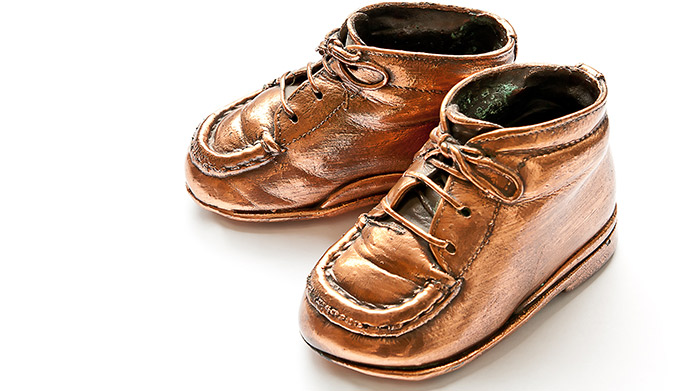
In an era when everything seems to be digital, physical keepsakes still have a special place in people’s hearts. Preserved baby items, in particular, are tangible mementos that stand out from many of the gifts that are available today. Bronzing businesses preserve cherished keepsakes in bronze and other platings, offering people a way to keep hold of cherished items from their children’s and grandchildren’s youngest years.
The bronzing business is far from an up-and-coming industry. One of the two largest companies in the industry, American Bronzing Co., has closed its doors, and so have many other established bronzing businesses. As larger businesses close, however, new opportunities open for small businesses that can operate in this industry while maintaining a lower overhead.
Our guide is in 3 parts:
The costs involved in opening a bronzing business are minimal. They include the cost of a workspace, vehicle and supplies.
Most business owners set up a workspace in their garage or workshop, and use their own vehicle to save on expenses. Some businesses, however, are located in low-rent industrial areas. Basements aren’t suitable workspaces because they don’t have adequate ventilation.
The supplies required for bronzing can be had for as little as $300, but more robust kits run around $700. Caswell sells one that has everything needed (chemicals, tanks, a DC power supply, an airbrush and buffering materials) for $746.
This kit doesn’t include a heat source, but heat is only needed when bronzing in a cold environment. The solutions need to be kept between 70 and 80 degrees Fahrenheit.
The supplies that a bronzing business needs aren’t cheap to replenish, but this is the only significant ongoing expense and it’s manageable. Getting more chemicals can be $500, and that will last for 100 to 500 pairs of shoes. Space and vehicle costs are minimal.
The target market for a bronzing business is mainly composed of parents and grandparents of young children. These are the people who may want mementos of their child or grandchild preserved.
A bronzing business makes money by charging customers to bronze baby shoes. Businesses usually charge a price for one shoe and offer a slight discount on pairs of shoes. It’s also common to charge more for shoes that are larger than baby shoes. Bronzery has different price lists for shoes up to 6 inches, and those between 6 and 8 inches.
A bronzed baby shoe today normally costs between $35 and $50, with pairs going for a little less than double that. Many businesses upsell customers with different metals and bases for bronzed shoes.
For example, Bronzery offers pewter, silver and gold finishes and several different bases. A single gold shoe runs $145.95, and bases can be hundreds of dollars.
A bronzing business can bring in a handsome profit for a single business owner. With bronzed shoes costing between $35 and $50 per pair, bronzing just 15 shoes a week can bring in between $525 and $750. This doesn’t take into account upcharges for pairs, different metals or bases. When these are accounted for, a bronzing business could have a weekly revenue of $1,000 or much more.
Baby shoes are the most popular item to be bronzed, but they are not the only item that can be bronzed. Almost any non-conductive item can be plated, including flowers, butterflies, leather, plastic and more. Marketing these can help add to a bronzing business’ profit potential.
A typical day at a bronzing business mostly involves bronzing customers’ keepsakes. This is a multi-step process that Caswell details as involving:
Washing the items being bronzed.
Affixing the items in their final position with glue.
Tying a piece of copper wire to the items.
Dip the items in the sealer solution for 30 minutes.
Allowing the items to dry.
Dipping the items again and allowing them to dry again.
Plating the items with DC power and a plating solution for 1 hour.
Removing and sanding the items.
Plating and sanding the items again, letting the items be plated for 3 to 5 hours.
Rinsing the items.
Finishing the items.
The full process takes hours, but it’s possible to bronze multiple shoes at once. Established businesses normally set up an assembly line. Several items can be at each step of the process, and a business might easily do dozens of items at once.
In order to run a bronzing business, business owners must know how to bronze items. Learning the process is not difficult, and it does not require taking classes. Business owners can get the knowledge they need from their materials supplier, the directions included in the kit they purchase and books. Some good titles to read include Electroplating and Electroforming for Artists and Craftsmen, Decorative Gilding, and Handbook on Electro-Plating, Polishing, Bronzing, Lacquering, and Enamelling.
Most bronzing businesses today will remain smaller operations. There isn’t enough demand to support the overhead that comes with a factory and large workforce. For self-employed business owners, however, this is a viable and affordable business opportunity.
American Bronzing averaged over 166,000 orders annually during its 84 years. There may no longer be that kind of demand for bronzed items, but there still is enough to support a small business.
Some bronzing businesses have transitioned from plating to applying a bronze-like paint. Although this is faster and cheaper, many people complain about the resulting quality and durability of the items.
Business owners who want to have long-term success should avoid this imitation and stay with the plating process. This will ensure customers are happy with their orders, and it’ll help set the business apart from some competition.
Most bronzing businesses today remain small businesses that are run by the business owner. If demand grows to be too much for one person, an employee might be hired to assist with operations.
Business Evaluation & Strategy Tool
We'll walk you through the four pillars every business needs: Points of Leverage, Marketing Strategy, Financial Model, and Personal Compatibility. At the end you'll see a personalized report and your action plan below will be tailored to your answers.
Every viable business has natural advantages. Below are common leverage points across four categories. Pick the ones that apply to your Bronzing business. We've pre-suggested a few based on your idea — review and adjust.
Without a way to connect with customers, even great businesses fail. Pick the channels you plan to use to reach your customers.
Enter your monthly baseline costs — the minimum overhead to keep the business running. Then we'll calculate how many sales per month you need to break even.
A business that doesn't fit your life will fail no matter how good the numbers look. Tell us how this business fits you.
Complete the four pillars and your personalized summary will appear here.
Nine concrete steps to take you from idea to open business, grouped into 30-day phases. Complete the planner above and we'll highlight what's most important for your situation.
An LLC keeps your personal assets separate from business debts and lawsuits — the most common reason small business owners choose this structure. Sole proprietorships and partnerships do not provide this protection.
Apply for your free Employer Identification Number through the IRS, then register for any state or local taxes that apply to your business (sales tax, franchise tax).
A dedicated business account is required to maintain personal asset protection. Mixing personal and business finances ('piercing the corporate veil') can void your LLC's liability shield.
Recording expenses and income from day one makes tax filing easier and lets you see when the business is actually profitable. Use software (QuickBooks, Wave) or a part-time bookkeeper.
State and local requirements vary widely. Brick-and-mortar businesses typically need a Certificate of Occupancy; service businesses may need specific professional licensing; food businesses need health permits.
General Liability Insurance is the most common starting point. If you'll have employees, most states require Workers' Compensation. Specific industries need additional coverage (product liability, professional liability, etc.).
Your brand is how customers perceive and remember you. A clear name, logo, and visual identity make every later marketing decision easier and protect you legally as you grow.
Every legitimate business needs a website. Social media pages are not a substitute — you don't own the platform. Modern website builders mean you can launch a clean site in a weekend without a developer.
A dedicated business number keeps your personal life private, makes the business look legitimate, and lets you route calls professionally. Cloud phone services start under $20/month.
Starting a Bronzing business typically costs $500 to $3,000. It is considered a low capital-intensity business.
A Bronzing business runs roughly a 8% net profit margin, and most owners reach break-even in about 4 to 12 months.
You can usually launch a Bronzing business in about 12 to 36 weeks, and it is commonly run full time.
A Bronzing business is generally an intermediate-skill business to start, with rising demand. TRUiC rates it 59 out of 100 on our Idea Score.
Most Bronzing businesses register as an LLC or other legal entity and obtain a general business license. Depending on your state and city you may also need industry-specific permits, sales tax registration, and zoning or health approvals, so check your local requirements before you launch.