Startup cost
$10k–$20k
TRUiC Business Ideas
Decision Snapshot
Idea Score
48
Startup cost
$10k–$20k
Profit margin
4%
Break-even
4 mo–12 mo
Time to launch
12 wk–36 wk
Demand trend
Stable
5-yr failure rate
—
Capital intensity
Medium
Time commitment
Full time
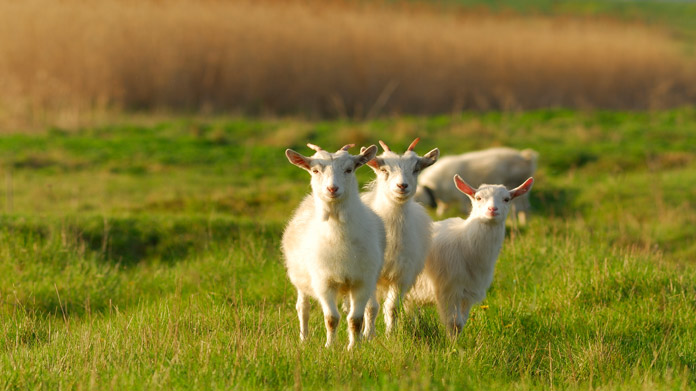
When overgrown brush or other large patches of ground must be shorn of grass and weeds, the goat rental business provides an environmentally responsible way of cutting and even naturally fertilizing the land. Also known as goatscaping, the goat use enables landowners to landscape without chemical fertilizers, gasoline, or the risk to human mowers of steep or uneven ground or poisonous weeds and thistles.
Our guide is in 3 parts:
Goats need a certain environment and amount of land in which to be raised and housed. Thus, you should own at least a small farm or an acreage before considering goat rental as a business. With that as a given, here are your likely startup costs.
Transport: $10,000-$20,000+. You will need a stock trailer in order to transport your goats, the size of which depends on the size of your herd. Here are some examples of typical transport.
Goat care: ~$350 per year. Goat care may be more or less expensive, but will include medicine, food, etc.
Goatscaping equipment
Solar electric fencing
Goat waterer, 5 gallon: $33. You will need one per goat.
Snake bite kits: $6. You will want to have multiples for emergency situations.
Marketing and promotional — $500 to $2,000 per year, or more. This can include logo development and signage, a website and marketing materials. Here’s an example of the marketing and promotional image of one business.
Legal and insurance — $1,000 or more. You should have a lawyer write a basic contract for customers and carry liability insurance in case your herd strays or gets in trouble with homeowners.
Staffing — Zero to $10,000 or more per year. This is highly variable depending on whether you set up your business to run it solo or only use employees to transport your herd to and from locations. In some business models, the herd renters are responsible for basic care, and employees are only needed to drive and to set up and take down electric fencing (which can take as long as four hours, depending on area). In other models, you might want someone on hand all day to protect and oversee the herd. Another form of “free” labor might be herding dogs who can protect the herd from such predators as coyotes or other dogs.
Goat care, transportation, off-season feed, and labor costs will be your main ongoing expenses. While one business owner estimated annual goat care costs to be $350 per goat, total expenses will be determined by the size of your herd and the number of jobs you take on.
Although some goat rental businesses have golf course and homeowner customers, goatscaping works best on less well-sculpted lawns. That’s because the goats might not eat everything on the land, and could cut vegetation to varying heights.
Therefore, many goat rental businesses look for municipal and Department of Transportation customers in charge of large underdeveloped tracts of land such as empty or abandoned properties or commercial strips of brush that need clearing. Fire departments can also be customers, especially in parts of the country where overgrown public lands present wildfire risks. Wetlands and steep property are also perfect for this business model.
Other customer types would include municipalities, commercial, and even residential landowners with strong feeling on ecology who would prefer a more environmentally safe and even beneficial mowing solution.
There are various ways of charging for the business. Smaller operations might consider it as a way of feeding their herd for free and only charge for transport and the hourly rate of a herder to oversee the goats. Larger operations might charge on a per-goat basis or per-day for the herd.
Rates vary wildly depending on location and competitive pressure. One business charges $20 per goat, per day, while another charges $700 to $850 per four-goat herd on a weekly basis.
That’s variable depending on the size of your business, but check out this Shark Tank blog in which the owner of a goat business alluded to grossing $600,000 a year. More typically, your business might gross $750 a week per herd during grazing seasons.
Consider breeding some of your goats for sale. You can also take fuller advantage of the novelty of your business by renting your goats out for kids’ parties or other celebrations or events.
Or expand your business and take advantage of your knack for selling to landowner and municipal customers by also offering more traditional means of landscaping.
Your typical workday could consist of a range of activities including:
Feeding and caring for your herd, including hoof trimming, birthing, observing health, dealing with a livestock vet and other responsibilities
Promoting your business
Selling your services to individual prospects
Transporting your herd to customer locations and setting up fencing or providing human supervision
Picking up your herd and receiving payment for your services
Paying bills, maintaining your books and conducting the typical responsibilities of business ownership
You should be able to look after herds of livestock and make the sale. Once hired, you need to be able to make your herd feel safe, comfortable and motivated to get the job done without damaging the property.
As environmental concerns grow, so can the business of cutting grass in an environmentally responsible way. Wildfire concerns and reduced hiring of municipal maintenance workers can also boost your business.
Learn about your herd’s eating habits and where they’re likeliest to do the most good. Look for topography that challenges human mowers, such as heavy, dense brush, wetlands, steep hills, and rocky ground. And always be sure to stroll the grounds before accepting an order, so you know that the job can be completed to customer satisfaction and the safety of your herd.
You might stay solo, only obtaining enough business to keep you occupied and making your customers responsible for the basic care of your herd while on-premises. Alternatively, you might consider the need of one employee per herd. So if you get enough business to provide three herds on a regular basis, you’ll need three employees.
Business Evaluation & Strategy Tool
We'll walk you through the four pillars every business needs: Points of Leverage, Marketing Strategy, Financial Model, and Personal Compatibility. At the end you'll see a personalized report and your action plan below will be tailored to your answers.
Every viable business has natural advantages. Below are common leverage points across four categories. Pick the ones that apply to your Goat Mowing business. We've pre-suggested a few based on your idea — review and adjust.
Without a way to connect with customers, even great businesses fail. Pick the channels you plan to use to reach your customers.
Enter your monthly baseline costs — the minimum overhead to keep the business running. Then we'll calculate how many sales per month you need to break even.
A business that doesn't fit your life will fail no matter how good the numbers look. Tell us how this business fits you.
Complete the four pillars and your personalized summary will appear here.
Nine concrete steps to take you from idea to open business, grouped into 30-day phases. Complete the planner above and we'll highlight what's most important for your situation.
An LLC keeps your personal assets separate from business debts and lawsuits — the most common reason small business owners choose this structure. Sole proprietorships and partnerships do not provide this protection.
Apply for your free Employer Identification Number through the IRS, then register for any state or local taxes that apply to your business (sales tax, franchise tax).
A dedicated business account is required to maintain personal asset protection. Mixing personal and business finances ('piercing the corporate veil') can void your LLC's liability shield.
Recording expenses and income from day one makes tax filing easier and lets you see when the business is actually profitable. Use software (QuickBooks, Wave) or a part-time bookkeeper.
State and local requirements vary widely. Brick-and-mortar businesses typically need a Certificate of Occupancy; service businesses may need specific professional licensing; food businesses need health permits.
General Liability Insurance is the most common starting point. If you'll have employees, most states require Workers' Compensation. Specific industries need additional coverage (product liability, professional liability, etc.).
Your brand is how customers perceive and remember you. A clear name, logo, and visual identity make every later marketing decision easier and protect you legally as you grow.
Every legitimate business needs a website. Social media pages are not a substitute — you don't own the platform. Modern website builders mean you can launch a clean site in a weekend without a developer.
A dedicated business number keeps your personal life private, makes the business look legitimate, and lets you route calls professionally. Cloud phone services start under $20/month.
Starting a Goat Mowing business typically costs $10,000 to $20,000. It is considered a medium capital-intensity business.
A Goat Mowing business runs roughly a 4% net profit margin, and most owners reach break-even in about 4 to 12 months.
You can usually launch a Goat Mowing business in about 12 to 36 weeks, and it is commonly run full time.
A Goat Mowing business is generally an intermediate-skill business to start, with stable demand. TRUiC rates it 48 out of 100 on our Idea Score.
Most Goat Mowing businesses register as an LLC or other legal entity and obtain a general business license. Depending on your state and city you may also need industry-specific permits, sales tax registration, and zoning or health approvals, so check your local requirements before you launch.