Startup cost
$25k–$250k
TRUiC Business Ideas
Decision Snapshot
Idea Score
38
Startup cost
$25k–$250k
Profit margin
4%
Break-even
4 mo–12 mo
Time to launch
12 wk–36 wk
Demand trend
Stable
5-yr failure rate
—
Capital intensity
Very high
Time commitment
Seasonal
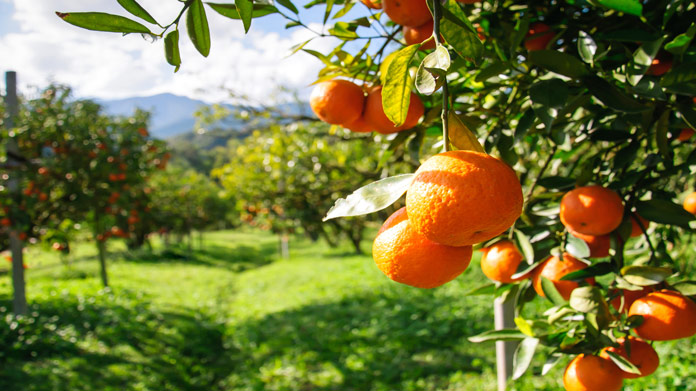
An orchard may be an extension or addition to an existing farm. It can offer pick-your-own fall family fun or incorporate a cider press and resultant sales of the additional product. It may ship all the fruit wholesale to a food distributor or have a farmer’s market on site.
Our guide is in 3 parts:
If you are starting from scratch, remember to include five years of living expenses to your start-up projections. Expect to pay $10 to $20 per tree and be planting 100-400 trees per acre depending on the size of the tree. You’ll need to spend about $5 per tree per year on pesticides, pruning, and fertilizer. Of course, you’ll need to purchase the land in the first place. A small orchard that caters to the farm stand crowd will only need five to ten acres at minimum, but if you’re going to make a decent profit, you’ll want to consider 50 to 100 acres for planting purposes.
Read our orchard purchasing guide to learn about the materials and equipment you’ll need to start an orchard, how much to budget, and where to make purchases.
Your expenses will be focused on paying for fertilizer, pest control, and harvesting. You will need to replace some of your trees on a regular basis to maintain the health and vitality of the entire orchard. Payroll during the harvest season will also make a large dent in the checking account.
A food distributor for a large supermarket chain will be willing to buy your entire harvest for one price, which guarantees the sale. However, individual customers who pay to pick-your-own from the trees will pay a premium price per pound for the opportunity to explore the rural life for an afternoon. A farm stand can generate income throughout the growing season from your local neighbors.
Very slowly. Fruit trees require patience and planning before any profit can be generated. Plan to wait at least two years for dwarf variety fruit trees to start bearing fruit and allow up to seven years for larger varieties to mature. You earn a profit by spending as little as possible on the maintenance of your trees and landing a high price when they’re ready to sell.
Retail pricing for fruits vary over time and in different markets. Typical apple pricing runs from ten cents a pound when selling direct to a distributor and up to two dollars per pound when selling retail direct to a single market customer. However, if you hope to sell the entire harvest at your farm stand, expect to see a significant percentage fail to move. In the right climate, olives can generate impressive income when used for their valuable oil.
Expect not to clear a profit for the first three fruit-bearing years as the orchard pays for the trees and maintenance. After that, you will still be making payments on harvesting equipment. As a sideline, a healthy small orchard of five to ten acres can generate $10,000 a year, but expenses must be deducted before you see profit. The profit margin increases for industrial sized orchards where the cost of machinery is shared over more trees.
Diversification can help you increase profit at an orchard. Plant multiple types of fruits and consider in investing in a cider press or jam kitchen to be able to offer multiple products at your farm stand.
If you own and operate an orchard, you may be expected to:
Determine which trees are optimal for planting in your region and what products are in high demand
Plant new trees in the spring
Prune, spray, and fertilize trees according to schedule
Be able to determine when the crop is ripe and harvest in a timely manner, reducing loss
Check trees on a regular basis for disease or infestation
Seek best prices for your crop among distributors
Maintain a farm stand during the growing season
Plan harvest entertainment options for pick-your-own activities
Apply for any grants or assistance available to farms or orchards in your region
The successful orchard grower and owner will have a solid background in:
Soil science
Agricultural studies
Biology
Chemistry
Understanding of current fruit markets, demand, and pricing
Basic business knowledge
Time management skills
Food handling safety standards
Proper harvesting techniques
Most orchard businesses only consist of a single orchard. You are better off planning ahead when planting a vast orchard, as every hill and valley will affect how well any particular tree will grow. Your property will largely define how high a yield you can expect. Knowledge in tree husbandry, soil biology, and even weather can help you find the right place to plant your orchard and choose the right fruit to earn the highest yield possible.
You cannot go into this business blind. You need to have an excellent understanding of how to care for the trees. You must realize that you won’t see one penny of income for two to five years and plan accordingly. You must know what will thrive in your climate or else risk losing your entire investment. Check the demand for your potential crop before buying the trees that only produce sour apples that nobody wants. Research and patience are needed.
Orchards require massive amounts of work in the spring and again during and after harvest. The rest of the year, one or two people should be able to handle the pest and disease checks and run any irrigation. Come harvest time you will be hiring transient workers to operate your machinery and to pick the fruit, or to operate your harvest themed attractions. These workers typically only work for you for a few weeks before moving onto the next farm. Talk to other nearby farmers to find out where they find their crews.
Read our orchard hiring guide to learn about the different roles an orchard typically fills, how much to budget for employee salaries, and how to build your team exactly how you want it.
Business Evaluation & Strategy Tool
We'll walk you through the four pillars every business needs: Points of Leverage, Marketing Strategy, Financial Model, and Personal Compatibility. At the end you'll see a personalized report and your action plan below will be tailored to your answers.
Every viable business has natural advantages. Below are common leverage points across four categories. Pick the ones that apply to your Orchard business. We've pre-suggested a few based on your idea — review and adjust.
Without a way to connect with customers, even great businesses fail. Pick the channels you plan to use to reach your customers.
Enter your monthly baseline costs — the minimum overhead to keep the business running. Then we'll calculate how many sales per month you need to break even.
A business that doesn't fit your life will fail no matter how good the numbers look. Tell us how this business fits you.
Complete the four pillars and your personalized summary will appear here.
Nine concrete steps to take you from idea to open business, grouped into 30-day phases. Complete the planner above and we'll highlight what's most important for your situation.
An LLC keeps your personal assets separate from business debts and lawsuits — the most common reason small business owners choose this structure. Sole proprietorships and partnerships do not provide this protection.
Apply for your free Employer Identification Number through the IRS, then register for any state or local taxes that apply to your business (sales tax, franchise tax).
A dedicated business account is required to maintain personal asset protection. Mixing personal and business finances ('piercing the corporate veil') can void your LLC's liability shield.
Recording expenses and income from day one makes tax filing easier and lets you see when the business is actually profitable. Use software (QuickBooks, Wave) or a part-time bookkeeper.
State and local requirements vary widely. Brick-and-mortar businesses typically need a Certificate of Occupancy; service businesses may need specific professional licensing; food businesses need health permits.
General Liability Insurance is the most common starting point. If you'll have employees, most states require Workers' Compensation. Specific industries need additional coverage (product liability, professional liability, etc.).
Your brand is how customers perceive and remember you. A clear name, logo, and visual identity make every later marketing decision easier and protect you legally as you grow.
Every legitimate business needs a website. Social media pages are not a substitute — you don't own the platform. Modern website builders mean you can launch a clean site in a weekend without a developer.
A dedicated business number keeps your personal life private, makes the business look legitimate, and lets you route calls professionally. Cloud phone services start under $20/month.
Starting an Orchard business typically costs $25,000 to $250,000. It is considered a very high capital-intensity business.
An Orchard business runs roughly a 4% net profit margin, and most owners reach break-even in about 4 to 12 months.
You can usually launch an Orchard business in about 12 to 36 weeks, and it is commonly run seasonal.
An Orchard business is generally an intermediate-skill business to start, with stable demand. TRUiC rates it 38 out of 100 on our Idea Score.
Most Orchard businesses register as an LLC or other legal entity and obtain a general business license. Depending on your state and city you may also need industry-specific permits, sales tax registration, and zoning or health approvals, so check your local requirements before you launch.