Startup cost
$35k–$49k
TRUiC Business Ideas
Decision Snapshot
Idea Score
50
Startup cost
$35k–$49k
Profit margin
4%
Break-even
18 mo–36 mo
Time to launch
2 wk–12 wk
Demand trend
Stable
5-yr failure rate
—
Capital intensity
Medium
Time commitment
Full time
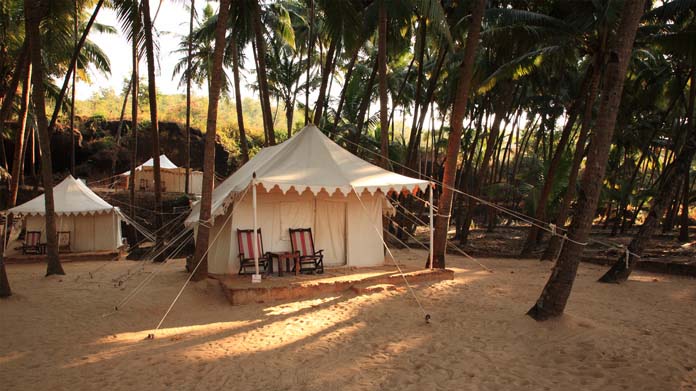
Glamorous camping, or glamping, can be traced back to ancient Turkish ottomans that served as mobile palaces. In more recent history, it has taken England by storm and is quickly becoming popular within the United States. Although there aren’t any official statistics for glamping in the U.S., industry insiders have seen a big increase in demand recently.
For entrepreneurs act, this demand represents an exciting opportunity. Glamping.com lists only 183 glamping sites within the U.S., which leaves plenty of space for new glamping businesses.
You may also be interested in additional unique business ideas.
Our guide is in 3 parts:
The startup costs for a glamping business are significant, but they can be managed. The main expenses are purchasing land and tents.
To save on land costs, many business owners get into this work after they already own land. Hunting grounds, farming fields and coastal properties that are already owned are excellent and free locations. Business owners that don’t already have land should look at remote locations where property costs are normally lower.
Tents can cost tens of thousands of dollars each. FDomes’ smallest glamping tents start at €7,575 ($9,350). Inspired Camping recommends larger tents that cost between £25,000 and £35,000 ($34,600 to $48,600).
Business owners that don’t have this capital can start with simpler tents that feature fewer amenities. Wigwam even mentions that some business owners haven’t installed toilet facilities for guests at first, and instead let guests use the facilities in their own house. This obviously isn’t as luxurious as high-end glamping that comes with a private restroom and shower, but it is an affordable way to get started in the industry.
In cold climates, business owners also need storage facilities for their tents during winter. Storage is usually inexpensive, though.
The ongoing expenses for a glamping business are minimal. They include property taxes, maintenance costs, employees’ wages and utilities, along with some other expenses.
The target market for glamping business is affluent individuals, families and couples who want to take a vacation. Many of these people are turning to staycations instead of or in addition to traditional vacations, and a glamping business is the perfect place to go on a staycation.
A glamping business makes money by charging guests for use of a tent. Most glamping businesses have nightly and weekly rates, and they charge different rates for differently sized tents.
On Glamping.com, rates in the U.S. range from $50 to $3,000 per night. At the low end, sites are basic and include few amenities. At the high end, rates are for large lodges or extravagant tents. They also often include activities.
Because a glamping business can charge significant nightly rates and have low ongoing expenses, this type of business can earn a significant profit. Under Canvas, for instance, has an annual revenue of $8 million.
Glamping businesses often diversify their revenue by adding activities to bookings. These may be on-site activities or activities offered through other companies. On-site activities typically command an additional fee, while other companies’ activities may result in a commission. Tours, outdoor activities and romantic events are all activities that people who go glamping may be interested in.
Most activity at a glamping business focuses on making guests happy. This involves:
responding to inquiries from prospective guests
welcoming new guests
checking in and recommending activities for current guests
cleaning tents after guests leave
helping guests in any other feasible way
These activities are only done during the glamping season. During the off-season, a glamping business may close for a vacation or due to weather. Where winter weather would damage tents, a business’ tents must be taken down at the end of the season and then put up once spring comes.
Jake Jewell recommends that glamping business owners have a background in hospitality generally and in holiday accomodations more particularly. Wigwam Holidays echoes this overall sentiment and explains why. Glamping business owners work lots of holidays and weekends, when other people are able to vacation. It’s the job of business owners to make their vacationing guests feel as welcome as possible, and people with backgrounds in hospitality know how to do that.
While a glamping business theoretically could franchise and open new locations, almost all businesses operate just one location. The location may have just a couple of tents, or it might have lots of spaces for guests. Firelight Camps is an example of a typical glamping business that has one location.
A glamping business’ layout must give guests plenty of space to enjoy an intimate and private experience close to nature. To do this, glamping sites must be larger than traditional camping sites. Making sites small in order to fit more sites on a property will hinder long-term success, because it will negatively affect each guest’s experience.
As a general rule, plan on setting aside at least a half-acre for each site. In high-demand areas, such as waterfront locations, a third of an acre may suffice. In places where there isn’t a major natural attraction, like in fields, a full acre is better.
Most glamping businesses start out with a partner or employee. Having two people who can see to guests’ needs helps ensure that guests will always be as happy as possible.
Business Evaluation & Strategy Tool
We'll walk you through the four pillars every business needs: Points of Leverage, Marketing Strategy, Financial Model, and Personal Compatibility. At the end you'll see a personalized report and your action plan below will be tailored to your answers.
Every viable business has natural advantages. Below are common leverage points across four categories. Pick the ones that apply to your Glamping business. We've pre-suggested a few based on your idea — review and adjust.
Without a way to connect with customers, even great businesses fail. Pick the channels you plan to use to reach your customers.
Enter your monthly baseline costs — the minimum overhead to keep the business running. Then we'll calculate how many sales per month you need to break even.
A business that doesn't fit your life will fail no matter how good the numbers look. Tell us how this business fits you.
Complete the four pillars and your personalized summary will appear here.
Nine concrete steps to take you from idea to open business, grouped into 30-day phases. Complete the planner above and we'll highlight what's most important for your situation.
An LLC keeps your personal assets separate from business debts and lawsuits — the most common reason small business owners choose this structure. Sole proprietorships and partnerships do not provide this protection.
Apply for your free Employer Identification Number through the IRS, then register for any state or local taxes that apply to your business (sales tax, franchise tax).
A dedicated business account is required to maintain personal asset protection. Mixing personal and business finances ('piercing the corporate veil') can void your LLC's liability shield.
Recording expenses and income from day one makes tax filing easier and lets you see when the business is actually profitable. Use software (QuickBooks, Wave) or a part-time bookkeeper.
State and local requirements vary widely. Brick-and-mortar businesses typically need a Certificate of Occupancy; service businesses may need specific professional licensing; food businesses need health permits.
General Liability Insurance is the most common starting point. If you'll have employees, most states require Workers' Compensation. Specific industries need additional coverage (product liability, professional liability, etc.).
Your brand is how customers perceive and remember you. A clear name, logo, and visual identity make every later marketing decision easier and protect you legally as you grow.
Every legitimate business needs a website. Social media pages are not a substitute — you don't own the platform. Modern website builders mean you can launch a clean site in a weekend without a developer.
A dedicated business number keeps your personal life private, makes the business look legitimate, and lets you route calls professionally. Cloud phone services start under $20/month.
Starting a Glamping business typically costs $34,600 to $48,600. It is considered a medium capital-intensity business.
A Glamping business runs roughly a 4% net profit margin, and most owners reach break-even in about 18 to 36 months.
You can usually launch a Glamping business in about 2 to 12 weeks, and it is commonly run full time.
A Glamping business is generally an intermediate-skill business to start, with stable demand. TRUiC rates it 50 out of 100 on our Idea Score.
Most Glamping businesses register as an LLC or other legal entity and obtain a general business license. Depending on your state and city you may also need industry-specific permits, sales tax registration, and zoning or health approvals, so check your local requirements before you launch.