Startup cost
$30k–$70k
TRUiC Business Ideas
Decision Snapshot
Idea Score
63
Startup cost
$30k–$70k
Profit margin
11%
Break-even
4 mo–12 mo
Time to launch
2 wk–8 wk
Demand trend
Rising
5-yr failure rate
—
Capital intensity
High
Time commitment
Full time
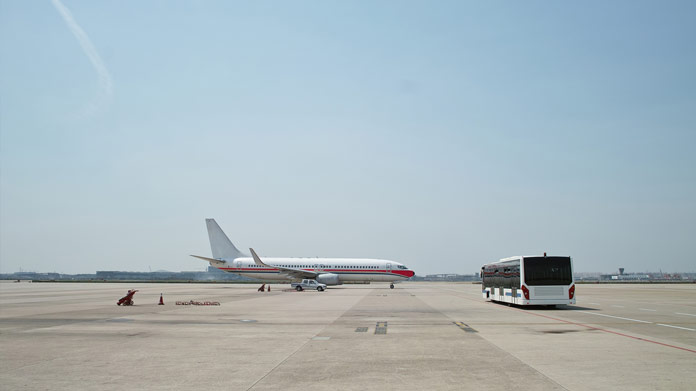
Starting an airport shuttle business can be an exciting and rewarding business venture for entrepreneurs who are interested in operating a business that serves frequent travelers and tourists.
Having said that, you should keep in mind that launching a successful airport shuttle business will require you to invest significant upfront capital in vehicles, insurance, and licensing.
In this comprehensive guide, we’ll walk you through all the essential steps you’ll need to take to start your own airport shuttle business, from researching the market and developing a solid business plan to purchasing vehicles and obtaining the necessary licenses.
Our guide is in 3 parts:
The airport shuttle business is uniquely positioned to benefit from the rapid expansion of the global travel market, which is forecast to grow by $5.50 trillion between 2024 and 2028 at an impressive compound annual growth rate (CAGR) of 18.52%.
This growth is primarily underpinned by the increasing popularity of international tourism, both for business and leisure purposes — which bodes well for airport shuttle businesses as more people traveling should lead to a direct increase in the demand for reliable transportation to and from airports.
In the US, for example, transatlantic travel appears to be thriving — with Delta Air Lines reporting a 14% rise in corporate bookings for these types of journeys — while domestic airline capacity is predicted to increase by a much more modest 3.50% in the closing half of 2024, according to JP Morgan analysts.
At the moment, the biggest challenge for airport shuttle businesses to overcome is the economic pressure of rising costs for key operational components; while higher fuel prices are driving up the cost of running these vehicles, wage inflation is also increasing the expense associated with hiring and retaining drivers.
As a result, while the growth of the travel market offers a significant opportunity for prospective airport shuttle businesses, these cost pressures are making it essential for both new and existing businesses alike to carefully manage their expenses and optimize operations in order to maintain profitability.
If you’re considering whether an airport shuttle business is right for you, the first thing you’ll need to know is whether it’s a) affordable, and b) worth the investment. I mean, how much can you actually make running your own airport shuttle business?
Well, it depends; the initial investment for an airport shuttle business varies widely based on factors such as its location, scale of operations, and the type of vehicles it plans to use:
Vehicle Acquisition: By far the most significant single expense your airport shuttle business will face when starting out is the cost of purchasing a reliable vehicle to use for transporting passengers. To be able to provide a quality service you should ideally invest in at least one van that can seat between 10 and 15 passengers. These typically cost between $30,000 and $70,000 each depending on whether you buy new or used.
Licensing and Permits: Another key expense faced by airport shuttle businesses is the cost of obtaining all the necessary licenses and permits for legal operation (see Step 6). Between the airport permits, commercial driver’s license, and local business licenses you might need, the total cost can easily range from $500 to $5,000, depending on your municipality and the number and type of vehicles you plan to operate.
Commercial Insurance: Due to the heightened level of risk associated with this business venture, you’ll likely spend a sizable chunk of your initial startup capital on securing comprehensive insurance — with annual premiums typically ranging between $2,000 and $10,000 in total. While it might be tempting to save money in this area where possible, investing in robust coverage is crucial to protect your business due to the significant liabilities involved in transporting passengers and operating on public roads.
Employee Salaries: If you plan to hire employees to help you with the driving, you’ll need to budget for the initial costs associated with recruiting and training drivers, as well as ensure you have enough to cover at least the first couple of months of their salaries, as it may take some time for your business to begin generating any significant revenue. Depending on the region and number of hours worked, you can typically expect to pay each driver between $35,000 and $50,000 per year at a minimum.
It’s worth mentioning at this point that the estimation made above regarding the initial costs faced by an airport shuttle business will be significantly lower if you decide to forgo hiring any employees and instead handle the driving yourself — which is a common decision among new entrepreneurs with limited capital.
In terms of the ongoing costs that your airport shuttle business will need to manage once it gets up and running, the main ones you’ll be faced with will include fuel, regular cleaning, and vehicle maintenance. However, as your business grows — particularly when expanding your fleet and hiring additional drivers — these ongoing expenses will increase significantly.
Payroll is often the largest ongoing cost, though as your fleet grows, you’ll likely also need to spend large amounts both leasing storage space for your vehicles, and eventually, renting office space to accommodate your business’s administrative needs.
While an airport shuttle business does offer a high potential to generate significant revenue, it’s important to note that they also run on fairly slim profit margins due to the high overheads involved in their day-to-day operation.
For example, with ongoing monthly costs of $10,000 and trips typically earning between $25 and $50 per customer, your business would generally need to complete between 200 and 400 trips with an individual passenger each month in order to break even. However, this is a conservative estimate as it assumes each trip only carries one passenger, when in reality they’ll likely have multiple.
As this example illustrates, an airport shuttle business’s earning potential depends on obtaining a high and consistent sales volume, rather than banking on large profits per passenger — something which is now particularly difficult in this market due to the effect of ridesharing apps (e.g., Uber or Lyft) over the last decade.
As a result of the monopoly these services hold over the market, it’s tough for typical airport shuttle businesses to earn a significant profit as, without anything to set them apart, they can’t obtain the loyal customer base needed for a high volume of sales.
In order to compete with these giants, which on top of being far more renowned (and thus trustworthy in the customer’s eyes), are also able to charge far less than you, successful airport shuttle businesses will need to carve out a niche and offer more specialized services.
A great example of one way in which some shuttle businesses have made this change is by shifting away from the mainstream consumer to focus on providing a more premium “chauffeur service” for higher-end clientele seeking unparalleled service quality.
Offering a number of different and unique perks — including drivers collecting passengers from Arrivals with a name board, a complimentary wait time of up to one hour, and luxurious vehicles as standard — has allowed these businesses to develop the loyal customer base necessary for significant profits.
The target market for an airport shuttle business primarily includes frequent travelers, tourists, and corporate clients.
However, it’s recommended to try and cater to a particular niche within these groups of frequent travelers in order to stand out from ridesharing services and build customer loyalty.
The amount you can charge customers typically ranges between $25 and $50 per trip per passenger, depending on factors such as distance, location, and the type of service offered.
With that being said, premium services, such as luxury vehicles or additional amenities, will naturally command rates that are much higher than this.
Profit margins are generally slim due to high overheads, but with effective cost management and consistent sales volume, a new airport shuttle business can expect to earn between $50,000 and $100,000 annually.
As your operations grow and you can afford to manage multiple vehicles, your earning potential can increase significantly.
To make your business more profitable, try to focus on securing partnerships with hotels or hostels near to airports, as well as carving out a niche with specialized services like premium vehicles or family-friendly accommodations.
Carefully managing your finances by keeping initial debts low and not overborrowing are also critical to your business’s success.
Business Evaluation & Strategy Tool
We'll walk you through the four pillars every business needs: Points of Leverage, Marketing Strategy, Financial Model, and Personal Compatibility. At the end you'll see a personalized report and your action plan below will be tailored to your answers.
Every viable business has natural advantages. Below are common leverage points across four categories. Pick the ones that apply to your Airport Shuttle business. We've pre-suggested a few based on your idea — review and adjust.
Without a way to connect with customers, even great businesses fail. Pick the channels you plan to use to reach your customers.
Enter your monthly baseline costs — the minimum overhead to keep the business running. Then we'll calculate how many sales per month you need to break even.
A business that doesn't fit your life will fail no matter how good the numbers look. Tell us how this business fits you.
Complete the four pillars and your personalized summary will appear here.
Nine concrete steps to take you from idea to open business, grouped into 30-day phases. Complete the planner above and we'll highlight what's most important for your situation.
An LLC keeps your personal assets separate from business debts and lawsuits — the most common reason small business owners choose this structure. Sole proprietorships and partnerships do not provide this protection.
Apply for your free Employer Identification Number through the IRS, then register for any state or local taxes that apply to your business (sales tax, franchise tax).
A dedicated business account is required to maintain personal asset protection. Mixing personal and business finances ('piercing the corporate veil') can void your LLC's liability shield.
Recording expenses and income from day one makes tax filing easier and lets you see when the business is actually profitable. Use software (QuickBooks, Wave) or a part-time bookkeeper.
State and local requirements vary widely. Brick-and-mortar businesses typically need a Certificate of Occupancy; service businesses may need specific professional licensing; food businesses need health permits.
General Liability Insurance is the most common starting point. If you'll have employees, most states require Workers' Compensation. Specific industries need additional coverage (product liability, professional liability, etc.).
Your brand is how customers perceive and remember you. A clear name, logo, and visual identity make every later marketing decision easier and protect you legally as you grow.
Every legitimate business needs a website. Social media pages are not a substitute — you don't own the platform. Modern website builders mean you can launch a clean site in a weekend without a developer.
A dedicated business number keeps your personal life private, makes the business look legitimate, and lets you route calls professionally. Cloud phone services start under $20/month.
Starting an Airport Shuttle business typically costs $30,000 to $70,000. It is considered a high capital-intensity business.
An Airport Shuttle business runs roughly a 11% net profit margin, and most owners reach break-even in about 4 to 12 months.
You can usually launch an Airport Shuttle business in about 2 to 8 weeks, and it is commonly run full time.
An Airport Shuttle business is generally an expert-skill business to start, with rising demand. TRUiC rates it 63 out of 100 on our Idea Score.
Most Airport Shuttle businesses register as an LLC or other legal entity and obtain a general business license. Depending on your state and city you may also need industry-specific permits, sales tax registration, and zoning or health approvals, so check your local requirements before you launch.