Startup cost
$25k–$250k
TRUiC Business Ideas
Decision Snapshot
Idea Score
46
Startup cost
$25k–$250k
Profit margin
11%
Break-even
4 mo–12 mo
Time to launch
12 wk–36 wk
Demand trend
Stable
5-yr failure rate
—
Capital intensity
Very high
Time commitment
Flexible
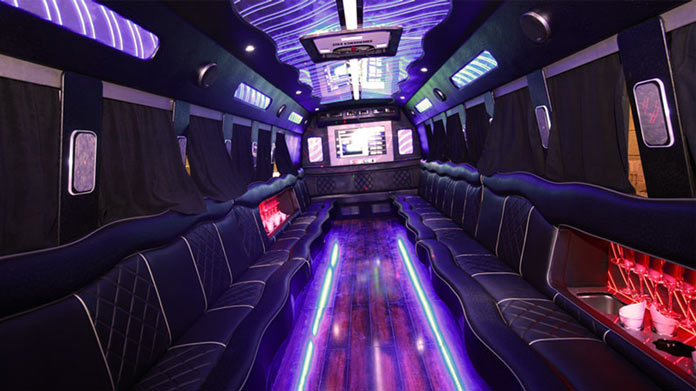
A party bus business will transport people for major events, so they don’t have to worry about the logistics of getting from place to place. While people on the bus are generally invited to consume alcohol (if they’re of age), party buses don’t necessarily have to offer adult beverages as a part of their business model.
You may also be interested in additional unique business ideas.
Our guide is in 3 parts:
Owners will need to account for the following initial costs:
Buses
Maintenance
Gas
Driver salaries
Administrative supplies
Liability insurance
Office space
Party buses will spend the most money maintaining their buses (tires, oil changes, fuel, etc.) to ensure they’re picture-perfect for each new client. Owners should also account for rental space if they have a physical office, as well as insurance costs and employee salaries.
The target market can be anyone planning a major party, though your target demographic will have to have a decent amount of disposable income. This can include anything from high school proms, football games, weddings, bachelor parties, family reunions, etc.
Party buses typically charge per hour based on the type of vehicle and the number of people they need to transfer.
Most party buses will charge over $100 an hour along with a time minimum (e.g., at least four hours.) It’s not unusual for clients to pay more than $200 an hour for the most coveted of buses (e.g., a new Escalade, etc.) Owners should check on their competitor’s rates before deciding on a pricing model for themselves.
It can take some time for party bus businesses to make back their money, especially considering the initial costs of the car and the intense maintenance required for the buses. However, if you spend a total of $50,000 a year for a single vehicle at $200 an hour, you’ll make $50,000 in profit (minus employee salaries, etc.) if you ride for 500 rides hours in a year.
Party buses can consider offering additional related services, such as material transport (e.g., tables, chairs, etc.) for an additional price or taking professional photos while drivers are in idle time. They can even create their own event packages for an additional charge. For example, creating tours for bachelorettes to visit several places in a city.
Party bus businesses ideally spend the better part of most days working with clients. From the initial scheduling to actual transportation, the focus should be on the customer. However, owners will also have to account for hiring and managing staff, advertising their business, renewing licenses, and maintaining vehicles.
Event coordinators will certainly have a head start because they already have the detail-oriented practice they need to bring multiple components together. They should also have some experience managing employees, devising company strategies and following basic business models.
Party buses are a very convenient feature, and it’s not necessarily seen as a luxury good anymore. Events bring different people together, and a party bus eliminates both the liability and the potential catastrophes that could spoil an otherwise perfect day. Those who offer an attractive service may be able to grow their business faster than they think.
Owners will need to look into the specific licensing rules of their state before looking at the types of vehicles that are in demand. They’ll need experienced (and charismatic) drivers and buses with modern amenities. They’ll also need a comprehensive liability insurance policy. Party buses are out on the road at all hours of the night, often with those who have consumed too much alcohol. Insurance reduces the financial fall-out in the event of a collision or property destruction.
To attract customers, owners should go to where the parties are in their neighborhood (e.g, banquet halls, reception centers, etc.) This is the time to pitch people with ideas, so that you can stand out from the pack. Research your competitors to find out what they’re offering, so you can supply clients with new features or at least more convenience. You do not necessarily need a public office space to get started, though it may make your company appear more professional.
Find out what people are looking for when it comes to the party bus they hire. Maybe your bus has the gear people need to keep their phones charged for end-of-night photos. Maybe you hire a videographer to document all the fun being had in the party bus before everyone starts drinking. It could be as simple as guaranteeing your driver’s accuracy with a money-back guarantee.
Finally, make friends and network with the event coordinators and reception hall owners. While it’s true that many formal event centers likely already have contracted workers or businesses that assist their customers, they may be able to recommend other business avenues that you hadn’t considered.
It’s not impossible for an owner to start with a single bus that they drive themselves, but typically owners will hire qualified drivers immediately. (Depending on the state you operate in, drivers may need a special license to work for a commercial enterprise.) Once the drivers are in place, you can also consider hiring an office manager to keep track of scheduling, payments, and last-minute changes.
Business Evaluation & Strategy Tool
We'll walk you through the four pillars every business needs: Points of Leverage, Marketing Strategy, Financial Model, and Personal Compatibility. At the end you'll see a personalized report and your action plan below will be tailored to your answers.
Every viable business has natural advantages. Below are common leverage points across four categories. Pick the ones that apply to your Party Bus business. We've pre-suggested a few based on your idea — review and adjust.
Without a way to connect with customers, even great businesses fail. Pick the channels you plan to use to reach your customers.
Enter your monthly baseline costs — the minimum overhead to keep the business running. Then we'll calculate how many sales per month you need to break even.
A business that doesn't fit your life will fail no matter how good the numbers look. Tell us how this business fits you.
Complete the four pillars and your personalized summary will appear here.
Nine concrete steps to take you from idea to open business, grouped into 30-day phases. Complete the planner above and we'll highlight what's most important for your situation.
An LLC keeps your personal assets separate from business debts and lawsuits — the most common reason small business owners choose this structure. Sole proprietorships and partnerships do not provide this protection.
Apply for your free Employer Identification Number through the IRS, then register for any state or local taxes that apply to your business (sales tax, franchise tax).
A dedicated business account is required to maintain personal asset protection. Mixing personal and business finances ('piercing the corporate veil') can void your LLC's liability shield.
Recording expenses and income from day one makes tax filing easier and lets you see when the business is actually profitable. Use software (QuickBooks, Wave) or a part-time bookkeeper.
State and local requirements vary widely. Brick-and-mortar businesses typically need a Certificate of Occupancy; service businesses may need specific professional licensing; food businesses need health permits.
General Liability Insurance is the most common starting point. If you'll have employees, most states require Workers' Compensation. Specific industries need additional coverage (product liability, professional liability, etc.).
Your brand is how customers perceive and remember you. A clear name, logo, and visual identity make every later marketing decision easier and protect you legally as you grow.
Every legitimate business needs a website. Social media pages are not a substitute — you don't own the platform. Modern website builders mean you can launch a clean site in a weekend without a developer.
A dedicated business number keeps your personal life private, makes the business look legitimate, and lets you route calls professionally. Cloud phone services start under $20/month.
Starting a Party Bus business typically costs $25,000 to $250,000. It is considered a very high capital-intensity business.
A Party Bus business runs roughly a 11% net profit margin, and most owners reach break-even in about 4 to 12 months.
You can usually launch a Party Bus business in about 12 to 36 weeks, and it is commonly run flexible.
A Party Bus business is generally an intermediate-skill business to start, with stable demand. TRUiC rates it 46 out of 100 on our Idea Score.
Most Party Bus businesses register as an LLC or other legal entity and obtain a general business license. Depending on your state and city you may also need industry-specific permits, sales tax registration, and zoning or health approvals, so check your local requirements before you launch.