Startup cost
$200–$2k
TRUiC Business Ideas
Decision Snapshot
Idea Score
62
Startup cost
$200–$2k
Profit margin
11%
Break-even
4 mo–12 mo
Time to launch
12 wk–36 wk
Demand trend
Rising
5-yr failure rate
—
Capital intensity
Low
Time commitment
Flexible
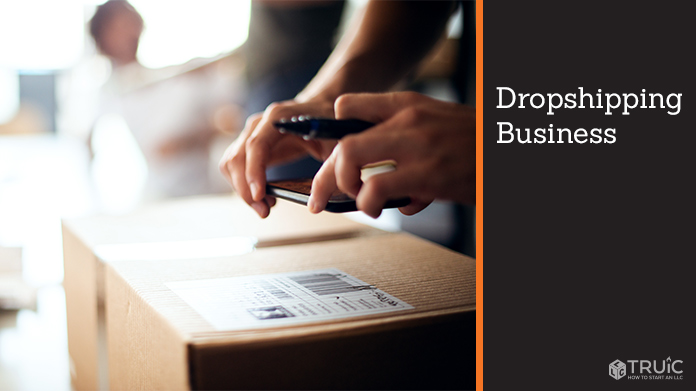
A dropshipping business is one in which an individual runs a store without ever holding onto any physical inventory. When a customer places an order from your online store, the manufacturer or supplier will package and ship the products right to the customer’s door. You will never be responsible for holding on to products, packing them, or shipping them out to your customers.
Our guide is in 3 parts:
If you do not want to start a Shopify dropshipping business from scratch, you will need to find one that is for sale. Costs can range from a few hundred to a few thousand dollars if you opt to buy an existing business. Otherwise, you can reduce your starting costs by building your business from the ground up. Your initial start up costs will then be limited to the products that you will sell to your paying customers.
Ongoing expenses will include advertising costs, any costs to maintain a team, and product costs. Even with long term dropshipping businesses, the owners are still required to pay for the products they sell to customers through their ecommerce store.
Your target market will be customers who can benefit from the products you sell in your online store. You can find these individuals through market and competitor research. Odds are, your target market is already following similar brands and companies on social media.
Your dropshipping business will make money by keeping a certain percentage of the sale. However, some manufacturer’s do offer a flat rate payment as well. Each manufacturer will be able to describe exactly how much money you will make on each sale.
You must be competitive with your pricing and ensure you do not charge more than your manufacturer or supplier dictates in your agreement. You can choose to offer manufacturer pricing or provide a discount to encourage more orders through your dropshipping business.
Drop shipping business owners will control how much profit they make by keeping advertising costs low and driving business to their online store. For example, if dropshipper makes $50 for every $200, they have the potential to earn $150 of profit on that order. If they need to pay for $25 of advertising costs on that order, however, their profit now creases to $125.
As mentioned above, the amount of profit you will generate will depend on how much time and the amount of resources you put into your business. It will also depend on what percentage of the sale you receive from the manufacturer. However, the amount of profit is virtually limitless.
By learning how to more effectively market your Shopify dropshipping business brand, you can earn a higher return on investment (ROI) with each campaign. When you optimize your campaigns, you will drive more traffic without spending anymore than you have on past campaigns. This means you can expect more customers to find your store and purchase your products. In turn, you will earn a higher profit.
Since you are not responsible for storing, packing, or shipping any of the products you sell on through your Shopify dropshipping business, your typical day will revolve around marketing and customer support. You will need to build your own social media following, maintain your website, and follow up with any customer inquiries. When required, you may need to reflect your manufacturer’s coupons on your own website.
You must be computer savvy to operate your Shopify dropshipping business. You will be managing your own website, replying to customers, processing orders, and running your own marketing campaigns. Aside from basic computer skills, it helps to understand how to use a variety of marketing tools.
The growth potential for drop shipping is dependent on the amount of resources you put into it. If you only want to earn a few hundred dollars every month, you can do so. If you want to make this your main source of income, you can do that too. Your growth potential is directly tied to what you put into your business.
You need to find products that you are passionate about and believe in. This will drive your motivation and allow you to build a success drop shipping business. However, you must also find a product niche that has growth potential and will be profitable in both the short and long term. In order to do this, conduct research on current market trends and use that information to drive your decision.
You will build a drop shipping team when you can no longer handle the volume of orders that are coming in on your own. You can hire virtual assistants to help you manage customer support and order processing.
Business Evaluation & Strategy Tool
We'll walk you through the four pillars every business needs: Points of Leverage, Marketing Strategy, Financial Model, and Personal Compatibility. At the end you'll see a personalized report and your action plan below will be tailored to your answers.
Every viable business has natural advantages. Below are common leverage points across four categories. Pick the ones that apply to your Drop Shipping business. We've pre-suggested a few based on your idea — review and adjust.
Without a way to connect with customers, even great businesses fail. Pick the channels you plan to use to reach your customers.
Enter your monthly baseline costs — the minimum overhead to keep the business running. Then we'll calculate how many sales per month you need to break even.
A business that doesn't fit your life will fail no matter how good the numbers look. Tell us how this business fits you.
Complete the four pillars and your personalized summary will appear here.
Nine concrete steps to take you from idea to open business, grouped into 30-day phases. Complete the planner above and we'll highlight what's most important for your situation.
An LLC keeps your personal assets separate from business debts and lawsuits — the most common reason small business owners choose this structure. Sole proprietorships and partnerships do not provide this protection.
Apply for your free Employer Identification Number through the IRS, then register for any state or local taxes that apply to your business (sales tax, franchise tax).
A dedicated business account is required to maintain personal asset protection. Mixing personal and business finances ('piercing the corporate veil') can void your LLC's liability shield.
Recording expenses and income from day one makes tax filing easier and lets you see when the business is actually profitable. Use software (QuickBooks, Wave) or a part-time bookkeeper.
State and local requirements vary widely. Brick-and-mortar businesses typically need a Certificate of Occupancy; service businesses may need specific professional licensing; food businesses need health permits.
General Liability Insurance is the most common starting point. If you'll have employees, most states require Workers' Compensation. Specific industries need additional coverage (product liability, professional liability, etc.).
Your brand is how customers perceive and remember you. A clear name, logo, and visual identity make every later marketing decision easier and protect you legally as you grow.
Every legitimate business needs a website. Social media pages are not a substitute — you don't own the platform. Modern website builders mean you can launch a clean site in a weekend without a developer.
A dedicated business number keeps your personal life private, makes the business look legitimate, and lets you route calls professionally. Cloud phone services start under $20/month.
Starting a Drop Shipping business typically costs $200 to $2,000. It is considered a low capital-intensity business.
A Drop Shipping business runs roughly a 11% net profit margin, and most owners reach break-even in about 4 to 12 months.
You can usually launch a Drop Shipping business in about 12 to 36 weeks, and it is commonly run flexible.
A Drop Shipping business is generally an intermediate-skill business to start, with rising demand. TRUiC rates it 62 out of 100 on our Idea Score.
Most Drop Shipping businesses register as an LLC or other legal entity and obtain a general business license. Depending on your state and city you may also need industry-specific permits, sales tax registration, and zoning or health approvals, so check your local requirements before you launch.