Startup cost
$7.5k
TRUiC Business Ideas
Decision Snapshot
Idea Score
63
Startup cost
$7.5k
Profit margin
8%
Break-even
4 mo–12 mo
Time to launch
2 wk–8 wk
Demand trend
Rising
5-yr failure rate
—
Capital intensity
Low
Time commitment
Full time
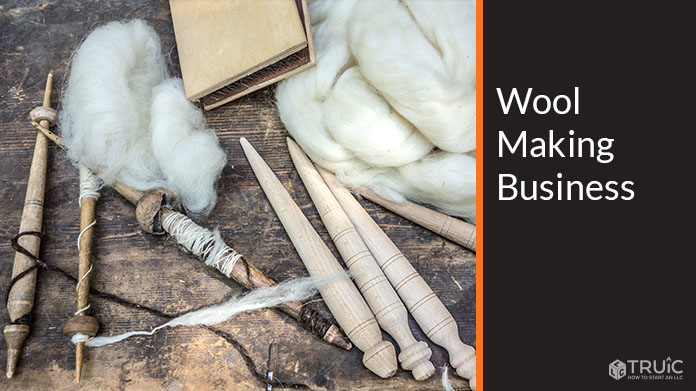
Wool is used to make a variety of products, from yarn used for knitting to clothing. But, many of us never think about how it got from the sheep’s body to the shelves. Wool makers spin the wool from alpacas, sheep, and goats. Some sell it as raw yarn, while others offer additional services, such as dyeing.
Our guide is in 3 parts:
Initial costs for this type of business vary, depending on what steps in the manufacturing process you choose to take part in. Assuming you’re involved in every stage of the wool making process, you’ll need to invest in:
Farmland, animals, and equipment – Consider how many animals you need to meet production goals. Prices vary depending upon the size of the land and the number of animals you wish to have.
Production space – Existing businesses report needing a minimum of 10,000 square feet. Rent and utilities average $4,500.
Production equipment (scouring equipment, carding tools, pickers, and dyeing equipment) – Many of these tools have both manual and automated options. Each item starts at a minimum of $495.
Payroll – To keep production numbers up, you will need to hire a team to manage every stage of production, from farming to dyeing and marketing.
Education and training – $1,000
Business software – $250
Marketing strategy – This should include a website, printed and online literature, and paid targeted ads.
Insurance
Successful wool makers indicate the minimum startup costs for a small wool production business that purchases the fleece from local farmers is $7,500. The maximum spent is $67,000, and the average is just over $37,000.
As with any business, you will need to budget for ongoing expenses each month. Again, this depends upon what steps of production your business takes part in and what steps you hire another party to complete. Standard business expenses include:
Land expenses – upkeep and taxes. Costs vary depending upon location.
Feed costs, if you raise your own sheep.
Workspace – Rent/loan repayment, utilities, and maintenance. Costs vary depending upon the size and location of your production space.
Equipment maintenance, repair, and replacement – Depreciation should also be factored into your business’s budget.
Fuel and oil
Payroll
Ongoing education
Business software
Website maintenance
Marketing materials
Insurance
Industry leaders recommend regularly calculating your cost of production to ensure the business is operating efficiently and profits are maximized.
Your target market depends largely on your business goals. Some wool makers produce yarn that is sold in craft stores. Others sell yarn as a raw material, which is turned into fabric for making clothes and shoes. When developing your business plan, it’s important that you consider your production goals, as well as short and long-term business goals. This will help you identify your target market and develop a marketing strategy.
Wool-making businesses generate revenue through the sale of each product. Some purchase the fleece from farmers and process it from there, while others do everything in-house.
There are several factors that should influence your prices: the type of wool, material costs, equipment costs, and labor costs. Consider these numbers to get to your break-even point. The standard markup for retail yarn is 50%.
The wool-making industry is scalable and can be highly profitable with the right business plan. If you sell your wool as yarn, at $80.32 per pound, and sell 2,500 pounds per month, your monthly gross income is $200,800. Subtract the ongoing business expenses to determine your net profits.
To maximize profits, it’s important that you really get to know your product well. Each time you add a new type of wool, you and your staff should be highly educated on the product before sending it to market. This will keep production levels higher and maintain customer confidence.
Many wool-production businesses elevate profits by managing their own ecommerce websites and partnering with large clothing and shoe production companies.
The specifics of your day will depend on what parts of the process you do in house and what steps you hire other people to handle. Assuming your wool making business does everything in house, you can expect a normal business day to include the following:
Shearing the animals – This is typically done every year at the end of winter
Managing the farm and employees
Cleaning, carding, and spinning the wool
Dying the wool – Some customers need raw wool, which is then woven into fabric. Other customers need it dyed.
Customer Service — Communicating with customers regarding their needs, answering questions, and addressing concerns.
Filling orders
Customer service
Administrative duties
Implementing and overseeing the marketing strategy
Behind every successful business is an innovative entrepreneur. Someone with a growth mindset, always looking to improve their processes and products, will excel in this field. Launching a successful wool-making business requires both industry knowledge and the ability to lead.
Communication skills, both written and oral, will also prove critical in helping you achieve your short and long-term business goals. The International Wool Textile Organisation and the American Wool Council offer a wealth of information and support for both established entrepreneurs and those just entering the industry.
The textile industry is profitable and poised for long-term growth. By 2029, the global wool and yarn industry is expected to reach over $50.5 million, with an annual growth rate of 4%. The key to success is strong business acumen, a firm understanding of the industry, and industry connections.
While no formal education is required, it’s important that you understand the intricacies of this industry. For example, there are a number of different sheep breeds. Each produces a different type of wool, and each wool is appropriate for manufacturing different products.
Calculating your cost of production is a key strategy for understanding production efficiency.
This industry has a high customer retention rate and offers an opportunity to make meaningful business connections. Therefore, industry leaders urge entrepreneurs new to the industry to seize all networking opportunities. They also recommend careful selection of the clients you work with. Remember, you’re providing an invaluable service and will hopefully work with each customer for years to come. Make sure you partner with people whose business goals align with yours.
Given the work you are doing, you will likely need to start building a team during the planning phase. There are many moving pieces to this type of business and each one will contribute to your success. Every member of the team must possess the knowledge and experience to perform their job well. If one cog breaks down, the entire system slows and your customers are in danger of not receiving their product on time.
Business Evaluation & Strategy Tool
We'll walk you through the four pillars every business needs: Points of Leverage, Marketing Strategy, Financial Model, and Personal Compatibility. At the end you'll see a personalized report and your action plan below will be tailored to your answers.
Every viable business has natural advantages. Below are common leverage points across four categories. Pick the ones that apply to your Wool Making business. We've pre-suggested a few based on your idea — review and adjust.
Without a way to connect with customers, even great businesses fail. Pick the channels you plan to use to reach your customers.
Enter your monthly baseline costs — the minimum overhead to keep the business running. Then we'll calculate how many sales per month you need to break even.
A business that doesn't fit your life will fail no matter how good the numbers look. Tell us how this business fits you.
Complete the four pillars and your personalized summary will appear here.
Nine concrete steps to take you from idea to open business, grouped into 30-day phases. Complete the planner above and we'll highlight what's most important for your situation.
An LLC keeps your personal assets separate from business debts and lawsuits — the most common reason small business owners choose this structure. Sole proprietorships and partnerships do not provide this protection.
Apply for your free Employer Identification Number through the IRS, then register for any state or local taxes that apply to your business (sales tax, franchise tax).
A dedicated business account is required to maintain personal asset protection. Mixing personal and business finances ('piercing the corporate veil') can void your LLC's liability shield.
Recording expenses and income from day one makes tax filing easier and lets you see when the business is actually profitable. Use software (QuickBooks, Wave) or a part-time bookkeeper.
State and local requirements vary widely. Brick-and-mortar businesses typically need a Certificate of Occupancy; service businesses may need specific professional licensing; food businesses need health permits.
General Liability Insurance is the most common starting point. If you'll have employees, most states require Workers' Compensation. Specific industries need additional coverage (product liability, professional liability, etc.).
Your brand is how customers perceive and remember you. A clear name, logo, and visual identity make every later marketing decision easier and protect you legally as you grow.
Every legitimate business needs a website. Social media pages are not a substitute — you don't own the platform. Modern website builders mean you can launch a clean site in a weekend without a developer.
A dedicated business number keeps your personal life private, makes the business look legitimate, and lets you route calls professionally. Cloud phone services start under $20/month.
Starting a Wool Making business typically costs $7,500. The largest cost is usually marketing. It is considered a low capital-intensity business.
A Wool Making business runs roughly a 8% net profit margin, and most owners reach break-even in about 4 to 12 months.
You can usually launch a Wool Making business in about 2 to 8 weeks, and it is commonly run full time.
A Wool Making business is generally an intermediate-skill business to start, with rising demand. TRUiC rates it 63 out of 100 on our Idea Score.
Most Wool Making businesses register as an LLC or other legal entity and obtain a general business license. Depending on your state and city you may also need industry-specific permits, sales tax registration, and zoning or health approvals, so check your local requirements before you launch.