Startup cost
$2k–$10k
TRUiC Business Ideas
Decision Snapshot
Idea Score
71
Startup cost
$2k–$10k
Profit margin
41%
Break-even
4 mo–12 mo
Time to launch
12 wk–26 wk
Demand trend
Stable
5-yr failure rate
—
Capital intensity
Medium
Time commitment
Flexible
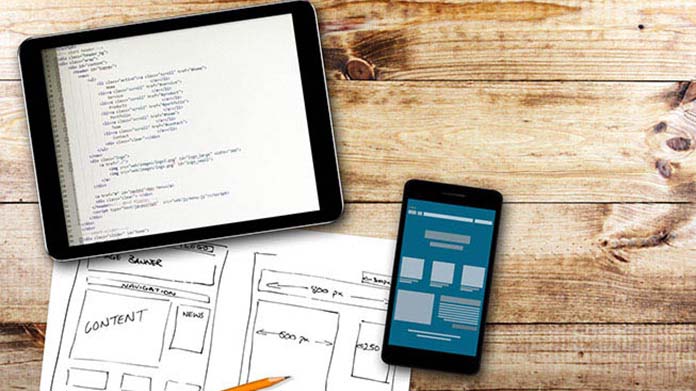
With businesses increasingly relying on their online presence to reach customers and drive growth, the opportunity to start a web development company has never been more promising.
Having said that, just like with any business, launching a web development company will require careful planning, a clear strategy, and a commitment to understanding the needs of your clients.
In this comprehensive guide, we’ll walk you through all the essential steps you’ll need to take to start your own web development company, from conducting market research and identifying your niche to building a strong team, setting up operations, and attracting customers.
Our guide is in 3 parts:
The web development industry is currently experiencing unprecedented growth, driven by two main factors: the increasing reliance on digital platforms across virtually all industries and the growing demand for updating and optimizing existing websites to meet modern design and performance standards.
Having said that, the sector is also facing intense competition, with providers from countries with lower labor costs creating significant price pressures for web development companies operating in higher-cost regions, such as the United States.
Therefore, new entrants to the industry will need to focus on differentiation through quality, expertise, and value-added services in order to establish themselves and thrive in this competitive landscape.
If you’re considering whether a web development company is right for you, the first thing you’ll need to know is whether it’s a) affordable, and b) worth the investment. I mean, how much can you actually make running your own web development company?
Well, it depends. The initial investment for a web development company can vary widely based on factors such as the scale of your marketing efforts, the type of clients you’ll aim to serve, and the tools and resources you’ll need.
We’ve included the most common startup costs to be aware of below:
Marketing and Advertising ($2,000 – $10,000): You will need to invest in a comprehensive marketing campaign that includes digital ads on platforms like Google and social media, local promotions to reach nearby clients, and targeted online advertising to build visibility and attract consistent leads. This will likely be by far your largest ongoing expense, with the exact costs varying based on the scale of your campaigns, the platforms you choose, and the competition within your target market.
Technology and Software ($1,000 – $3,000): You will need to purchase or subscribe to various software in order to manage the design, coding, and project workflows of your company effectively. These could include tools like Adobe Creative Suite for graphic and web design, Visual Studio Code or similar IDEs for writing and debugging code, Trello or Asana for organizing and tracking project tasks, and other web hosting services to maintain your clients’ websites.
Website and Branding ($500 – $3,000): You will need to design a visually appealing, easy-to-navigate website optimized for both desktop and mobile users — along with a professional logo — in order to showcase your web development company’s expertise and build trust with potential clients.
Licenses and Permits ($100 – $1,000+): You will need to officially register your web development company and secure any licenses or permits required to operate legally in your area.
Note: Although not exactly a startup cost, it’s highly recommended to set aside working capital to cover three to six months of operating expenses, ensuring you can handle any cash flow gaps or unexpected costs during the early stages of running your web development company.
The earning potential for web development companies is generally quite strong, with the majority of revenue typically translating directly into profit.
This is largely because — unlike businesses that depend on substantial inventory or production costs — web development primarily relies on technical expertise, tools, and time, which means that overhead expenses are generally kept to a minimum.
That said, acquiring clients and standing out in this competitive industry will require significant marketing efforts, a cost that you will need to carefully account for when starting out.
To start your web development company, you’ll need to conduct thorough market research, identify your niche, register your business, and secure any licenses or permits required by your local or state authorities.
You should also keep in mind the importance of investing in a comprehensive marketing campaign in order to help your business build visibility and attract a consistent flow of clients.
No, starting a web development company is quite manageable for individuals with technical skills in areas like web design, coding languages (e.g., HTML and CSS), and familiarity with content management systems such as WordPress.
That said, you will also need to possess a strong understanding of business operations management, including marketing, client management, and financial planning, in order to ensure the long-term success of your company.
Yes, web development companies are typically quite profitable.
This is primarily due to the low overhead costs associated with running the business, combined with the consistent demand for website design, development, and maintenance services across virtually all industries.
Well, it depends.
The exact costs will vary based on your individual business model, the tools and software you choose, and the scale of your marketing efforts.
That said, on average for a small web development company you can expect to start with anywhere from $1,000 to $15,000.
Business Evaluation & Strategy Tool
We'll walk you through the four pillars every business needs: Points of Leverage, Marketing Strategy, Financial Model, and Personal Compatibility. At the end you'll see a personalized report and your action plan below will be tailored to your answers.
Every viable business has natural advantages. Below are common leverage points across four categories. Pick the ones that apply to your Web Development business. We've pre-suggested a few based on your idea — review and adjust.
Without a way to connect with customers, even great businesses fail. Pick the channels you plan to use to reach your customers.
Enter your monthly baseline costs — the minimum overhead to keep the business running. Then we'll calculate how many sales per month you need to break even.
A business that doesn't fit your life will fail no matter how good the numbers look. Tell us how this business fits you.
Complete the four pillars and your personalized summary will appear here.
Nine concrete steps to take you from idea to open business, grouped into 30-day phases. Complete the planner above and we'll highlight what's most important for your situation.
An LLC keeps your personal assets separate from business debts and lawsuits — the most common reason small business owners choose this structure. Sole proprietorships and partnerships do not provide this protection.
Apply for your free Employer Identification Number through the IRS, then register for any state or local taxes that apply to your business (sales tax, franchise tax).
A dedicated business account is required to maintain personal asset protection. Mixing personal and business finances ('piercing the corporate veil') can void your LLC's liability shield.
Recording expenses and income from day one makes tax filing easier and lets you see when the business is actually profitable. Use software (QuickBooks, Wave) or a part-time bookkeeper.
State and local requirements vary widely. Brick-and-mortar businesses typically need a Certificate of Occupancy; service businesses may need specific professional licensing; food businesses need health permits.
General Liability Insurance is the most common starting point. If you'll have employees, most states require Workers' Compensation. Specific industries need additional coverage (product liability, professional liability, etc.).
Your brand is how customers perceive and remember you. A clear name, logo, and visual identity make every later marketing decision easier and protect you legally as you grow.
Every legitimate business needs a website. Social media pages are not a substitute — you don't own the platform. Modern website builders mean you can launch a clean site in a weekend without a developer.
A dedicated business number keeps your personal life private, makes the business look legitimate, and lets you route calls professionally. Cloud phone services start under $20/month.
Starting a Web Development business typically costs $2,000 to $10,000. It is considered a medium capital-intensity business.
A Web Development business runs roughly a 41% net profit margin, and most owners reach break-even in about 4 to 12 months.
You can usually launch a Web Development business in about 12 to 26 weeks, and it is commonly run flexible.
A Web Development business is generally an intermediate-skill business to start, with stable demand. TRUiC rates it 71 out of 100 on our Idea Score.
Most Web Development businesses register as an LLC or other legal entity and obtain a general business license. Depending on your state and city you may also need industry-specific permits, sales tax registration, and zoning or health approvals, so check your local requirements before you launch.