Startup cost
$10k–$15k
TRUiC Business Ideas
Decision Snapshot
Idea Score
73
Startup cost
$10k–$15k
Profit margin
41%
Break-even
4 mo–12 mo
Time to launch
2 wk–8 wk
Demand trend
Stable
5-yr failure rate
—
Capital intensity
Medium
Time commitment
Flexible
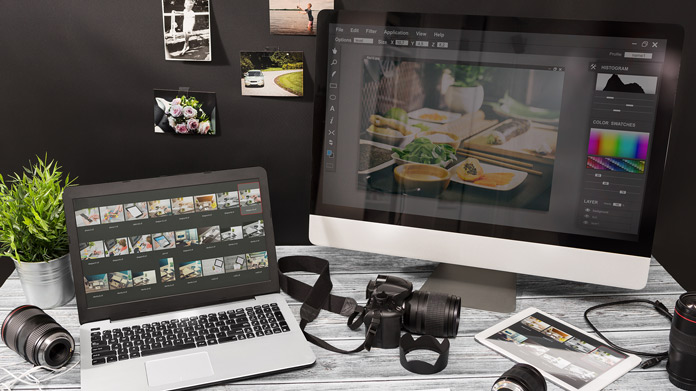
Commercial photographers capture artistic photographs with an emphasis on marketing and selling products and services. Photographs can be used in advertisements, brochures, leaflets, and even restaurant menus.
Our guide is in 3 parts:
Experienced professionals suggest budgeting for a minimum of $10,000-$15,000 for camera and studio equipment. If you plan to have your own studio space, double your starting budget to account for deposits and any necessary facility upgrades.
Camera and equipment should include:
Camera(s) and various lenses
Tripods and monopods
Hard drives
Laptop
Flashes and flash filters
Color meter
Editing software
Backup storage devices
As part of your initial investment, you will also need to discuss your insurance needs with a professional and have a simple, yet professional website built. Accounting and business management software would also prove beneficial.
Ongoing expenses you could potentially incur, depending upon your target clientele and goals for the business include:
Brick and mortar
Travel expenses
Networking and marketing
Maintenance or replacement of equipment
Business tools
Insurance
Payroll or professional fees
Unlike most professions, you define your own target market based on your vision, passions, and strengths. Your role is to help clients reach their target demographic(s), leaving virtually every demographic in need of inspiring photographers.
Commercial photographers are generally paid a flat fee per shoot. Fees are determined ahead of time and are based on a number of factors, including scope of project, client budget, and the photographer’s experience.
Commercial photography business owners set their prices based on experience and project demands. In addition to expenses, a flat fee is standard. Daily fees range anywhere from $1,000 to $10,000 per day.
Profits vary, depending upon a wide range of factors. Entrepreneurs who prefer to keep businesses small report an average profit of $75,000. Industry leaders report making well over $250,000 in profit.
To maximize profitability, consider implementing the following strategies:
Include product photography in your list of services
Build an agency of talent of varying skill levels
Include video in your list of services
While most professionals are drawn to this industry because of the creative aspect, managing and marketing the business are equally as important. Your website must be maintained and portfolio updated regularly. Additionally, you or a member of your team will perform administrative tasks, such as making travel arrangements, managing the books, and maintaining business contracts.
Whether your photo shoot is local or takes you on the road, the groundwork should be laid well in advance. This helps ensure the process goes smoothly and that everything is ready when you arrive. Commercial photographers who spend much of their time on the road indicate a trip can last anywhere from 3 days to several weeks.
In addition to planning, directing, and photographing a photo shoot, successful professionals continuously strive to learn and better themselves. Networking within the community, researching, and noting the latest trends are all effective ways to grow creatively and professionally.
In addition to having an appreciation of photography composition, it is critical that you understand marketing strategies. Who your client is trying to reach will dictate every aspect of the campaign. Understanding people and their needs, and being able to convey this to your client, are all critical components to your business’ success.
Whether laying the groundwork or on-site, you represent not only your organization, but your client’s as well. It’s important that you are able to communicate professionally and connect with individuals from all backgrounds and cultures.
Leaders in this industry advise working as a photography assistant before venturing out on your own. In addition to helping ensure you are at one with your camera, this firsthand experience will assist you in planning, problem-solving, and networking. Most commercial photographers specialize in one or two industries, particularly when starting out. Use your time as an assistant to identify what industries speak to you and which you have a natural eye for.
Because each marketing campaign requires something different, there is great demand for commercial photographers of all different styles. This is great news for professionals of every skill level, as it offers the opportunity for growth and ensures the work always remains fresh and interesting. Growth opportunities include opening an agency or a marketing firm.
Leading industry professionals offer the following advice:
While you’re blessed to turn your passions into a career, it’s important to remember that this is a business, too. Sign up for some business classes or work closely with a mentor before venturing out on your own.
While your job is to turn your client’s vision into a reality, the end result reflects directly back on you. Consider this when taking on new projects. Don’t sacrifice your own creative style, unless you believe it could help you grow creatively and professionally.
Never stop striving for professional and personal growth. Surround yourself with others in the community who challenge you. Learn from each other.
When traveling out of the country for a project, obtain a work visa and carry a list of all equipment that’s traveling with you. This will help you with negotiations should an issue arise.
Many entrepreneurs enter this field to fuel their artistic fire. If this is your primary goal, join the majority of freelance photographers and build a substantial support team. An assistant can remove the day-to-day stresses, while an attorney and/or accountant can ensure all contracts and finances are in order.
Business Evaluation & Strategy Tool
We'll walk you through the four pillars every business needs: Points of Leverage, Marketing Strategy, Financial Model, and Personal Compatibility. At the end you'll see a personalized report and your action plan below will be tailored to your answers.
Every viable business has natural advantages. Below are common leverage points across four categories. Pick the ones that apply to your Commercial Photography business. We've pre-suggested a few based on your idea — review and adjust.
Without a way to connect with customers, even great businesses fail. Pick the channels you plan to use to reach your customers.
Enter your monthly baseline costs — the minimum overhead to keep the business running. Then we'll calculate how many sales per month you need to break even.
A business that doesn't fit your life will fail no matter how good the numbers look. Tell us how this business fits you.
Complete the four pillars and your personalized summary will appear here.
Nine concrete steps to take you from idea to open business, grouped into 30-day phases. Complete the planner above and we'll highlight what's most important for your situation.
An LLC keeps your personal assets separate from business debts and lawsuits — the most common reason small business owners choose this structure. Sole proprietorships and partnerships do not provide this protection.
Apply for your free Employer Identification Number through the IRS, then register for any state or local taxes that apply to your business (sales tax, franchise tax).
A dedicated business account is required to maintain personal asset protection. Mixing personal and business finances ('piercing the corporate veil') can void your LLC's liability shield.
Recording expenses and income from day one makes tax filing easier and lets you see when the business is actually profitable. Use software (QuickBooks, Wave) or a part-time bookkeeper.
State and local requirements vary widely. Brick-and-mortar businesses typically need a Certificate of Occupancy; service businesses may need specific professional licensing; food businesses need health permits.
General Liability Insurance is the most common starting point. If you'll have employees, most states require Workers' Compensation. Specific industries need additional coverage (product liability, professional liability, etc.).
Your brand is how customers perceive and remember you. A clear name, logo, and visual identity make every later marketing decision easier and protect you legally as you grow.
Every legitimate business needs a website. Social media pages are not a substitute — you don't own the platform. Modern website builders mean you can launch a clean site in a weekend without a developer.
A dedicated business number keeps your personal life private, makes the business look legitimate, and lets you route calls professionally. Cloud phone services start under $20/month.
Starting a Commercial Photography business typically costs $10,000 to $15,000. It is considered a medium capital-intensity business.
A Commercial Photography business runs roughly a 41% net profit margin, and most owners reach break-even in about 4 to 12 months.
You can usually launch a Commercial Photography business in about 2 to 8 weeks, and it is commonly run flexible.
A Commercial Photography business is generally an intermediate-skill business to start, with stable demand. TRUiC rates it 73 out of 100 on our Idea Score.
Most Commercial Photography businesses register as an LLC or other legal entity and obtain a general business license. Depending on your state and city you may also need industry-specific permits, sales tax registration, and zoning or health approvals, so check your local requirements before you launch.