Startup cost
$25k–$250k
TRUiC Business Ideas
Decision Snapshot
Idea Score
49
Startup cost
$25k–$250k
Profit margin
8%
Break-even
4 mo–12 mo
Time to launch
12 wk–36 wk
Demand trend
Rising
5-yr failure rate
—
Capital intensity
Very high
Time commitment
Full time
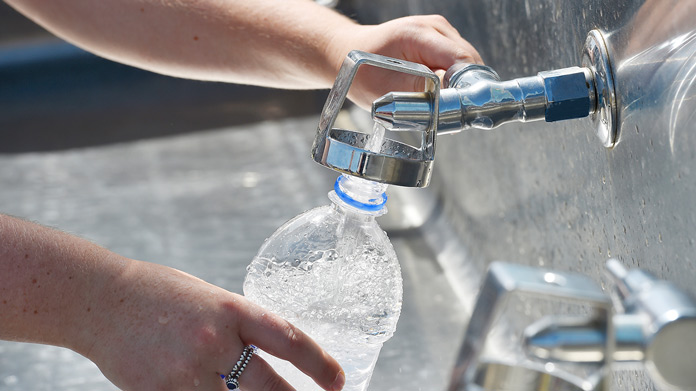
A water refilling business produces safe, drinkable water for consumers. Normally, a water refilling business’s water is cheaper than retailed bottled water. Buyers can purchase pre-filled two-to-five-gallon water bottles or bring their own jugs.
Typically, a water refilling business has a refilling “station” which uses a kiosk to distribute water. Other water refilling businesses, meanwhile, provide water refilling stations for public spaces like museums, parks and schools. A water refilling business might promote the use of reusable water, as opposed to wasting resources. Similarly, they usually promote the use of reusable bottles, as opposed to disposable plastic bottles.
Our guide is in 3 parts:
Here are the basic things you will need to pay for:
-Initial water refilling machine
-Storefront
-Delivery vehicle
-Legal documents and business permit
-Supplies (bottles, stickers, etc.)
Ongoing expenses include rent and utility costs. You’ll also need to source your water. In general, incremental costs can be as little as $0.02 per small water bottle refill. Expect to pay employees per hour, at about $10 per hour.
While residential homes provide great clients, you’re better off targeting commercial entities. Make sure you’re selling to larger businesses, as they’re most likely to buy refilled water bottles in bulk. Plus, they can redistribute them for your business—requiring less overall money to distribute your products.
A water refilling business makes money by collecting, testing and redistributing water. Normally, the water is sold in bottles. It can, however, be sold to larger companies for mass distribution. Some water refilling companies sell water filling stations for the home.
Refilled water bottles vary in price. Most can be purchased for as little as $1. Larger, five-gallon water bottles can be charged at about $15. If you’re selling mounted water refilling stations, consider pricing them at about $500 to be competitive.
A successful water refilling business can net its owner as much as $40,000 per month. As the business expands, however, money will need to be managed effectively to ensure proper scaling.
Connect with local businesses quickly, and take a disciplined approach to account management and promotions. If you can, make sure your employees are knowledgeable about social network marketing to reduce overall costs. Competition between brands can be difficult for start-up businesses, so it pays off to invest time and effort. Offer something competitors can’t give, and establish a solid value proposition.
Every day, a water refill business sources water for cleaning. Machines are installed, repaired and maintained. These machines can process water for redistribution. Water must be sampled to ensure that the treatment process went well. If the sampling results don’t meet standards, the business needs to check its machinery. Water refilling machines eventually distribute the water into different containers. These containers are loaded onto delivery vehicles which carry the water to different outlets.
Other daily responsibilities include marketing, management and financing. Unlike other businesses where marketing promotion alone can gather consumers, water refilling businesses require a little more perseverance.
To become a successful water refilling business owner, you’ll need to have a solid handle on water analysis. Additionally, you’ll need to know how to implement marketing tactics while supporting environmental causes.
From a competitive standpoint, you’ll need to run promotions often and have a disciplined approach to business operations.
The water refilling industry is growing rapidly. It’s become a profitable business for entrepreneurs, and a lot of consumers are choosing refilled water because they’re turning away from tap water. Assuming quality control is upheld, a water refilling business can make quite a lot of money—even becoming a national distributor.
Water refilling businesses are usually needed, and they’re likely to succeed if its area has no access to clean pipe water. For this reason, they’re incredibly profitable in places like the Philippines. Because a water refilling business promotes sustainability while protecting the environment, it has a higher chance of success if an area requires additional efforts.
Make sure you promote quality control and safety measure when jump-starting your business. Also, check with your local health department before getting involved. There’s a good chance your business needs to abide by several standards which you might not have thought about.
A team of two to five should be built as soon as possible. You’ll need maintenance operators to handle the machinery. Similarly, you’ll need to distribute efforts across marketing and management spheres. The water refilling business can get complex, and plenty of water needs to be analyzed and redistributed.
Business Evaluation & Strategy Tool
We'll walk you through the four pillars every business needs: Points of Leverage, Marketing Strategy, Financial Model, and Personal Compatibility. At the end you'll see a personalized report and your action plan below will be tailored to your answers.
Every viable business has natural advantages. Below are common leverage points across four categories. Pick the ones that apply to your Water Refilling business. We've pre-suggested a few based on your idea — review and adjust.
Without a way to connect with customers, even great businesses fail. Pick the channels you plan to use to reach your customers.
Enter your monthly baseline costs — the minimum overhead to keep the business running. Then we'll calculate how many sales per month you need to break even.
A business that doesn't fit your life will fail no matter how good the numbers look. Tell us how this business fits you.
Complete the four pillars and your personalized summary will appear here.
Nine concrete steps to take you from idea to open business, grouped into 30-day phases. Complete the planner above and we'll highlight what's most important for your situation.
An LLC keeps your personal assets separate from business debts and lawsuits — the most common reason small business owners choose this structure. Sole proprietorships and partnerships do not provide this protection.
Apply for your free Employer Identification Number through the IRS, then register for any state or local taxes that apply to your business (sales tax, franchise tax).
A dedicated business account is required to maintain personal asset protection. Mixing personal and business finances ('piercing the corporate veil') can void your LLC's liability shield.
Recording expenses and income from day one makes tax filing easier and lets you see when the business is actually profitable. Use software (QuickBooks, Wave) or a part-time bookkeeper.
State and local requirements vary widely. Brick-and-mortar businesses typically need a Certificate of Occupancy; service businesses may need specific professional licensing; food businesses need health permits.
General Liability Insurance is the most common starting point. If you'll have employees, most states require Workers' Compensation. Specific industries need additional coverage (product liability, professional liability, etc.).
Your brand is how customers perceive and remember you. A clear name, logo, and visual identity make every later marketing decision easier and protect you legally as you grow.
Every legitimate business needs a website. Social media pages are not a substitute — you don't own the platform. Modern website builders mean you can launch a clean site in a weekend without a developer.
A dedicated business number keeps your personal life private, makes the business look legitimate, and lets you route calls professionally. Cloud phone services start under $20/month.
Starting a Water Refilling business typically costs $25,000 to $250,000. It is considered a very high capital-intensity business.
A Water Refilling business runs roughly a 8% net profit margin, and most owners reach break-even in about 4 to 12 months.
You can usually launch a Water Refilling business in about 12 to 36 weeks, and it is commonly run full time.
A Water Refilling business is generally an intermediate-skill business to start, with rising demand. TRUiC rates it 49 out of 100 on our Idea Score.
Most Water Refilling businesses register as an LLC or other legal entity and obtain a general business license. Depending on your state and city you may also need industry-specific permits, sales tax registration, and zoning or health approvals, so check your local requirements before you launch.