Startup cost
$50k–$500k
TRUiC Business Ideas
Decision Snapshot
Idea Score
33
Startup cost
$50k–$500k
Profit margin
8%
Break-even
4 mo–12 mo
Time to launch
12 wk–36 wk
Demand trend
Stable
5-yr failure rate
—
Capital intensity
Very high
Time commitment
Full time
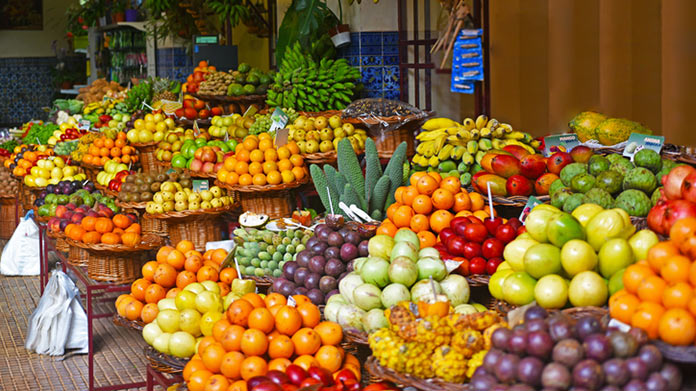
Fruit markets offer customers an inexpensive option for purchasing fresh and local fruits and produce.
Our guide is in 3 parts:
There are a few options for the type of fruit market you might open. Costs will vary accordingly, but should be relatively inexpensive to get started. If you set up a roadside stand, your overhead costs will involve the construction of the fruit bins, a temporary structure to cover your produce from the elements and the fruits you are selling. If you are operating from a farmer’s market or other permanent location, you will need to include the monthly rent on a stand location or an actual brick and mortar location. For all types of locations, your fruit costs must also be factored in, whether you grow your own or buy wholesale from other farmers. In addition, you will need a business operating license and business insurance.
A majority of your operating costs will reflect the cost to stock your shelves and bins. If you are buying your fruits from farms and wholesalers, your overhead will be the market costs. If you are selling your own fruits from your farm and/or orchard, your costs will also reflect the money spent cultivating and growing your products.
Your target market will consist of consumers looking for fresh fruits and produce at low prices. You will attract both residential shoppers, as well as chefs and cooks, looking for fresh or local alternatives.
A fruit market makes its money from the sales of fruit and produce to retail customers as well as local and regional restaurants.
Pricing for the various types of fruits you sell will depend on seasonal availability and market or competitor pricing. You will want to research how much other fruit and produce markets are charging and look to match or beat those prices, when possible, while still maintaining profitability for your own business.
Fruit market profitability can fluctuate, depending on your location within the country, fruit and produce availability, and customer support. Annually, profits can range anywhere from $25,000-60,000.
In addition to selling fruits and produce, you can consider selling related foods and spices. Honey, cane syrup, fresh herbs, canned fruits, jams and jellies, and baked goods such as breads and cookies are also good ways to increase your sales. Ask customers what they want or are looking for and aim to fill that niche. Often, customers are searching for unique items not available in supermarkets or chain stores. Your market can begin to service the needs of the public and support locally owned business growth in your area.
Day to day activities at a fruit market are dominated by customer service and re-stocking your store’s fruit and produce. If you are selling fruit grown by other farmers and orchards, coordinating deliveries and orders will also be part of the daily schedule. If you are selling your own farm’s fruits, harvesting and stocking will be a large part of your day.
A successful fruit market owner should have great experience in the cultivation and preparation of fruits and vegetables. Education in or time spent working in the agriculture industry will be quite beneficial.
Since you will be interacting with the general public, experience in retail or grocery store management will also be helpful. You should also have experience in small business finances.
More and more customers are searching for healthy and cost effective options for their groceries. A fruit market offers both of these options to consumers. Fruit markets tend to also be fairly low cost to run. Additionally, many communities are trending towards support for local and regional businesses. As long as you have a regular supply of fruits to sell, growth potential should steadily rise.
Advertising is always a necessity for alerting the public of your presence. Make the most of social media and a business website. Both mediums give the ability to spread word of your business, both locally and beyond your regional area.
Consider joining fruit and produce associations, such as the National Association of Farmer’s Market Nutrition Programs or the International Fresh Produce Association. Affiliation with these types of groups helps establish your reputation, as well as a networking system among other farmers and fruit and produce market owners.
For the fruit market, one or two people will be able to effectively run the shop successfully. You may want to add a few more employees, as your business grows, or you open additional locations. It’s best to operate with as few employees as you can, when first getting started, in order to maximize profits.
Business Evaluation & Strategy Tool
We'll walk you through the four pillars every business needs: Points of Leverage, Marketing Strategy, Financial Model, and Personal Compatibility. At the end you'll see a personalized report and your action plan below will be tailored to your answers.
Every viable business has natural advantages. Below are common leverage points across four categories. Pick the ones that apply to your Fruit Market business. We've pre-suggested a few based on your idea — review and adjust.
Without a way to connect with customers, even great businesses fail. Pick the channels you plan to use to reach your customers.
Enter your monthly baseline costs — the minimum overhead to keep the business running. Then we'll calculate how many sales per month you need to break even.
A business that doesn't fit your life will fail no matter how good the numbers look. Tell us how this business fits you.
Complete the four pillars and your personalized summary will appear here.
Nine concrete steps to take you from idea to open business, grouped into 30-day phases. Complete the planner above and we'll highlight what's most important for your situation.
An LLC keeps your personal assets separate from business debts and lawsuits — the most common reason small business owners choose this structure. Sole proprietorships and partnerships do not provide this protection.
Apply for your free Employer Identification Number through the IRS, then register for any state or local taxes that apply to your business (sales tax, franchise tax).
A dedicated business account is required to maintain personal asset protection. Mixing personal and business finances ('piercing the corporate veil') can void your LLC's liability shield.
Recording expenses and income from day one makes tax filing easier and lets you see when the business is actually profitable. Use software (QuickBooks, Wave) or a part-time bookkeeper.
State and local requirements vary widely. Brick-and-mortar businesses typically need a Certificate of Occupancy; service businesses may need specific professional licensing; food businesses need health permits.
General Liability Insurance is the most common starting point. If you'll have employees, most states require Workers' Compensation. Specific industries need additional coverage (product liability, professional liability, etc.).
Your brand is how customers perceive and remember you. A clear name, logo, and visual identity make every later marketing decision easier and protect you legally as you grow.
Every legitimate business needs a website. Social media pages are not a substitute — you don't own the platform. Modern website builders mean you can launch a clean site in a weekend without a developer.
A dedicated business number keeps your personal life private, makes the business look legitimate, and lets you route calls professionally. Cloud phone services start under $20/month.
Starting a Fruit Market business typically costs $50,000 to $500,000. It is considered a very high capital-intensity business.
A Fruit Market business runs roughly a 8% net profit margin, and most owners reach break-even in about 4 to 12 months.
You can usually launch a Fruit Market business in about 12 to 36 weeks, and it is commonly run full time.
A Fruit Market business is generally an intermediate-skill business to start, with stable demand. TRUiC rates it 33 out of 100 on our Idea Score.
Most Fruit Market businesses register as an LLC or other legal entity and obtain a general business license. Depending on your state and city you may also need industry-specific permits, sales tax registration, and zoning or health approvals, so check your local requirements before you launch.