Startup cost
$25k–$250k
TRUiC Business Ideas
Decision Snapshot
Idea Score
49
Startup cost
$25k–$250k
Profit margin
8%
Break-even
4 mo–12 mo
Time to launch
12 wk–36 wk
Demand trend
Rising
5-yr failure rate
—
Capital intensity
Very high
Time commitment
Full time
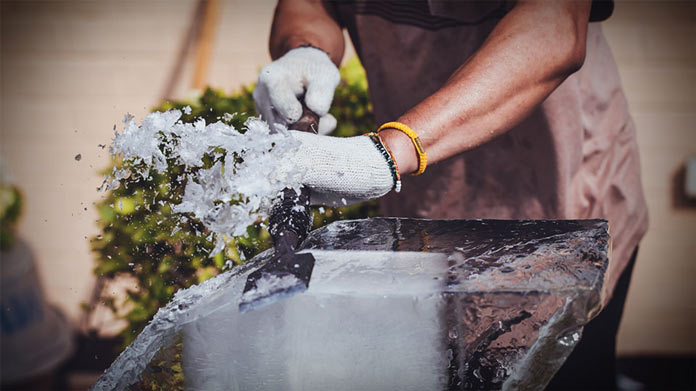
Ice sculpture business owners are typically adept at sculpting, from clear ice, figures for weddings, parties and other social events. Their finished work might include animals, logos, abstract shapes—anything requested. There’s also a market for creating larger-scale sculptures for winter outdoor events. The business owner might be a sole proprietor or could employ others, including salespeople, other sculptors and support staff to load and deliver ice figures and help operate the business.
Our guide is in 3 parts:
Ice sculpting is not an inexpensive endeavor. Here are some of the principal investments you’ll need to make.
Ice trailer for transporting ice blocks in and finished products out. A 4’ x 8’ freezer trailer can cost $12,000-$14,000. Alternatively, a refrigerated van can be rented for a day for $150. If most of your business comes in during the cold winter months or your commissions are all very close to your studio, you might be able to avoid or minimize this cost.
Ice-carving tools and equipment including chisels, ice tongs, chippers, chainsaws, hoists, ice-moving equipment and block-making machinery can run thousands of dollars.
At the customer location you’ll need display trays, lighting, and meltwater drainage containers to literally put your sculpture in its best light for several hours.
Most ice sculpting businesses today use CNC machines for computer-aided carving and mass production, and your most leading-edge competitors use robotic carvers. A CNC machine can cost $50,000 new.
The good news is that a lot of your startup necessities can be found used, online. Start by comparing prices at such sites as Icecrafters and IceSculptingTools.com. The startup costs can make starting this type of business challenging, but it is not impossible.
You’ll have payroll expenses for support staff and possibly the day-rental costs of your refrigerated trailer or van, and of course the rental of your production facility or studio. You’ll regularly have to pay your utilities and fuel and maintenance for your delivery vehicles. And you might have to buy ice blocks if you’re not making your own and maintain large machinery and periodically replace hand tools.
Your best customers are people hosting weddings, anniversary or birthday parties and other high-end celebrations. If your company can attract the attention of end users directly, it will save on commissions.
Another category of customers are companies that provide services for such big-ticket celebrations, such as restaurateurs, event and party planners and caterers.
The business makes money by selling ice sculptures at a set price, which is determined by labor, size, and intricacy of the project.
One sculptor stated online that he typically prices his work at $500 per 300-pound block of ice used. Another stated that the company offers sculptures for as much as $1,200, but that an average was about $275 to $500. You might also provide smaller carvings and even custom ice cubes for less. But there are many variables, including the size of the carving, the intricacy of the work, distance of delivery and others.
Keep in mind that, in addition to your time and skill sculpting, you must invest significantly in sculpting tools and equipment, display equipment, delivery and installation help and possibly the lease or purchase of a small refrigerated delivery truck or van. So don’t undersell yourself.
Scott Rella became the first American to start an ice sculpting business in 1982. Before that, sculpting was just a sideline of select restaurants, hotels, caterers and culinary arts institutes. By the following year, he was clearing $1.5 million in annual profits.
That’s not to say that his experience is anywhere near typical. Back then, he had no competitors and he was based in New York City. You can maximize your profit potential by finding a location with few competitors, promoting your business with savvy and putting out memorable work.
Consider adding to your payroll an experienced ice sculptor who already has a book of business and prefers the security of working for someone else. Explore the possibility of expanding into other areas. For instance, if you only do weddings and parties, look into the profit potential of winter outdoor events near you. And if there’s enough interest in your area, consider teaching ice sculpting classes.
Here’s how you’re likely to spend your typical day.
Developing and nurturing relationships with clients
Sculpting ice commissions
Overseeing the sculpting work of others if you have employees or freelancers
Arranging for the delivery of the finished product
Promoting your business through word of mouth, media stories, paid advertising, your website, signage and other means
The ice sculpting business is at the confluence of creative endeavor, technology and sales ability. If you can do it all, (or can hire the skills you lack) you can succeed here. It’s also valuable to have an instinct for self-promotion. A particularly interesting assignment or unusual sculpture can be newsworthy since it might make a striking image online or in print media.
You should also have a good camera and the ability to take professional-quality photographs to send to the media and upload to the portfolio section of your website.
If you have employees or regularly work with freelance sculptors, your strong interpersonal communications skills will be of value.
Time and sales volume are your only limitations. If you get enough business that you feel confident to bring on another sculptor, you can increase production further. Also, the more different markets you serve the more business you’ll bring in.
Since ice sculptures are novelty items at premium prices, you can assume that your business might do best during strong economic times.
Your business might be highly cyclical. For instance, the spring is wedding season. If you specialize in outdoor placements, that’s likely to only happen in the winter. So don’t mistake a flurry of business for the need to add employees. Go through a few business cycles first so that you know real business growth when you see it.
Even when you do identify a real need, consider freelance talent first. You’ll only hire them after you’ve already struck a deal for the business—so you’ll know you can afford them.
When you see an ice sculpture you love, note who carved it and keep the name in mind when you’re ready to expand.
As for support help for loading and delivering, consider hiring seasonal help until you get confident that you’ll have enough year-round business to continuously meet payroll.
Business Evaluation & Strategy Tool
We'll walk you through the four pillars every business needs: Points of Leverage, Marketing Strategy, Financial Model, and Personal Compatibility. At the end you'll see a personalized report and your action plan below will be tailored to your answers.
Every viable business has natural advantages. Below are common leverage points across four categories. Pick the ones that apply to your Ice Sculpture business. We've pre-suggested a few based on your idea — review and adjust.
Without a way to connect with customers, even great businesses fail. Pick the channels you plan to use to reach your customers.
Enter your monthly baseline costs — the minimum overhead to keep the business running. Then we'll calculate how many sales per month you need to break even.
A business that doesn't fit your life will fail no matter how good the numbers look. Tell us how this business fits you.
Complete the four pillars and your personalized summary will appear here.
Nine concrete steps to take you from idea to open business, grouped into 30-day phases. Complete the planner above and we'll highlight what's most important for your situation.
An LLC keeps your personal assets separate from business debts and lawsuits — the most common reason small business owners choose this structure. Sole proprietorships and partnerships do not provide this protection.
Apply for your free Employer Identification Number through the IRS, then register for any state or local taxes that apply to your business (sales tax, franchise tax).
A dedicated business account is required to maintain personal asset protection. Mixing personal and business finances ('piercing the corporate veil') can void your LLC's liability shield.
Recording expenses and income from day one makes tax filing easier and lets you see when the business is actually profitable. Use software (QuickBooks, Wave) or a part-time bookkeeper.
State and local requirements vary widely. Brick-and-mortar businesses typically need a Certificate of Occupancy; service businesses may need specific professional licensing; food businesses need health permits.
General Liability Insurance is the most common starting point. If you'll have employees, most states require Workers' Compensation. Specific industries need additional coverage (product liability, professional liability, etc.).
Your brand is how customers perceive and remember you. A clear name, logo, and visual identity make every later marketing decision easier and protect you legally as you grow.
Every legitimate business needs a website. Social media pages are not a substitute — you don't own the platform. Modern website builders mean you can launch a clean site in a weekend without a developer.
A dedicated business number keeps your personal life private, makes the business look legitimate, and lets you route calls professionally. Cloud phone services start under $20/month.
Starting an Ice Sculpture business typically costs $25,000 to $250,000. It is considered a very high capital-intensity business.
An Ice Sculpture business runs roughly a 8% net profit margin, and most owners reach break-even in about 4 to 12 months.
You can usually launch an Ice Sculpture business in about 12 to 36 weeks, and it is commonly run full time.
An Ice Sculpture business is generally an intermediate-skill business to start, with rising demand. TRUiC rates it 49 out of 100 on our Idea Score.
Most Ice Sculpture businesses register as an LLC or other legal entity and obtain a general business license. Depending on your state and city you may also need industry-specific permits, sales tax registration, and zoning or health approvals, so check your local requirements before you launch.