Startup cost
$50k–$500k
TRUiC Business Ideas
Decision Snapshot
Idea Score
36
Startup cost
$50k–$500k
Profit margin
11%
Break-even
4 mo–12 mo
Time to launch
12 wk–36 wk
Demand trend
Stable
5-yr failure rate
—
Capital intensity
Very high
Time commitment
Full time
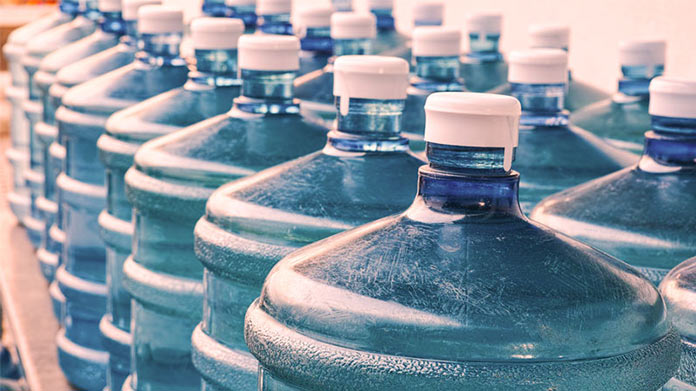
Bottled water delivery businesses offer fresh, delicious options for hydration. Whether for residential or commercial use, water is a vital part of good health and will be a bonus for family and employees.
Our guide is in 3 parts:
Costs will range, depending on the size and scope of the operation you are starting.
For most water delivery businesses, they start small as a subsidiary of a larger water bottling corporation. You will need to buy in to a water distributor, much like other franchised businesses.These costs can vary but are usually reasonable for entrepreneurs just starting out, as it is in the water company’s best interest to have as many smaller delivery businesses distributing their product. You will also need to:
Purchase a business license and insurance
Buy or lease a couple delivery trucks or vans
rent a storage space for inventory
initial advertisement and marketing blitz to build an name and, ultimately, a reputation
Moving forward, your operational costs will include fleet maintenance, rental costs for business or storage space, employee salaries, and repair and replacement of water coolers.
Typically, the target market will split between commercial operations, such as retail businesses, restaurants and cafes, office buildings and complexes and businesses with laborers working in outside or hot conditions or residential customers who prefer bottled water to other residential options. All of these customers have the same needs in common though, as they want fresh, clean water to be available 24/7.
Customers buy monthly shipments of water, rent or buy water coolers and dispersion devices, and place special orders for water for one-off parties, large gatherings, and celebrations, such as weddings or corporate seminars.
Water is not incredibly expensive, so your earning comes from the contracts you’re able to agree upon with customers. Annual contracts for delivery ensure your business will garner revenue monthly. Typically, a business will want three to six 5 gallon bottles per month, depending on the size of their business. This will average around about $50 per monthly delivery. Larger businesses will want more accordingly and you may want to develop a sliding scale of employee/water ratios, with pricing in the favor of the customer, as the orders become larger. As mentioned previously, make sure you research what other delivery companies are charging and look to align with those figures.
Bottled water, as an industry, is more and more lucrative, especially considering the low overhead costs of extracting and bottling a natural resource. On average, the bottled water industry is making billions of dollars annually and is one of the fastest growing divisions of the beverage industry in the world. This is good news for water delivery businesses. A successful, medium sized delivery service will see annual profits in the $85,000 – 150,000 range.
When looking to expand your business, think outside the box, or jug, as it is. Promote the idea of a greener option; move away from the individual-sized water bottles and move customers towards the 5 gallon, refillable bottles. More and more customers are starting to realize the multitude of benefits from reducing plastic waste and reusing the larger containers. You may also want to promote the water cooler rental and purchase options more strongly. Water coolers aren’t just for office buildings anymore. Finally, consider offering the options of personalizing the labels on water bottles, large jugs and even water coolers. With today’s wrap services, virtually any logo or design can be placed on these products.
As the name implies, most of the day to day activities focus on water deliveries. Whether residential or commercial, you will be meeting customers and re-stocking their water supplies.
In addition, you will:
restock your own inventory
repair or replace customer water coolers
communicate and network with your water distribution parent company
develop marketing and advertising strategies
train new employees for working in the field or in the office
Much of the business of water delivery revolves around interactions with the customers. If you are comfortable talking to different individuals on a day to day basis, often in person or over the phone, you will enjoy the business. One must also be able to manage a small or growing business and be able to physically load and deliver some of the water bottles, at least initially, while starting up your business.
Clean water is quickly becoming an increasingly valuable commodity, with need and availability always driving prices higher. Therefore, the growth potential is quite expansive. There is always a danger of over saturation in a market but, since water is vital to survival, this seems unlikely in the near future.
When just starting out, look to secure some annual contracts with some sizable businesses. The regular income will help to pad your investment. Look for residential customers, as well, although the larger parts of your business will usually be derived from commercial operations looking for clean, cold water for employees.
Consider these points, as well:
Will you supply more than one kind of water? i.e. spring, purified, or distilled
Do you service and/or sell water coolers?
How large of a delivery range will you operate within?
Will you deliver large and medium (1.5-5 gallon) bottles, small individual drinking bottles, or a mixture of all sizes?
Make sure you research the market you’re trying to break into and look for areas which need greater attention or are underrepresented with current water delivery services.
Building a team will rely on how fast your business grows. To start out, you will only need a few employees to handle inventory and invoices, deliveries and maintenance. You will most likely be able to manage much of the work with a two or three person team, in the beginning. And, when you do add employees, maximize your money by choosing individuals with an array of skills and abilities, so you will all be able to help out wherever needed.
Business Evaluation & Strategy Tool
We'll walk you through the four pillars every business needs: Points of Leverage, Marketing Strategy, Financial Model, and Personal Compatibility. At the end you'll see a personalized report and your action plan below will be tailored to your answers.
Every viable business has natural advantages. Below are common leverage points across four categories. Pick the ones that apply to your Water Delivery business. We've pre-suggested a few based on your idea — review and adjust.
Without a way to connect with customers, even great businesses fail. Pick the channels you plan to use to reach your customers.
Enter your monthly baseline costs — the minimum overhead to keep the business running. Then we'll calculate how many sales per month you need to break even.
A business that doesn't fit your life will fail no matter how good the numbers look. Tell us how this business fits you.
Complete the four pillars and your personalized summary will appear here.
Nine concrete steps to take you from idea to open business, grouped into 30-day phases. Complete the planner above and we'll highlight what's most important for your situation.
An LLC keeps your personal assets separate from business debts and lawsuits — the most common reason small business owners choose this structure. Sole proprietorships and partnerships do not provide this protection.
Apply for your free Employer Identification Number through the IRS, then register for any state or local taxes that apply to your business (sales tax, franchise tax).
A dedicated business account is required to maintain personal asset protection. Mixing personal and business finances ('piercing the corporate veil') can void your LLC's liability shield.
Recording expenses and income from day one makes tax filing easier and lets you see when the business is actually profitable. Use software (QuickBooks, Wave) or a part-time bookkeeper.
State and local requirements vary widely. Brick-and-mortar businesses typically need a Certificate of Occupancy; service businesses may need specific professional licensing; food businesses need health permits.
General Liability Insurance is the most common starting point. If you'll have employees, most states require Workers' Compensation. Specific industries need additional coverage (product liability, professional liability, etc.).
Your brand is how customers perceive and remember you. A clear name, logo, and visual identity make every later marketing decision easier and protect you legally as you grow.
Every legitimate business needs a website. Social media pages are not a substitute — you don't own the platform. Modern website builders mean you can launch a clean site in a weekend without a developer.
A dedicated business number keeps your personal life private, makes the business look legitimate, and lets you route calls professionally. Cloud phone services start under $20/month.
Starting a Water Delivery business typically costs $50,000 to $500,000. It is considered a very high capital-intensity business.
A Water Delivery business runs roughly a 11% net profit margin, and most owners reach break-even in about 4 to 12 months.
You can usually launch a Water Delivery business in about 12 to 36 weeks, and it is commonly run full time.
A Water Delivery business is generally an intermediate-skill business to start, with stable demand. TRUiC rates it 36 out of 100 on our Idea Score.
Most Water Delivery businesses register as an LLC or other legal entity and obtain a general business license. Depending on your state and city you may also need industry-specific permits, sales tax registration, and zoning or health approvals, so check your local requirements before you launch.