Startup cost
$2k–$25k
TRUiC Business Ideas
Decision Snapshot
Idea Score
55
Startup cost
$2k–$25k
Profit margin
11%
Break-even
4 mo–12 mo
Time to launch
12 wk–36 wk
Demand trend
Stable
5-yr failure rate
—
Capital intensity
Medium
Time commitment
Full time
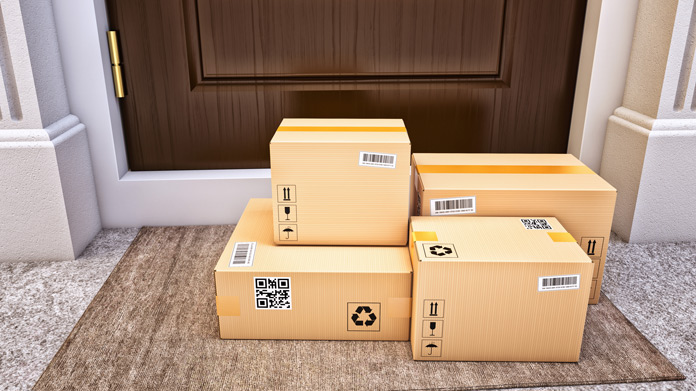
While there are national delivery services, such as USPS, FedEx and UPS, people often need packages delivered to nearby locations in a shorter timeframe than these services are able to provide. A delivery service provides fast, often same-day delivery, within a particular area. A service may specialize in a specific type of delivery, such as delivering food, or it might deliver all kinds of packages.
Our guide is in 3 parts:
A delivery business’ largest startup cost is the acquisition of a suitable vehicle. A vehicle doesn’t need to be fancy, but it must be reliable. Such a vehicle usually costs several thousand dollars, at least.
The second-largest startup cost is often insurance. Delivery businesses might need commercial auto insurance, and they may want insurance for the packages being delivered. Without the proper insurance coverage, the business may be responsible for reimbursing any customers whose packages are damaged en route.
The other startup costs are minimal, often totaling only a few hundred dollars. These include any fuel, equipment costs (e.g. for a hand truck and ratcheting straps), licensure fees and marketing expenses. A cell phone is also needed to make calls, and most business owners rely on a computer as well.
Business owners who want to keep their upfront costs as small as possible can use a personal vehicle until the business’ profits support purchasing a different one. They also can use free marketing strategies, such as door-to-door marketing and social media marketing. Fuel can’t be avoided, but only a little is needed to get a business started. Revenue from the first delivery can be used to purchase more fuel for subsequent deliveries, which will generate more revenue.
The main ongoing expenses for a delivery service business include vehicles’ maintenance and depreciation, fuel costs and insurance premiums. All of these should be considered when determining what to charge.
A delivery service business’ ideal customer is a business that needs to make lots of quick, local deliveries. Partnering with local flower shops, cake shops and pizza places can provide steady business.
A delivery service makes money by charging customers for deliveries made.
A few different factors go into how much delivery service businesses charge. A typical delivery charges may include a mileage charge of $0.50 to $2.50 per mile, with longer deliveries tending toward the higher end of the range, and a fuel surcharge of 15 percent. Deliveries that take longer than normal may be charged on an hourly rate rather than a distance-based rate.
There may be additional fees assessed for waiting, rush orders, after-hours deliveries, and heavy or oversized packages.
A national survey of couriers found that the average deliverer makes $34 per hour. According to the survey, most work part-time by choice. Working 40 hours a week at this rate would provide a weekly paycheck of $1,360.
A delivery service business can generate more revenue by investing in more fuel-efficient vehicles. Although this won’t increase revenue, it will greatly reduce operating expenses because fuel is one of the biggest ongoing expenses. The net result will be an increase in profitability.
A delivery service business owner spends much of their day taking delivery orders, picking up packages and dropping them off. As a business grows, more drivers may be hired. Once there are multiple drivers, a business owner may transition to overseeing the fleet of couriers. This may involve accepting orders, passing them onto drivers and ensuring deliveries are made in the most efficient manner possible.
In large metropolitan areas, such as New York City, some delivery services may deliver packages via bicycle. Most delivery services, however, rely on cars to take packages from their pickup location to their drop-off point. Therefore, most delivery service business owners need to have a driver’s license. Interested business owners who don’t have a driver’s license should contact their state’s department of motor vehicles to learn about the permitting and licensure process.
Customer service skills are also important in the delivery industry, as customers regularly change their orders. They may have more packages to deliver than they originally mentioned, need a package taken to a different address or want a package delivered sooner than initially agreed upon. Being able to gracefully respond to requests will help ensure customers are satisfied with the service provided.
A delivery service may be a local operation that has just a few drivers, or it might be a national company. GrubHub and Zipments are two examples of larger delivery services.
While a small delivery service business might be able to be run by one person, having multiple drivers lets a courier service deliver more packages and extend its delivery hours. Some companies directly employ couriers, but most hire them as independent contractors (the same way Uber hires drivers). Deliverers sign up to drive for a company, and they’re given a percentage of the delivery charge on all deliveries they make.
The independent contractor model is easier to scale, and it ensures businesses only have to pay deliverers if they make deliveries.
Business Evaluation & Strategy Tool
We'll walk you through the four pillars every business needs: Points of Leverage, Marketing Strategy, Financial Model, and Personal Compatibility. At the end you'll see a personalized report and your action plan below will be tailored to your answers.
Every viable business has natural advantages. Below are common leverage points across four categories. Pick the ones that apply to your Delivery business. We've pre-suggested a few based on your idea — review and adjust.
Without a way to connect with customers, even great businesses fail. Pick the channels you plan to use to reach your customers.
Enter your monthly baseline costs — the minimum overhead to keep the business running. Then we'll calculate how many sales per month you need to break even.
A business that doesn't fit your life will fail no matter how good the numbers look. Tell us how this business fits you.
Complete the four pillars and your personalized summary will appear here.
Nine concrete steps to take you from idea to open business, grouped into 30-day phases. Complete the planner above and we'll highlight what's most important for your situation.
An LLC keeps your personal assets separate from business debts and lawsuits — the most common reason small business owners choose this structure. Sole proprietorships and partnerships do not provide this protection.
Apply for your free Employer Identification Number through the IRS, then register for any state or local taxes that apply to your business (sales tax, franchise tax).
A dedicated business account is required to maintain personal asset protection. Mixing personal and business finances ('piercing the corporate veil') can void your LLC's liability shield.
Recording expenses and income from day one makes tax filing easier and lets you see when the business is actually profitable. Use software (QuickBooks, Wave) or a part-time bookkeeper.
State and local requirements vary widely. Brick-and-mortar businesses typically need a Certificate of Occupancy; service businesses may need specific professional licensing; food businesses need health permits.
General Liability Insurance is the most common starting point. If you'll have employees, most states require Workers' Compensation. Specific industries need additional coverage (product liability, professional liability, etc.).
Your brand is how customers perceive and remember you. A clear name, logo, and visual identity make every later marketing decision easier and protect you legally as you grow.
Every legitimate business needs a website. Social media pages are not a substitute — you don't own the platform. Modern website builders mean you can launch a clean site in a weekend without a developer.
A dedicated business number keeps your personal life private, makes the business look legitimate, and lets you route calls professionally. Cloud phone services start under $20/month.
Starting a Delivery business typically costs $2,000 to $25,000. It is considered a medium capital-intensity business.
A Delivery business runs roughly a 11% net profit margin, and most owners reach break-even in about 4 to 12 months.
You can usually launch a Delivery business in about 12 to 36 weeks, and it is commonly run full time.
A Delivery business is generally an intermediate-skill business to start, with stable demand. TRUiC rates it 55 out of 100 on our Idea Score.
Most Delivery businesses register as an LLC or other legal entity and obtain a general business license. Depending on your state and city you may also need industry-specific permits, sales tax registration, and zoning or health approvals, so check your local requirements before you launch.