Startup cost
$300k–$1.0M
TRUiC Business Ideas
Decision Snapshot
Idea Score
53
Startup cost
$300k–$1.0M
Profit margin
41%
Break-even
18 mo–36 mo
Time to launch
2 wk–12 wk
Demand trend
Stable
5-yr failure rate
—
Capital intensity
Very high
Time commitment
Full time
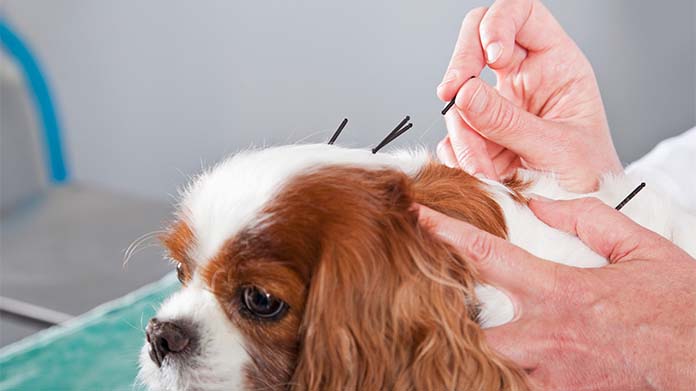
Pet owners seek out a variety of veterinary services to ensure their four-legged companions are happy and healthy. Unfortunately, many do not respond to standard treatments such as medication and dietary changes. In those instances, veterinarians may refer their patients to a veterinary acupuncturist. Veterinary acupuncturists utilize small needles that are inserted into various pressure points around the animal’s body. These needles spark the release of natural chemicals that aid in bodily healing. Veterinary acupuncture has proven widely successful in treating conditions such as neurologic disorders, muscle injuries, hip dysplasia, gastrointestinal issues, and reproductive disorders.
Our guide is in 3 parts:
Startup costs for a veterinary acupuncturist vary depending on the types of animals treated and whether they choose to offer mobile or in-house treatments. The average budget for setting up a mobile business is $300,000, with some vets reporting costs as high as $750,000. This includes equipping a vehicle, operating licenses, business insurance, an initial pharmaceutical order, and administrative supplies. Starting a stationary clinic requires the lease of office space and retrofitting the clinic with all necessary equipment. Industry leaders report an initial investment of approximately $1 million.
Acupuncturists will need to include a number of items in their ongoing budget. Equipment must be kept clean and maintained through a preventative maintenance plan. Licenses and insurance should be maintained and continuing education should be a top priority. Therapists who perform additional therapies and modalities will need to keep a steady supply of materials. Needles should be properly disposed of after each treatment, utilizing a fresh set for each session. Mobile therapists face overhead costs such as vehicle and equipment maintenance, while therapists who treat patients in-house incur ongoing expenses such as lease payments and utilities.
Veterinary acupuncturists should clearly define their target market during the planning stages. Work settings and initial investments vary depending upon their specific interests. Some choose to operate out of a private practice while others work on farms, in laboratories, out of research facilities, or at zoos. Market needs should be thoroughly researched and taken into consideration prior to investment.
Veterinary acupuncturists charge a fee for each treatment. Some offer mobile services, while others perform all treatments in-office. Many treat all breeds of animals, while others focus on specific breeds.
The pricing of acupuncture therapy varies depending upon the type of animal, the nature of the animal’s condition, and the scope of practice. Costs per treatment range from $60 to $300 per session.
Profits vary depending upon the types of animals treated and overhead expenses. A recent study reports that the average annual earnings of a board-certified specialist are well over $150,000.
Veterinary acupuncturists looking to increase profits should consider offering additional products and services. Industry leaders have found success selling supplements, homeopathic medicines, prescription diet food, and general conventional medications. Additional alternative treatment options, such as massage or herbal therapy, could also prove beneficial.
For many, veterinary acupuncture is part of a larger treatment plan. Acupuncturists collaborate with the primary vet to ensure a well-rounded treatment plan is in place. They determine which anatomical points should be treated, as well as the duration of therapy. Many treatment plans require more frequent treatments during the initial stages, tapering off over time. Many veterinary acupuncturists will combine acupuncture with behavioral modification programs or a special diet to maximize results. They will follow their patients’ progress, communicating all results to the primary veterinarian and the pet owner. When not treating patients, veterinary acupuncturists research alternative therapies and perform administrative duties associated with the business.
Most states require that an accredited veterinary acupuncturist hold both a veterinary degree and certification through the American Board of Animal Acupuncture (ABAA). Therapists must have extensive knowledge of animal behavior, anatomy, muscle physiology, and approved acupuncture techniques. Continuing education is typically done through the American Academy of Veterinary Acupuncture (AAVA).
In addition to the appropriate schooling, it’s important that therapists understand animal behavior and treat each patient with the utmost respect. Communication with both the animals and their owner is a critical component for long-term success.
Over the last decade, consumer spending on animal healthcare has increased significantly. This growth is expected to continue with a projected increase of over 19% from 2016 to 2026. As pet owners seek out alternative therapies for their four-legged companions, the need for veterinary acupuncturists is expected to grow steadily. Therapists have the option to maintain or expand their businesses based on their needs and interests.
Aspiring veterinary acupuncturists are encouraged to seek counsel from a financial advisor before opening their practice. A thorough business plan should address all aspects of the business including practice goals and an analysis of financial data to help maximize their investment.
During your business’s infancy stage, you will likely be able to work alone or limit hiring to one technician. As your practice experiences growth, however, it may become difficult to fit all patients into your daily schedule. When looking to hire additional team members, it is critical that each candidate is fully vetted and that the parameters of the position are clearly expressed.
Business Evaluation & Strategy Tool
We'll walk you through the four pillars every business needs: Points of Leverage, Marketing Strategy, Financial Model, and Personal Compatibility. At the end you'll see a personalized report and your action plan below will be tailored to your answers.
Every viable business has natural advantages. Below are common leverage points across four categories. Pick the ones that apply to your Veterinary Acupuncture business. We've pre-suggested a few based on your idea — review and adjust.
Without a way to connect with customers, even great businesses fail. Pick the channels you plan to use to reach your customers.
Enter your monthly baseline costs — the minimum overhead to keep the business running. Then we'll calculate how many sales per month you need to break even.
A business that doesn't fit your life will fail no matter how good the numbers look. Tell us how this business fits you.
Complete the four pillars and your personalized summary will appear here.
Nine concrete steps to take you from idea to open business, grouped into 30-day phases. Complete the planner above and we'll highlight what's most important for your situation.
An LLC keeps your personal assets separate from business debts and lawsuits — the most common reason small business owners choose this structure. Sole proprietorships and partnerships do not provide this protection.
Apply for your free Employer Identification Number through the IRS, then register for any state or local taxes that apply to your business (sales tax, franchise tax).
A dedicated business account is required to maintain personal asset protection. Mixing personal and business finances ('piercing the corporate veil') can void your LLC's liability shield.
Recording expenses and income from day one makes tax filing easier and lets you see when the business is actually profitable. Use software (QuickBooks, Wave) or a part-time bookkeeper.
State and local requirements vary widely. Brick-and-mortar businesses typically need a Certificate of Occupancy; service businesses may need specific professional licensing; food businesses need health permits.
General Liability Insurance is the most common starting point. If you'll have employees, most states require Workers' Compensation. Specific industries need additional coverage (product liability, professional liability, etc.).
Your brand is how customers perceive and remember you. A clear name, logo, and visual identity make every later marketing decision easier and protect you legally as you grow.
Every legitimate business needs a website. Social media pages are not a substitute — you don't own the platform. Modern website builders mean you can launch a clean site in a weekend without a developer.
A dedicated business number keeps your personal life private, makes the business look legitimate, and lets you route calls professionally. Cloud phone services start under $20/month.
Starting a Veterinary Acupuncture business typically costs $300,000 to $1,000,000. It is considered a very high capital-intensity business.
A Veterinary Acupuncture business runs roughly a 41% net profit margin, and most owners reach break-even in about 18 to 36 months.
You can usually launch a Veterinary Acupuncture business in about 2 to 12 weeks, and it is commonly run full time.
A Veterinary Acupuncture business is generally an expert-skill business to start, with stable demand. TRUiC rates it 53 out of 100 on our Idea Score.
Most Veterinary Acupuncture businesses register as an LLC or other legal entity and obtain a general business license. Depending on your state and city you may also need industry-specific permits, sales tax registration, and zoning or health approvals, so check your local requirements before you launch.