Startup cost
$25k–$250k
TRUiC Business Ideas
Decision Snapshot
Idea Score
60
Startup cost
$25k–$250k
Profit margin
41%
Break-even
4 mo–12 mo
Time to launch
12 wk–36 wk
Demand trend
Stable
5-yr failure rate
—
Capital intensity
Very high
Time commitment
Full time
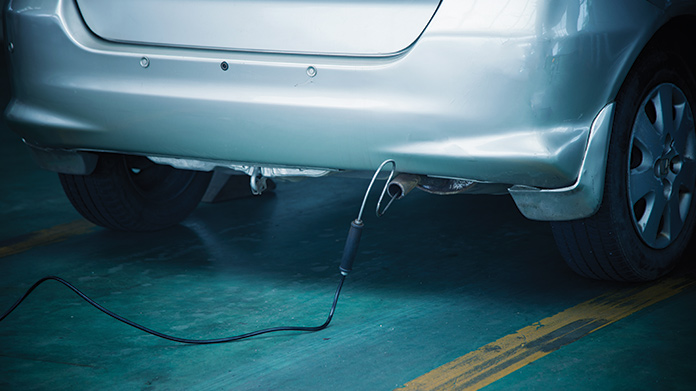
Emission testing businesses perform tests to determine the quality and amount of exhaust produced from internal combustion motors, such as cars, trucks, and motorcycles. These businesses can prove profitable, as well as beneficial to the overall health of the planet.
Our guide is in 3 parts:
One of the initial costs has to be the testing equipment itself. Equipment costs can range quite a bit, depending on the volume of business you anticipate. Testing machines can start around a few thousand and can go upwards to five figures. Additionally, you’ll need a garage to conduct the tests.
Certification for yourself and employees, licensing with the state, plus business and liability insurance will round out most of your higher startup costs.
Rent or mortgage for your garage, utility costs, and maintenance for your testing machine are some of the essential ongoing costs. Additionally, business licensing and insurance will incur moderate costs.
All vehicle owners and drivers, per state rules, must undergo regular emission testing. In some locations, commercial vehicles are subject to different testing procedures.
Customers pay emissions testing businesses to check the emissions of their vehicles.
Emission testing costs for customers are relatively low, anywhere between $20-30. This means the volume of tests performed will be an important factor for your business.
An average salary for an emission testing business owner is approximately $35,000 annually.
Combining an emission testing service with a larger mechanic-based business is a smart and profitable move. Presenting the public with more options can generate greater revenue and more repeat customers.
Depending on the state, emission testing businesses would be scheduling and performing tests for customers. State requirements vary, so some businesses may have customers come to them, whereas others may travel to businesses or other locations to perform tests. Once the testing is complete, and data is submitted, customers are informed of compliance or necessary next steps.
Additional activities may include ensuring equipment, facilities, and staff are certified and regularly maintained.
Understanding the ins and outs of exhaust systems can give an emission business owner an advantage. Helping customers to understand their options beyond the initial testing helps to build customer loyalty and confidence. General business and advertising knowledge is also beneficial for a relatively niche business, such as this.
Depending on the state you’re set up in, emissions testing is a reliable business, although the overall earning potential is modest. Many emissions testing businesses combine with other related businesses, such as mechanic shops, which we will discuss later.
One of the greatest resources an entrepreneur can have is quality mentorship. As you start planning your business, connect with a free business resource near you to get the help you need.
Having a support network in place to turn to during tough times is a major factor of success for new business owners.
Want to learn more about starting a business from entrepreneurs themselves? Visit Startup Savant’s startup founder series to gain entrepreneurial insights, lessons, and advice from founders themselves.
There are many resources out there specifically for women entrepreneurs. We’ve gathered necessary and useful information to help you succeed both professionally and personally:
Since emission testing is a specific business, some businesses choose to partner with mechanic shops or mechanics future emission testing as a service. By offering more than one service under one roof, businesses are more likely to succeed.
Be sure to determine the estimated customer need for your business. Some states have more stringent testing standards and can, therefore, support greater emission business saturation. Perform some market research ahead of launching a business.
Create a strong initial advertising presence. Make your name known and splash the market with special offers and initiatives to visit. Customers have to know you exist.
Emission testing itself doesn’t usually take more than one, or possibly two, technicians to operate. Needing a team will depend on what other services you offer, as well as the volume of customers.
Business Evaluation & Strategy Tool
We'll walk you through the four pillars every business needs: Points of Leverage, Marketing Strategy, Financial Model, and Personal Compatibility. At the end you'll see a personalized report and your action plan below will be tailored to your answers.
Every viable business has natural advantages. Below are common leverage points across four categories. Pick the ones that apply to your Emission Testing business. We've pre-suggested a few based on your idea — review and adjust.
Without a way to connect with customers, even great businesses fail. Pick the channels you plan to use to reach your customers.
Enter your monthly baseline costs — the minimum overhead to keep the business running. Then we'll calculate how many sales per month you need to break even.
A business that doesn't fit your life will fail no matter how good the numbers look. Tell us how this business fits you.
Complete the four pillars and your personalized summary will appear here.
Nine concrete steps to take you from idea to open business, grouped into 30-day phases. Complete the planner above and we'll highlight what's most important for your situation.
An LLC keeps your personal assets separate from business debts and lawsuits — the most common reason small business owners choose this structure. Sole proprietorships and partnerships do not provide this protection.
Apply for your free Employer Identification Number through the IRS, then register for any state or local taxes that apply to your business (sales tax, franchise tax).
A dedicated business account is required to maintain personal asset protection. Mixing personal and business finances ('piercing the corporate veil') can void your LLC's liability shield.
Recording expenses and income from day one makes tax filing easier and lets you see when the business is actually profitable. Use software (QuickBooks, Wave) or a part-time bookkeeper.
State and local requirements vary widely. Brick-and-mortar businesses typically need a Certificate of Occupancy; service businesses may need specific professional licensing; food businesses need health permits.
General Liability Insurance is the most common starting point. If you'll have employees, most states require Workers' Compensation. Specific industries need additional coverage (product liability, professional liability, etc.).
Your brand is how customers perceive and remember you. A clear name, logo, and visual identity make every later marketing decision easier and protect you legally as you grow.
Every legitimate business needs a website. Social media pages are not a substitute — you don't own the platform. Modern website builders mean you can launch a clean site in a weekend without a developer.
A dedicated business number keeps your personal life private, makes the business look legitimate, and lets you route calls professionally. Cloud phone services start under $20/month.
Starting an Emission Testing business typically costs $25,000 to $250,000. It is considered a very high capital-intensity business.
An Emission Testing business runs roughly a 41% net profit margin, and most owners reach break-even in about 4 to 12 months.
You can usually launch an Emission Testing business in about 12 to 36 weeks, and it is commonly run full time.
An Emission Testing business is generally an intermediate-skill business to start, with stable demand. TRUiC rates it 60 out of 100 on our Idea Score.
Most Emission Testing businesses register as an LLC or other legal entity and obtain a general business license. Depending on your state and city you may also need industry-specific permits, sales tax registration, and zoning or health approvals, so check your local requirements before you launch.