Startup cost
$25k–$250k
TRUiC Business Ideas
Decision Snapshot
Idea Score
60
Startup cost
$25k–$250k
Profit margin
41%
Break-even
4 mo–12 mo
Time to launch
12 wk–36 wk
Demand trend
Stable
5-yr failure rate
—
Capital intensity
Very high
Time commitment
Full time
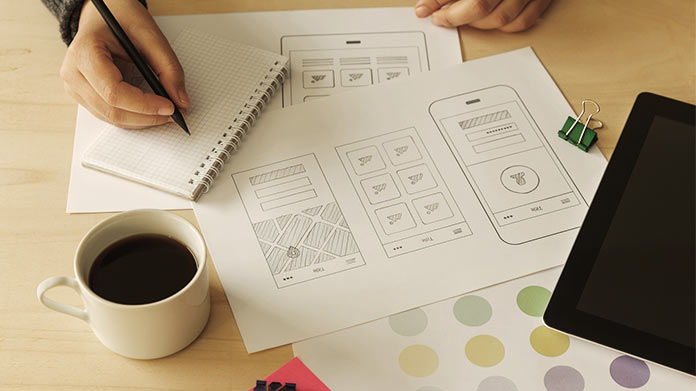
Corporations and individuals are constantly coming up with new ideas for products, and they frequently need help bringing their concepts into reality. Prototype design businesses specialize in creating first-drafts of products that corporations and inventors think up.
Prototype design is highly specialized work, but the demand for this work is growing. As online resources and technological advancements make it easier and more affordable to build prototypes, an increasing number of corporations and individuals want to make their concepts a physical reality.
Our guide is in 3 parts:
The costs of opening a prototype design business can be substantial. In addition to having a workplace, Creative Mechanisms recommends that business owners also purchase a:
Single-tool CNC machine that’s programmable but can also be manually operated
Multi-tool CNC machine that’s programmable
Fused Deposition Modeling (FDM) 3D printer
Business owners who have a limited budget might be able to start out renting equipment at a nearby CNC shop. Although this requires working around the shop’s schedule, paying to use equipment on an as-needed basis is much less expensive than buying it outright (and having to maintain it).
Additionally, business owners might be able to get buy at first with only an advanced 3D printer. While a business will eventually need CNC machines, a capable 3D printer will be able to build some prototypes itself. A business can start out making only these prototypes, and expand into other work once the business has enough funds for a CNC machine.
The ongoing expenses for a prototype design business are manageable. They include rent (if leasing a space), utilities, equipment maintenance, software licensing and material costs, as well as employee wages.
Most prototype design businesses focus on serving one of two distinct target markets.
Some businesses primarily work with corporations that want prototypes developed. These prototype businesses are often creating products from formal mechanical or engineering drawings, and they’re interacting with professionals who are familiar with the design and manufacturing process.
Other businesses serve individuals, who are often small business owners and/or inventors. These prototype businesses frequently create products from napkin sketches, and they often offer clients more assistance with the design and manufacturing process.
A prototype design business makes money by offering prototype services. Although the work ends in a physical product for the client, clients usually pay for the service because building a prototype frequently involves several steps. Charging for the service lets businesses adjust their fees based on the time required and work involved.
The rates that prototype design businesses charge vary greatly depending on a prototype’s complexity, the amount of assistance provided, the turnaround time and the equipment required to build the prototype. Basic rapid prototypes might cost as little as $100, while high fidelity connected prototypes can be $30,000. In some cases, a prototype might even be $100,000.
With prices ranging from $100 to (sometimes) $100,000, prototype design businesses bring in vastly different revenues. Some small businesses make respectable yet modest annual revenues, while others may have substantial revenues and profits. At $1000,000, making just 10 prototypes in a year would result in a $1 million gross annual revenue.
A prototype design business can increase its revenue by helping clients with more than just building prototypes. Many clients also need help with designing, developing, patenting, licensing and distributing their inventions. Some businesses also offer low-volume manufacturing.
Prototype design businesses don’t necessarily have a “typical day” because each new prototype presents its own challenges. On any given day, business owners might find themselves:
Helping clients refine their conceptual ideas
Reading (and sometimes refining) product drawings
Working with any number of materials to build products
Problem-solving with others who have specialized knowledge
Helping clients alter and adjust their prototypes
For many business owners, the variety that each new prototype brings is a major reason to start this type of business.
Running a prototype design business requires a significant amount of manufacturing knowledge, including expertise in product design and manufacturing. Business owners may find themselves working with many different plans and creating prototypes with a variety of materials.
In many cases, business owners already have an engineering degree. Those who don’t may want to complete an engineering program or hire an engineer to work with them. Many colleges and universities offer engineering programs, including lots of online options. The University of Southern Mississippi and Regent University are a couple of schools with online degrees.
As part of the engineering training, business owners frequently learn computer-aided drawing (CAD). Business owners who have an engineering background but would like to advance their CAD knowledge can take an online course from Coursera or a similar platform.
Most prototype businesses have a single facility where they build prototypes, but the internet makes it easy to serve clients from all over the world if a business wants to do so. An example of a business that primarily services a local area is Armstrong Rapid Manufacturing in Syracuse, NY. Kickr Design and Mako Design + Invent are two other businesses don’t focus on servicing a particular area.
Business owners must network, and not only with potential clients. Having a strong network of industry specialists gives business owners many consultants to draw from when they face problems and challenges that are outside their area of expertise. Ultimately, it’s business owners ability to help clients solve these problems and challenges that will make a prototype design business successful.
Business owners who have a strong network of industry specialists can start a prototype design business without any employees. Specialists can be consulted on an as-needed basis and paid a fee whenever they’re called upon. As demand for prototypes grows, business owners can hire employees to help with their workflow.
Business Evaluation & Strategy Tool
We'll walk you through the four pillars every business needs: Points of Leverage, Marketing Strategy, Financial Model, and Personal Compatibility. At the end you'll see a personalized report and your action plan below will be tailored to your answers.
Every viable business has natural advantages. Below are common leverage points across four categories. Pick the ones that apply to your Prototype Design business. We've pre-suggested a few based on your idea — review and adjust.
Without a way to connect with customers, even great businesses fail. Pick the channels you plan to use to reach your customers.
Enter your monthly baseline costs — the minimum overhead to keep the business running. Then we'll calculate how many sales per month you need to break even.
A business that doesn't fit your life will fail no matter how good the numbers look. Tell us how this business fits you.
Complete the four pillars and your personalized summary will appear here.
Nine concrete steps to take you from idea to open business, grouped into 30-day phases. Complete the planner above and we'll highlight what's most important for your situation.
An LLC keeps your personal assets separate from business debts and lawsuits — the most common reason small business owners choose this structure. Sole proprietorships and partnerships do not provide this protection.
Apply for your free Employer Identification Number through the IRS, then register for any state or local taxes that apply to your business (sales tax, franchise tax).
A dedicated business account is required to maintain personal asset protection. Mixing personal and business finances ('piercing the corporate veil') can void your LLC's liability shield.
Recording expenses and income from day one makes tax filing easier and lets you see when the business is actually profitable. Use software (QuickBooks, Wave) or a part-time bookkeeper.
State and local requirements vary widely. Brick-and-mortar businesses typically need a Certificate of Occupancy; service businesses may need specific professional licensing; food businesses need health permits.
General Liability Insurance is the most common starting point. If you'll have employees, most states require Workers' Compensation. Specific industries need additional coverage (product liability, professional liability, etc.).
Your brand is how customers perceive and remember you. A clear name, logo, and visual identity make every later marketing decision easier and protect you legally as you grow.
Every legitimate business needs a website. Social media pages are not a substitute — you don't own the platform. Modern website builders mean you can launch a clean site in a weekend without a developer.
A dedicated business number keeps your personal life private, makes the business look legitimate, and lets you route calls professionally. Cloud phone services start under $20/month.
Starting a Prototype Design business typically costs $25,000 to $250,000. It is considered a very high capital-intensity business.
A Prototype Design business runs roughly a 41% net profit margin, and most owners reach break-even in about 4 to 12 months.
You can usually launch a Prototype Design business in about 12 to 36 weeks, and it is commonly run full time.
A Prototype Design business is generally an intermediate-skill business to start, with stable demand. TRUiC rates it 60 out of 100 on our Idea Score.
Most Prototype Design businesses register as an LLC or other legal entity and obtain a general business license. Depending on your state and city you may also need industry-specific permits, sales tax registration, and zoning or health approvals, so check your local requirements before you launch.